













Home Blog Page 4

Vanessa Wanjiku’s death while giving life: Documenting maternal deaths in Kenya

0
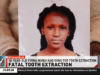
The late Vanessa Wanjiku. Photo: Screengrab - K24TV

By Maryanne W. Waweru l maryanne@mummytales.com

Maternal deaths in Kenya are a major public health concern. This is story one of the Wanjiku Kumbukumbu project by Mummy Tales, an initiative that is documenting maternal deaths in Kenya. This is borne from the questions we often ask when we learn of a woman’s death while giving life:

“Waaah!! Kwani what happened? Si she was in a hospital? What went wrong?”

After the initial shock, the questions continue:

“In this day and age, why are mothers still dying? Why is maternal mortality still an issue in Kenya? Who is responsible?”

The ‘Wanjiku Kumbukumbu’ project is a memorial board for the Kenyan mothers we have lost to maternal health complications. This is Vanessa Wanjiku’s story.

January 2025, Nairobi County: Vanessa Wanjiku

On 26 January 2025, Vanessa Wanjiku, aged just 26, died while giving birth at Mutuini Hospital in Dagoretti South sub-county, Nairobi County.

Her family says that a healthy Wanjiku arrived at the hospital to deliver her twins around the time of her due date. She bid her family goodbye, upbeat and in high spirits.

“Dad, I’ll be back; I’m at peace,” were the last words Wanjiku said to her father as she left for the hospital, excited about returning home with her new bundles of joy.

At the hospital, Wanjiku was admitted at the maternity wing but sadly, she did not leave the operating table alive. The family believes there was carelessness and inadequate medical oversight in her handling. Even worse, the grieving family says that following her death, no doctor offered them any explanation or information about what had gone wrong during delivery, further compounding their agony.

Could Wanjiku’s death have been prevented?

At 26, the young mother had a very promising future. Tragically, it was cut short. Wanjiku left behind three children; her firstborn aged one and a half, and her newborn twins.

Wanjiku attended her antenatal clinics as recommended. She went to the hospital to deliver, as recommended. She did her best. But she was let down.

Following her death, the Nairobi County government, in a statement, said that ‘the medical personnel did everything possible in their possession to save Wanjiku’s life’.

Watch Wanjiku’s story as reported by K24TV and Inooro TV.

Screengrab: K24TV

The ‘Wanjiku Kumbukumbu’ project by Mummy Tales is a memorial board for the Kenyan mothers we have lost to maternal health complications. Considering that maternal mortality is an important marker of a country’s health, through these women’s stories, I hope that all of us –family, community, medical professionals, researchers, women’s health advocates, policy makers and other leaders can broaden our understanding about why Kenyan mothers continue to die during pregnancy, childbirth, or within 42 days of ending their pregnancies.

If you would like to voluntarily provide information about a mother who has lost her life due to maternal health complications in 2025, or if you would like to support the #WanjikuKumbukumbu project by Mummy Tales, please reach me at maryanne@mummytales.com

Meanwhile, you may like to read the below articles I have previously published on men who lost their wives to maternal deaths.

  1. How I lost my wife to childbirth complications -Wilson Irungu
  2. How I lost my wife to delivery complications -John Maina

Mummy Tales by Maryanne W. Waweru is a platform dedicated to empowering its readers on different aspects of womanhood and motherhood. Read more motherhood experiences of Kenyan moms here. Connect with Mummy Tales on: FACEBOOK l YOU TUBE l TWITTER

Documenting Maternal Deaths in Kenya: the Wanjiku Kumbukumbu project by Mummy Tales

0
counting-dead-mothers-in-Kenya

By Maryanne W. Waweru l maryanne@mummytales.com

Maternal deaths in Kenya are a major public health concern. But why are Kenyan women still dying during pregnancy, delivery, or soon after childbirth? Every so often, while watching the news or scrolling through our social media timelines, we learn about the sad demise of a woman who passed away while giving life. Sometimes, they were perfectly healthy women who accessed high-quality medical care during pregnancy or childbirth in well-equipped health facilities. But they still died.

The World Health Organization (WHO) defines a maternal death as the death of a woman while pregnant or within 42 days of ending her pregnancy.

Why are Kenyan mothers still dying in 2025?

Despite decades of interventions by the government and thousands of non-governmental organizations, maternal mortality continues to be a major public health challenge in Kenya. UNFPA reports that nearly 5,000 women and girls in Kenya die annually due to pregnancy and childbirth complications. That’s about 13 women each day. 13 too many.

But these are just not numbers. Each number represents a woman who had a name, a beautiful face, a smile, a family, a job, a hobby, a way of life… a woman who had hopes and dreams. A woman who is dearly missed by those she touched. Going beyond the numbers is important. And so are the women’s stories.

Maternal death accounts in Kenya

Because every maternal death counts, and every maternal death has a story, telling the stories of these women is important, I am embarking on a journey to capture the faces and stories behind these numbers. Where possible, I will tell you who these women were -what their personalities were like, what made them laugh, what they loved doing, the people who loved and cared for them, and the gaps they left behind.

I will collect this information through existing documentation, reports, and media coverage about maternal deaths in Kenya (including published newspaper, television, radio and social media items/posts). I will also gather information voluntarily shared by their family members and friends, all of whom are still trying to make sense of the loss of a woman they loved. Where possible, I will include recollections of clinicians and community health workers. Some of the accounts will be skeletal, others will be more fleshed out -depending on the information I will gather and receive.

This compilation will give a human face to the issues surrounding different shortcomings in the maternal health ecosystem in Kenya. Through these women’s stories, I hope that all of us –family members, community, medical professionals, researchers, women’s health advocates, policy makers and other leaders can broaden our understanding about why Kenyan mothers continue to die during pregnancy and childbirth.

This documentation will be against the backdrop of the three main factors associated with maternal deaths, otherwise known as the “three delays model”:

1) Delay in deciding to seek care
2) Delay in reaching an appropriate health facility
3) Delay in receiving adequate care at the facility

Why ‘Wanjiku Kumbukumbu’?

I have titled this initiative the ‘Wanjiku Kumbukumbu’ project. Why this title?

Wanjiku is a symbolic reference to Kenya’s common mwananchi (citizen). In this context, Wanjiku represents the ordinary Kenyan woman.

Kumbukumbu is a Swahili word meaning ‘memory’. Or ‘remembrance’.

The ‘Wanjiku Kumbukumbu’ project is a memorial board for the Kenyan mothers we have lost to childbirth complications. By highlighting the stories of women who have died due to maternal health causes, the project aims to give them a voice and memorialize their lives. ‘Wanjiku Kumbukumbu’ aims to prompt discussions about the need for better maternal health care in Kenya. It seeks to raise awareness and advocate for greater support.

Support the ‘Wanjiku Kumbukumbu’ project

If you would like to provide any information about a mother who lost her life during pregnancy or shortly after giving birth in 2025, or if you would like to support this initiative, you may reach me at maryanne@mummytales.com

These are their stories (regularly updated):

  1. Dorcas Nzisa, 25, dies from caesarean section complications
  2. Eunice Mborothi, 27, succumbs to post-partum haemorrhage
  3. Phyllis Wanjiru, 33, dies after caesarean section complications
  4. Faith Binzali, 26, succumbs to a caesarean section gone wrong
  5. Mumbi’s death from retained placenta complications
  6. Barbara Mkok, 38, succumbs to pre-eclampsia complications
  7. Stella Mtira Wangama, 33, succumbs to post-caesarean section complications
  8. Magdalene Njoki Mburu, 36, and her death from uterine rupture complications
  9. Immaculate Akinyi Kirui, 40, dies from childbirth complications 
  10. Elizabeth Wairimu, 27, dies from pulmonary embolism
  11. Phanice Kerubo, 27, dies from alleged neglect while in labour at hospital  
  12. Vanessa Wanjiku, 26, dies after caesarean section delivery

Also read the accounts of these husbands who lost their wives to childbirth complications:

  1. How I lost my wife to childbirth complications -Wilson Irungu
  2. How I lost my wife to delivery complications -John Maina

Mummy Tales by Maryanne W. Waweru is a platform dedicated to empowering its readers on different aspects of womanhood and motherhood. Read more motherhood experiences of Kenyan moms here. Connect with Mummy Tales on: FACEBOOK l YOU TUBE l TWITTER

Upcoming event for grieving mums by Nelius Mukami

0
Nelius-Mukami-Rwamba
Photo: muqamiscircle on IG

By Maryanne W. Waweru l maryanne@mummytales.com

Nelius Mukami Rwamba is a Kenyan mom and businesswoman running a Foundation that supports families with premature babies. The Kena Foundation also advocates on issues around maternal mental health. Nelius’s advocacy work is inspired by her own personal motherhood experiences.

Eight years ago, Nelius a gave birth to triplets but sadly, she lost two of them —her precious baby girl and her brave baby boy. While announcing an upcoming event for grieving moms, dubbed: ‘A Healing Circle for Grieving Mothers’ slated for Saturday 26 April 2025, Nelius says that while the absence of her babies changed her forever, their love continues to live in her.

“I know firsthand that grief doesn’t end. It shifts, it softens—but it stays. And in that grief, we still mother. We still love.”

It is for this reason that Nelius is reaching out to hold a space for those who carry this silent kind of love… the kind wrapped in loss.

“This is not a therapy session. It’s not a place where someone will tell you how to feel. This is a circle of mothers; a circle of hearts; where we gather to say our children’s names, to cry if we must, to share if we wish, and to simply be.

We will honor our grief because it is valid. We will celebrate our children because their lives matter. We will sit together in kindness, in truth, and in tenderness.

Grief has no timeline. No rules. No “right” way. But it does deserve a space.

Join us—whether you are a grieving mother, a friend who wants to stand beside one, or family who simply wants to understand. In this sacred space, you will be seen, heard, and held.

Let’s no longer suffer in silence. Let’s heal forward—together.

If you’ve ever lost a child—during pregnancy, in infancy, or at any stage—you are not alone. You are still a mum. And you always will be.”

Event details

Date: Saturday 26 April 2025

Venue: Hotel Tobriana, Jacaranda Close, Ridgeways, Kiambu

Time: 2pm – 5pm

Charges: Ksh1,500

Organizer: MuQamis Circle by Nelius Mukami Rwamba

Contacts: +254 725 605 117 or +254 701 405 559

Email: muqamiscircle@gmail.com

Nelius emphasizes that: “Muqamis Circle is a safe, gentle space created for us. For the mothers who may not have photos to post, birthdays to plan, or school runs to do—but whose hearts are full of a love that never fades.

We will gather to say our children’s names, to cry, to sit in silence, to share if we wish—and simply be. No pressure, no judgment. Just kindness, presence, and deep understanding.

If you know a mother who needs this space, please share this with her. And if that mother is you, come just as you are. You are so deeply welcome.”

Also read: “How many children do you have?” Answering this question after a stillbirth -Wendy Mwatha’s story

Also watch: Nelius Mukami speaks on losing two babies from her triplets

Nelius-Mukami-Rwamba

Do you have an upcoming event targeting mothers in Kenya? You can share the details with me on maryanne@mummytales.com

Mummy Tales by Maryanne W. Waweru is a platform dedicated to empowering its readers on different aspects of womanhood and motherhood. Read more motherhood experiences of Kenyan moms here. Connect with Mummy Tales on: FACEBOOK l YOU TUBEINSTAGRAM l TWITTER

Why I took my teenage daughter to the family planning clinic

0
teenage-pregnancy-Kenya

This is one mother’s story, as narrated to Maryanne W. Waweru l maryanne@mummytales.com

As a I sit patiently with my 19-year-old daughter in the queue at the family planning clinic, I take note of the side eyes being cast our way by other clients, all of them women. I’m here to ensure that my daughter gets a contraceptive, because I cannot afford for her to have another child. Again.

I am a widow, and a mother of three daughters. She is my first child, while her follower is 14, and the last is aged 9 years. I eke a living as a cleaner employed by the City Council. On a daily basis, you will find me sweeping the streets of Nairobi. We live in the Eastlands side of Nairobi in a decent two-bedroom house that serves us well.

Pregnant school girl

My daughter got her first child when she was a Form 2 student at a local secondary school. The alleged father of her child, a boda boda rider, abandoned her as soon as she informed him of the pregnancy.

Disappointed, and with stern warnings for her not to repeat the same ‘mistake’ again, I accepted matters and together with a supportive school administration, she continued with her studies throughout the pregnancy.

‘Shame’ of teenage motherhood

She however did not return to the same school after delivery because, as a new mother, she said she didn’t feel comfortable going back there as she feared being ridiculed and shamed. I transferred her to a different school where she thankfully, completed her Form 4 education and attained a grade C in KCSE. I was proud of her and began looking for money to enroll her for a TVET course. If only I knew what lay ahead.

Another bombshell!

Mid-last year, my daughter dropped another bombshell on me. She told me she was pregnant! Again! I temporarily went mad for about a month. How could she do it? Again?

She delivered her second son in March 2025. The father of this child is different from the first one. Unbelievable! The second man is not supportive either, meaning that both she and her sons rely on me.

Also read: Why I put my teenage daughter on the contraceptive injection

That is why we are here at the family planning clinic. I have decided she will get a long-term contraceptive because she will not pregnant again -at least not under my roof! She didn’t seem to learn from her first pregnancy, and I fear that she will get pregnant again –by a different unsupportive man no less. I cannot afford another mouth to feed. She will not get pregnant in my house again. I want her to get the five-year contraception. I have discussed it with her, and she agreed to it.

So, when you see mothers with their teenage daughters queuing for services at the family planning clinic, just let them be. You don’t know what they are dealing with.

Also read: How I became a teenage mother of two in quick succession

What are your thoughts on this mother’s decision to accompany her daughter to the family planning clinic? Share your thoughts below. If you have a teen pregnancy story you’d like to share, email me on maryanne@mummytales.com

Mummy Tales by Maryanne W. Waweru is a platform dedicated to empowering its readers on different aspects of womanhood and motherhood. Read more motherhood experiences of Kenyan moms here. Connect with Mummy Tales on: FACEBOOK l YOU TUBEINSTAGRAM l TWITTER

Kenyan Hospital using TikTok to promote maternal health

0

A hospital in Thika, Kiambu County, is using TikTok to educate expectant mothers on the importance of pre- and post-natal care to help curb maternal mortality. Mary Help the Sick Hospital hopes the platform will help create more awareness about reproductive health and newborn care. (KBC)

“How many children do you have?” Answering this question after a stillbirth

2
Wendy-Mwatha
Screen grab: Life With Wendy Mwatha on YouTube

By Maryanne W. WAWERU

When you ask Wendy Mwatha how many children she has, she never hesitates to respond ‘three’. The 29-year-old flight attendant, fashion model and content creator who shares motherhood, travel and lifestyle content on her Instagram, YouTube and TikTok channels, is a mother of two handsome boys and one beautiful daughter ‘who is now an angel’.

Wendy lost her daughter in 2021, an experience that she documented on her YouTube channel.

Wendy never says she is a mother of two, and she shares her reasons why.

“Because that would be a disservice to myself, because I carried her in my body, I nurtured her and I laboured for her for a good eight hours and I gave birth to her and I held her little, tiny body in my arms and I kissed her, and she was somebody. She was my daughter. It is unfortunate that she passed away, but why should I not acknowledge the fact that she is my child?” Wendy said in this heartfelt post on Instagram.

The mother of three went on to encourage fellow women who have ever experienced the loss of a child.

“To fellow moms who have experienced a miscarriage, stillbirth or have lost their child in one way or another, let society not dictate how you choose to remember your child, because at the end of the day, he or she was part of you.”

Kenya: stillbirth statistics snapshot (source)

  • A stillbirth is defined as a baby who is born without any signs of life after 28 weeks of pregnancy or in the third trimester
  • Kenya’s stillbirth rate is reported at 19 per 1,000 births
  • Stillbirth can occur during pregnancy and prior to birth, before labor begins (antepartum stillbirth), as well as during labor and birth (intrapartum stillbirth)
  • In Kenya, 53% of stillbirths occurred during labor and birth, while 47% occurred during pregnancy
  • Stillbirths are caused by various factors; some are known while others are unknown. Approximately 1 in 3 stillbirths do not have known causes.

If you have ever experienced or a stillbirth or child loss, how do you usually respond to the question: “how many children do you have?” What have you found works best for you? If you’d like to share your story, please email me at: maryanne@mummytales.com

Mummy Tales by Maryanne W. Waweru is a platform dedicated to empowering its readers on different aspects of womanhood and motherhood. Read more motherhood experiences of Kenyan moms here. Connect with Mummy Tales on: FACEBOOK l YOU TUBEINSTAGRAM l TWITTER

‘Sarah’ the Kenyan movie: a review

0
Namurru-Sarara

By Maryanne W. WAWERU l maryanne@mummytales.com

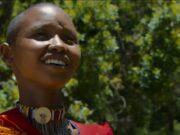
An uncircumcised woman smells.
An uncircumcised woman is a prostitute.
An uncircumcised woman cannot be married.
An uncircumcised woman cannot be helped during childbirth.

Those are some of the words spoken by, of, and among Maasai women, as depicted and clearly articulated in the feature film, Sarah.

Last Sunday 9 March 2025, I got to watch the film, Sarah. Sarah is a feature film shot in the heart of the Maa community in the Loita hills.

In this movie, we meet a young school-going Maasai girl, Sarah (played by Namurru Sarara). Though she doesn’t seem to concentrate much on her studies, she nevertheless loves school. And is determined to get an education. However, her traditional Maasai culture and the pressures of a long drought brought about by climate change are about to change her life.

A very tantalizing dowry offer from an old man ‘who stinks’ means that her family must choose between having her undergo the traditional circumcision ritual (female genital mutilation -FGM) and get married to the stinky old man, or miss a rare chance to rebuild their already dwindled wealth. Her father needs the money. He is keen on following traditional maasai culture.

Her mother, however, is not too certain. She risks losing her marriage if she goes against her husband’s wishes. Marriage to her, just like to many other Maasai women in her community, is everything.

The conversations by the characters are rich. We get insights into the thoughts of school-going girls about circumcision. We hear from those who have been circumcised and those who haven’t. They share their reasons about why they are for or against. Very detailed conversations.

The older women too. The mothers, the aunts and the grandmothers. We learn about why some of them strongly support FGM. Others are in the grey area. Others are completely opposed to it.

The morans and all other men as well. We get to learn from their own intimate conversations –what they think about the changing practice of circumcision in their community, and the alternative rite of passage that is gradually being embraced by families. Are the traditional Maasai cultures fading away? Is this something they should be deeply worried about?

By the way, the movie is delivered purely in the Maa language, with English subtitles. And it features a completely amateur cast who execute the assignment quite well. I absolutely loved how seriously each character played their role, especially Namurru Sarara -the lead character.

If you have worked in the NGO world interacting with grassroots communities for years like I have, then the conversations in this film are nothing new. However, it’s still good to see them produced in a well-shot and edited film like this. The film definitely sounds and feels NGO-ish. As you watch the film, you’ll get the feel that it is sponsored, that it is donor funded. Which I believe it is.

There are no surprises in this film. The Maasai story of FGM vs embracing ‘alternative rites of passage’ has been told over and over again. So if you’d like to re-learn about traditional African cultures and the dilemma that communities such as the Maa face in light of ‘modernity’, then watch Sarah.

The film would make for good screenings at the community levels. Not just targeting the Maasai people, but all communities across Kenya and beyond. There are interesting insights to learn from the themes in it.

The film, by the way, is based on the true story of Sarah Tenoi.

Catch it at Prestige Cinema, Ngong rd, Nairobi. Showing until Thursday 13 March 2025.

Also read: Mothers in rural Kajiado to benefit from new hospital -the Chief Ole Mpaa Health Centre

Mummy Tales welcomes news tips on issues related to women and health. If there’s an issue you’d like to see reported on, please email: maryanne@mummytales.com

Mummy Tales by Maryanne W. Waweru is a platform dedicated to empowering its readers on different aspects of womanhood and motherhood. Read more motherhood experiences of Kenyan moms here. Connect with Mummy Tales on: FACEBOOK l YOU TUBEINSTAGRAM l TWITTER

Mothers in rural Kajiado to benefit from new hospital -the Chief Ole Mpaa Health Centre

0
Chief-Ole-Mpaa-Health Centre

For years, residents in Oloilalei in Kajiado South Constituency have had to endure long treks through a treacherous 30-kilometre journey to access services at the nearest hospital. The arduous journey, on rough terrain, has always endangered their lives, especially for pregnant women.

“The situation has always been particularly bad for expectant women whose labour pains struck at night. We would have to embark on the dangerous journey in the dark, risking encounters with elephants on the way to the hospital,” said Ann Ntasikoi, a resident in Oloilalei.

Thankfully, Ann and other residents can now heave a sigh of relief following the commissioning of a new hospital in the area -the Chief Ole Mpaa Health Centre. The facility will now enable populations in unreached areas in rural Kajiado to access services in a place that is closer to them. The Chief Ole Mpaa Health Centre comprises an outpatient section, a maternity wing, a laboratory, and a radiology section among other critical clinical services.

Also read: How I lost my wife to delivery complications: a Kenyan father shares his story

Elizabeth Tantaine, another resident also expressed relief at the new health facility, saying that it will help in improving the quality of care for mothers and their newborn babies.

“I am elated that we now have a maternity unit nearby. Due to the distance we had to trek before getting antenatal and postnatal services, many mothers used to forego antenatal checkups and taking their babies for monthly clinics. Now with a health facility just a few kilometers away, they will not miss such essential services,” she said.

Source: KNA Photo: J. Lenku.

Also read: Maternal health services boosted in Kiptangwanyi, Gilgil sub-County

Also read: Breastfeeding room launched in Ndhiwa Comprehensive School to support lactating teachers

Mummy Tales welcomes news tips on issues related to maternal health care. If there’s an issue you’d like to see reported on, please email: maryanne@mummytales.com

Mummy Tales by Maryanne W. Waweru is a platform dedicated to empowering its readers on different aspects of womanhood and motherhood. Read more motherhood experiences of Kenyan moms here. Connect with Mummy Tales on: FACEBOOK l YOU TUBEINSTAGRAM l TWITTER

Maternal health services boosted in Kiptangwanyi, Gilgil sub-County

0
Kiptangwanyi-maternity-dispensary
Some of the beds at the new Kiptangwanyi maternity unit.

By Maryanne W. WAWERU l maryanne@mummytales.com

Expectant mothers from the village of Kiptangwanyi, Elementaita Ward in Gilgil sub-County, Nakuru County now have closer access to maternal health services following the establishment of a new 24-bed maternity unit at Kiptangwanyi Dispensary.

Previously, the mothers had to rely on Gilgil sub-county Hospital, or the Nakuru Teaching and Referral Hospital for these services –a distance of approximately 60 km from Kiptangwanyi. The new facility will offer comprehensive maternity services at the ward level, thereby reducing referrals to Level 4 and 5 hospitals. It will also allow mothers to receive quality care closer to home.

About 1,849 women in Elementaita ward receive antenatal care (ANC) services annually. The establishment of the 24-bed maternity at Kiptangwanyi Dispensary is expected to raise this number, as the facility is aimed at enhancing maternal and child health by improving healthcare services, reducing congestion, and cutting down on the long distances that mothers have to make to access maternal health services.

The new maternity unit will offer prenatal care, skilled birth attendance, postnatal support, nutritional counselling, and mental health services to ensure safe deliveries and better maternal health outcomes. Through the new maternity unit, it is expected that there will be reduced maternal and neonatal mortality in Gilgil sub-County and neighbouring areas.

Kiptangwanyi-maternity-DispensaryKiptangwanyi-maternity-DispensaryPhotos credit: Nakuru County Government

Mummy Tales welcomes news tips on issues related to maternal health care. If there’s an issue you’d like to see reported on, please email: maryanne@mummytales.com

Mummy Tales by Maryanne W. Waweru is a platform dedicated to empowering its readers on different aspects of womanhood and motherhood. Read more motherhood experiences of Kenyan moms here. Connect with Mummy Tales on: FACEBOOK l YOU TUBEINSTAGRAM l TWITTER

Breastfeeding room launched in Ndhiwa Comprehensive School to support working mothers

0
Photo courtesy: KEWOTA

By Maryanne W. WAWERU l maryanne@mummytales.com

Tr. Anyango is a Junior Secondary School (JSS) teacher at Ndhiwa Comprehensive School in Homa Bay County, teaching grades 7 – 9. She is also a new mother. Tr. Anyango has been facing various challenges pertaining to her responsibilities as a new mother, and her work.

“Sometimes when I’m in school, I’m told that my son is crying and doesn’t want to eat anything. When this happens, I have to ask for permission from the School Head to return home to breastfeed him before rushing back to school,” she says.

According to Tr. Anyango, many are the times when a mother has prepared herself to go to work in the morning, and at the last minute, the house help suddenly announces that she will not be reporting for duty that day or is quitting her job. This leaves the new mother completely stranded as she has no immediate alternative help that can step in on such short notice.

It also means that the mother has to call her employer to excuse herself from duty as she sorts out that emergency. Tr. Anyango says that many female teachers, including those who are breastfeeding, often find themselves in such predicaments.

It is these kinds of scenarios that Tr. Anyango and many other lactating female teachers face that inspired the Kenya Women Teachers Association (KEWOTA) to establish a breastfeeding parlour in the school.

Launched on 14 February 2025, the breastfeeding parlour is intended to support female teachers. The room is a safe space where they can comfortably breastfeed and interact with their babies while on their teaching breaks or when necessary, thereby enhancing their mental health and wellbeing while at work. This in turn helps them be more at ease as they focus on their duties.

The breastfeeding room at Ndhiwa Comprehensive School can comfortably host about 10 – 15 nursing mothers at any given time. This is able to cover all the teachers in the school who may need to use the facility.

The lactating mothers may opt to bring their child to work, or they can ask their house help to bring the child over when they are on a break from their lessons. In the room, they can comfortably nurse their babies before returning to class. Knowing that their babies are well fed, are resting well, and are generally well cared for in the room will give them peace of mind and thus significantly boosting their productivity at work.

Mercy Odhiambo, the KEWOTA Coordinator for Homa Bay County says that the establishment of the breastfeeding parlour at Ndhiwa Comprehensive School is a notable achievement. She says that KEWOTA, whose main mandate is to ‘work for the woman teacher’ has been advocating for such a facility as it will go a long way in addressing the challenges that female teachers with small babies face. She has urged school heads across the country to take up the same initiative, reiterating KEWOTA’s commitment to facilitate the establishment of the same in other schools.

Dulo Nedy, the Deputy Head Teacher at Ndhiwa Comprehensive School welcomed the initiative, saying that indeed, the breastfeeding parlour will be of immense benefit to lactating teachers at the school. She said that the comfort of knowing that their babies are around them will assist in their mental health.

In cases where they do not have a caregiver at home to watch over their babies, the Deputy Head Teacher said that the facility will help address this problem as the teacher will now be able to bring their child over to school and attend their lessons as required, while the baby is being cared for in the room.

This, she says, will reduce cases of absenteeism, especially in situations where teachers are left stranded when the house helps leave them stranded and they have to miss their lessons as they resolve the issues at home. She added that the benefits of the breastfeeding room will calm the teacher’s minds and ultimately enhance their output in school.

Information source: Nation 

How does your workplace support new mothers? Is there a breastfeeding room? Does it offer flexible working arrangements? You can comment down below, or you can write to me at maryanne@mummytales.com with this information. 

Mummy Tales by Maryanne W. Waweru is a platform dedicated to empowering its readers on different aspects of womanhood and motherhood. Read more motherhood experiences of Kenyan moms here. Connect with Mummy Tales on: FACEBOOK l YOU TUBEINSTAGRAM l TWITTER

Advertisement

POPULAR POSTS

error: Not Allowed