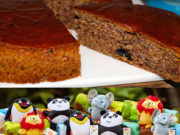
Are you aware there are some sweets, queen cakes, blackforest cakes, buns, mandazi’s and cookies being sold in supermarkets, shops, confectioneries and other outlets -that are laced with bhangi? Yes, those yummy things that we love snacking on with our tea, and which we also indulge in our children in -could actually contain bhangi? Yikes!!!
Me, I first heard about bhangi-laden cookies about five years ago. I knew they were mainly distributed during house parties for adults. But now, I understand that these drug-laced cookies -and now blackforest cakes, lollipops and mandazi’s are in the hands of some of our children. Our children are both consumers and peddlers of the drugs.
How this is happening is that youngsters are selling this stuff to their peers. Basketball courts, pool tables and soccer pitches are today the prime spots for these activities, according to one teacher at a boys’ boarding school I recently spoke to. Her students shared with her that the open sale of drug-laced bitings are common in these places today, and they are sold them by their friends, not adult drug peddlers.
How it happens is that at the start, the friend offers the teenager a cookie for free for a couple of days, then when sure he’s hooked, he begins selling it to him. Yet these are the places where we think are safe for our children. I mean, if your teenage son tells you he’s going out to play basketball for a couple of hours, won’t you be delighted, relieved that he is atleast going to keep himself engaged in a constructive activity? Well, that may not be the case anymore, because drugs are being sold to our children in some of these ‘safe spaces’. That is where they are getting introduced -and hooked to drugs by their peers. *Sigh*.
Take heed of this alert by the Ministry of Health about this issue.
Fistula. A very ‘shameful’ and embarrassing condition for many women. An obstetric fistula is a hole between the vagina and rectum or bladder that is caused by prolonged obstructed labor, leaving a woman incontinent of urine or feces, or both. More than 75% of women with obstetric fistula endured a labor that lasted three days or more.
I have had the opportunity to meet some women who had lived with fistula for years, and who eventually underwent surgery to repair the fistula.
I wrote about Melvin -who had lived with the condition for ten years, and Yvonne who had lived with it for two years. Then there was a little four-year old girl I met while in Kisii last year, whose experience is one of the most difficult I’ve ever had to write.
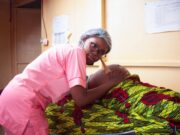
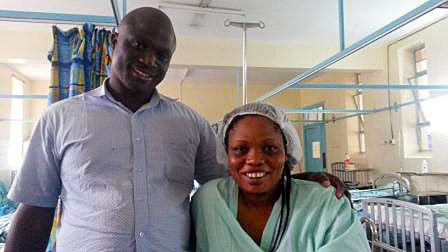
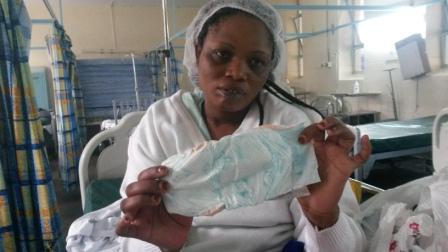
Melvin Barongo displays the type of disposable diapers she used for ten years while living with fistula. Above, she is with her supportive husband Eric.
The four-year old girl being comforted by her mother.
Now, I’m sure you’ve seen calls on Citizen TV and its affiliate radio stations asking women suffering from fistula to attend free camps at KNH or other medical centers where they can be treated -for free. The medical camps are organized by the Flying Doctors Society of Africa and the Freedom from Fistula Foundation, and let me tell you something -those free surgeries literally restore the dignity of hundreds of women. I have attended three such camps -two at KNH and one at Kisii, and spoken to over 40 women about their experiences living with fistula.
Their journeys have been difficult, sometimes almost moving me to tears. That a woman can suffer such devastating effects because of an event that is supposed to bring to much joy to her life –childbirth, is very painful. But it is even sadder when she has to live that way because she cannot afford to go to hospital for corrective surgery -to repair the fistula. In a government hospital the surgery costs about Sh 30,000. In a private hospital it ranges from Sh 150,000 – 300,000. Many women who suffer from fistula cannot raise the heavily subsidized Sh 30,000. And that’s why these free medical camps are God-sent, literally.
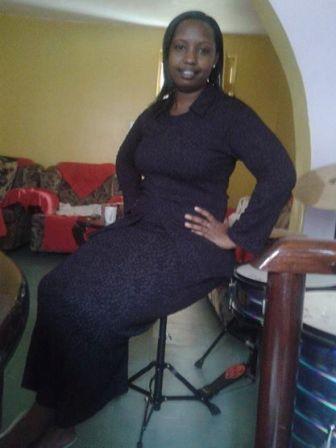
Yvonne Njoki who suffered a fistula following the birth of her son.
One such camp will be happening next week at the Embu Level 5 Hospital. This is from Monday17 August to Friday 21 August 2015. If you know of any woman who would benefit from this free service, please let her know, and help bring back the bounce to their lives. The contact numbers for the camp organizers are 0727 337 337 or 0735 337 337 incase you need more information. Spread the word and share widely.
Ann Wanjiku is mother to an eight-month old son. Born and raised in Kenya, she now lives in Germany with her husband and child. Ann moved to Germany 12 years ago, and offers us insights about raising her child in her new country, the differences in culture and the unique experiences that she continues to enjoy everyday.
In her last post which you can read here, Ann talked about the moment she found out she was pregnant and what happened thereafter. Today, she talks about her birth experience, including how she preferred to have a natural tear as opposed to an episiotomy. Read on…
“Pumpkin was born on a cold winter afternoon after more than 12 hours of active labour. As an expectant mother, I had the option of choosing whether to give birth on hospital or to have a home birth. I chose hospital, and one of the requirements for this is that I had to register myself at my hospital of choice around the 34th week of pregnancy. This means I had to do some ‘hospital window shopping’ in advance. I had time to view the labor and recovery wards of some hospitals before making my selection.
After I settled on my hospital of choice, I then needed to make an appointment to discuss what my wishes were for labour… sort of like a birth plan. One thing that I was very clear about is that I didn’t want an episiotomy, instead preferring to tear. An episiotomy is an incision made in the perineum — the tissue between the vaginal opening and the anus — during childbirth. In Germany, episiotomies are not part of the general birthing process and expectant mothers have the right to decide whether to have this procedure done or not. I also let them know that I wanted to have an epidural. An epidural is a common method for pain relief during labor.
During birth classes, expectant mothers are advised to start perineal massage around the 36th week. A perineal massage is believed to reduce the chances of a woman getting an episiotomy, and fewer natural tears.
In Germany, births have been partly medicalised. This means that one can give birth at home or in the hospital. Either way, it is the midwife who delivers the baby. Doctors only step incase of emergency like suction births or c-sections. In case of a tear or episiotomy, it is the doctor who stitches up the woman. The doctor comes in just before the baby is born to stitch the mother up and conduct the APGAR test, which rates the baby’s: Appearance (skin colour), Pulse (heartbeat), Grimace (reflex response), Activity- (muscle tone) and Respiration- (Baby’s breathing).
When an expectant woman arrives at the hospital, she is taken to the labour ward. Moms to-be are encouraged to try different positions during labour, including getting into the bath tub full of warm water for relief if she so chooses. Some women decide to have a water birth right there in the tub. The pregnant woman is particularly discouraged from giving birth while lying on the bed. The midwife asks her to try other positions where gravity can assist, such as sitting on a birthing stool or the squatting position.
Babies are normally not washed after birth unless the amniotic fluid is green, meaning that the baby pooped while in-utero. The reason for not washing the baby is so that the baby has a familiar smell around him. The partner is present during birth and can cut the baby’s cord if he/she wishes.
Ann in December last year, just after the birth of her son. Freezing temperatures!
In Kenya after a woman gives birth, family and friends come and visit her at the hospital. In Germany, this is not a part of the culture. Some couples can decide that they don’t want to have any visitors during their stay at the hospital. This means that these new parents get to bond with their baby without interruption from guests. The mum also gets time to rest without feeling the pressure of having to be presentable to receive guests. Actually this family time is encouraged by the midwives who advises the new mum to receive guests when she is ready. In my case I started receiving guests at home after the second week. And now reflecting back, I think it was a good decision because I was able to get some much needed rest.
Also in contrast to Kenya where you are expected to play host and make sure there is food for the visitors, here they do not expect food. Infact, some of our friends brought meals for me while those who didn’t were contented with a cup of tea or juice.
Here in Germany, the newborns are left with their mothers for bonding. There are no nurseries in the hospitals and babies stay with their parents from the start. The normal hospital stay is 3 days unless there are complications. During this time, the baby continues to be examined and weighed.
On the second day, a hearing test is done to determine if the baby can hear. The baby’s blood is tested to see whether its metabolism is working properly. In addition to that babies are given two oral doses of vitamin K. This is a preventative measure taken because some babies have vitamin K deficiency, which causes internal bleeding. Vitamin K helps the newborn’s blood to clot and stop this bleeding, which can lead to death.
In the recovery ward, after my delivery, the midwife visited me once a day for the entire hospital stay. During these beside visits, she checked my stitches to see how they are healing. She also checked my breasts to ensure that they were not engorged. During my hospital stay, I noticed that for new moms who are not interested in breast feeding or did not have sufficient milk, they were assisted. Such mothers are offered a breast milk pump which they are required to use every four hours, which helps stimulate milk production.
Before being released, the pediatrician will examine the baby and the parents told to schedule an appointment with a pediatrician in their area for further checks and immunizations.
Upon discharge, a midwife accompanies the new mom home. She visits every day during the first 7 days. During these visits, she weighs the newborn, checks her breasts and stitches to evaluate the healing process. The midwife is also there for you incase you have any queries. After the seven days, her visits reduce to once a week until the baby turns 8 weeks. During one of these visits she will show you how to bathe the baby and how to dress it appropriately.
As someone who grew up in a warm place, I had the weakness of dressing the baby too warm, I must confess. And that was my birth experience here. Just a few differences here and there between Kenyan and Germany, but all towards the good journey of motherhood.” Find Mummy Tales on Facebook and Twitter.
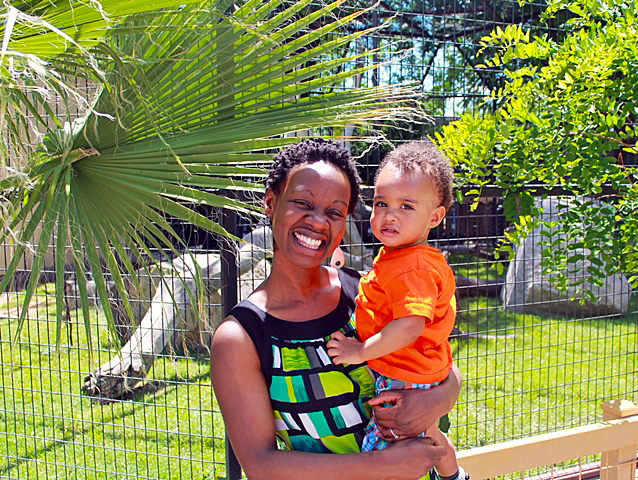
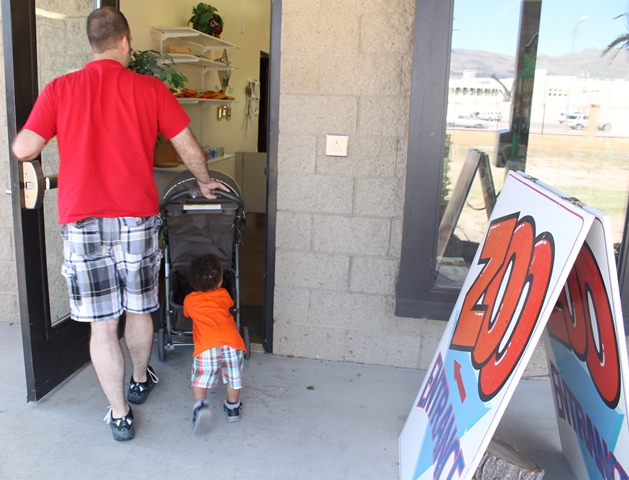
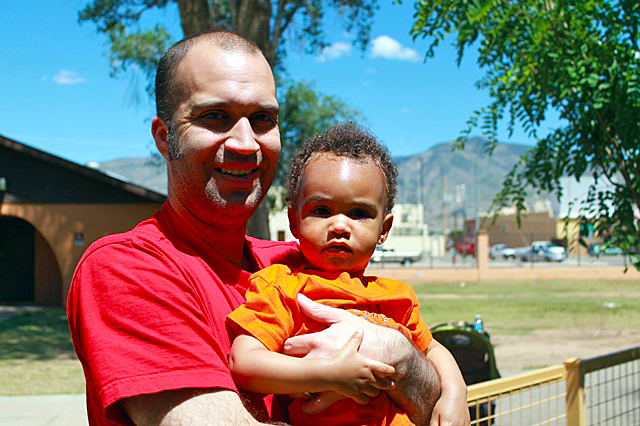
Nabubwaya Chambers is a Kenyan mom living in Texas, USA with her husband and their 18-month old son Lema. Nabubwaya loves sharing her motherhood experiences with us here and this week, she lets us know how a family trip to the zoo went. Read on.
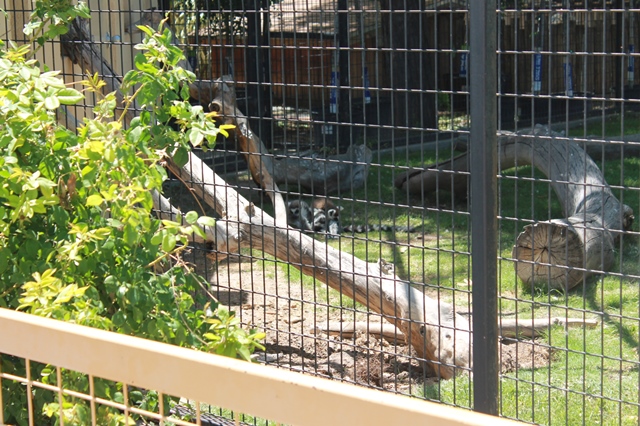
“The other day, we took Lema to see some of the animals he has been learning about over the last few months. It turned out to be a trip to the zoo for all of us since we saw animals and birds we had never seen or heard of at all.
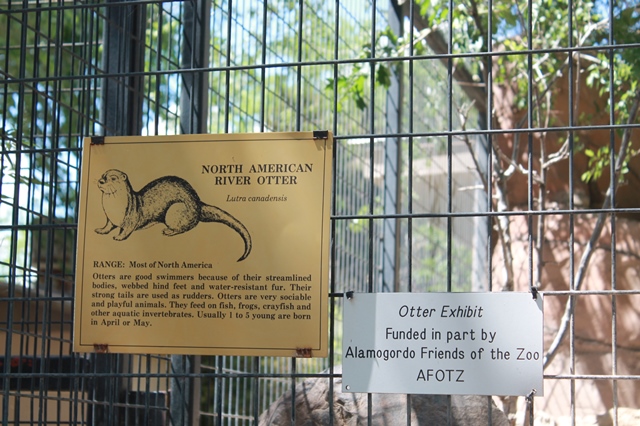
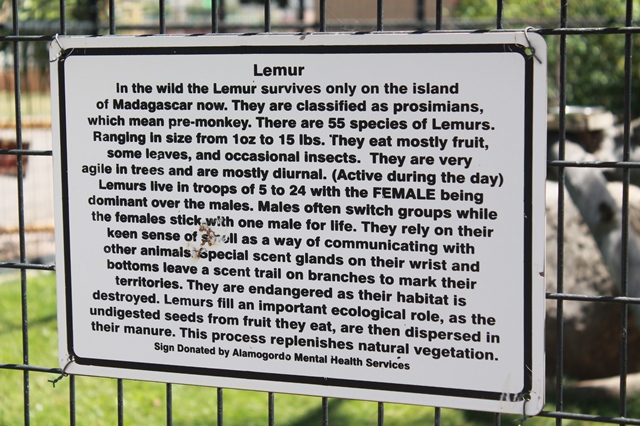
Some of the animals I had never seen before were ring-tailed lemurs, endangered wolves, North American river otter, ocelot, coati mundis, cougar, mountain lion, American black bear, capuchin monkeys, mule deer, and coyote.
The birds were bald eagle, guanaco, common rhea, and emu. Our eyes almost popped out of our sockets when we saw a giant guinea pig. It was beyond huge that one could have thought our eyes would pop! Baba Lema and I were both so excited to see those animals and to spend time at the zoo.
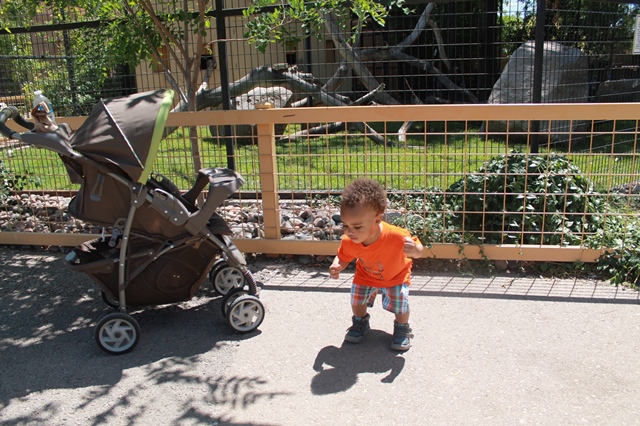
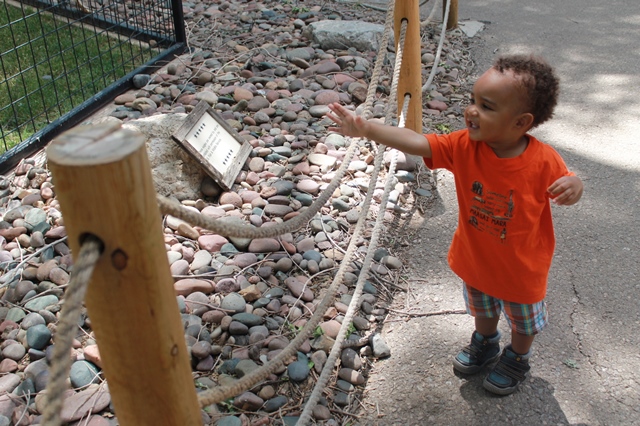
Lema also got to feed a tortoise and lots of ducks. His father and I got a kick from seeing his reaction every time he would see a different animal. The reactions ranged from excitement to non-expressive looks sometimes.
These animals were behind a fence in an environment that was set up to appear as natural as it is in the wild as possible. There was absolutely no way anyone could come close to these animals. I could clearly see questions running through Lema’s mind. I wished I could figure out what he thought about.
Comparing Nairobi National Park and the Alamogordo Zoo
Having gone to the Nairobi National Park and seen all the fantastic animals I saw at the Alamogordo zoo, I would say that both zoos have unique ways of trying to recreate natural environments for the animals and birds. The ones in Nairobi seem to be in a more natural and open environment and there is clear visibility. Yes they are behind a protected fence, but one gets the sense that they are in a more natural and less restrictive environment. Also, they seem more lively in Nairobi than the ones we saw at the Alamogordo zoo. Perhaps it was the time of the day that we visited and the heat that made them look so lethargic. We were there in the afternoon and it was really hot in the ranges of 80-90 degrees Fahrenheit.
All in all, our son had so much fun away from what he was used to. I figured a new environment could be helpful for all of us, once in a while. I don’t know about others but I know it works wonders for me. I’m usually rejuvenated by breaks from time to time. There is more to life than we may think there is. New territories wait to be explored so go out and just do it.
Now, as I go out and about my usual business, I often come across some beautifully dressed kids and I’ve always thought to share some of their outfits on the blog. Today we feature Elizabeth, a young mum whose stylishly-dressed son I spotted, and who agreed to share a little bit about that.
MT: Tell us a Little About Yourself
EW: My name is Elizabeth Wafula, a wife and mother to Leo Kerre Simiyu who is 16 months old. I’m currently undertaking my Master’s degree in Nutrition at Kenyatta University. When I’m not busy with my studies, I spend the rest of the time at home with my son.
MT: Tell us about Your Son’s Dress Sense
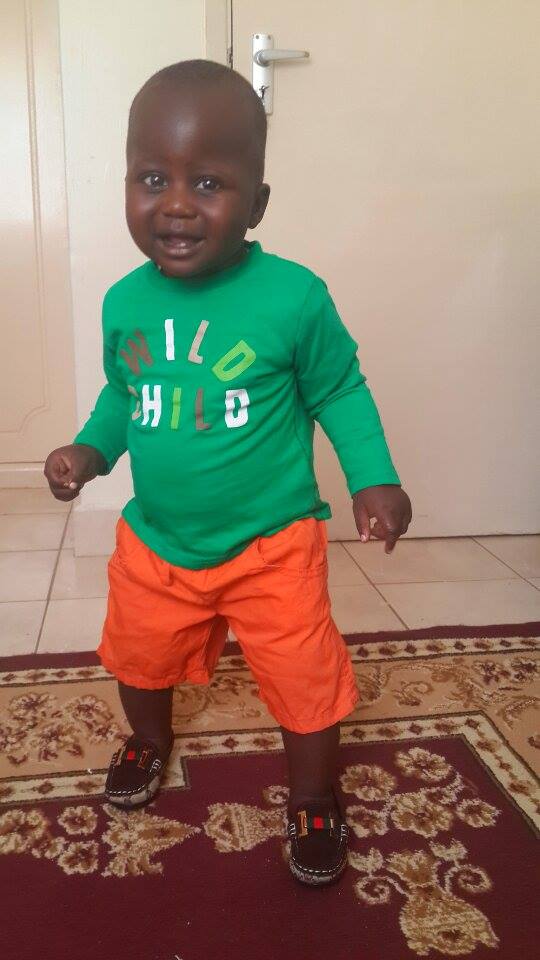
EW: I consider myself a fashionable mum and so when it comes to dressing Leo, I love for him to be fashionable too. I enjoy experimenting and playing around with different colours to create a fashion statement for him. For example, this green and orange outfit looked bold and trendy.
I have come to realize that my son loves colours too, after taking note of how fascinated he usually is when he sees me in colourful outfits and jewelry. Sometimes he can’t keep his eyes off my nail polish! I love to dress Leo in the most trendy and fabulous outfits available and make sure he steps out with swag:)
MT: Where do you Buy Leo’s Clothes?
EW: I usually shop at Toi market and Sunu’s along Biashara Street.
MT: What Advice Would you Give to Fellow Moms about Dressing their Kids?
EW:Dress your kids according to how you want them to look. Don’t compete for a space that’s not yours. Remember that comfort matters.
So that’s Elizabeth’s style for her son. Which look do you like most of Leo?
Last weekend was Independence Day in America. The 4th of July is a BIG holiday there. So I was curious to find our how our diaspora mum Nabubwaya celebrated it with her family.
Nabubwaya is a Kenyan-born mum, now raising her family in Texas, USA.
She lets us in on this year’s July 4 celebrations with her family.
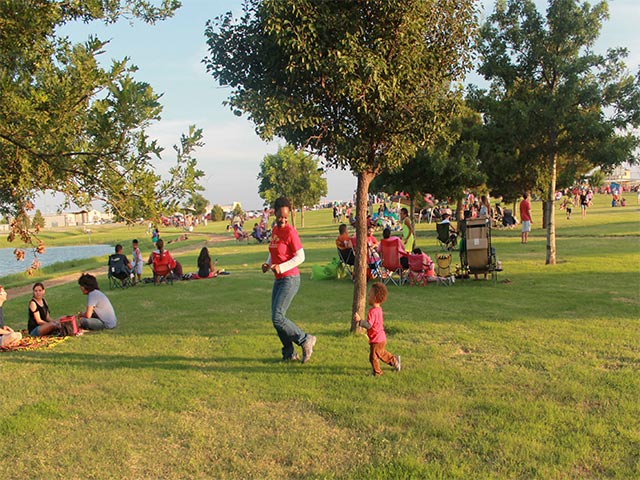
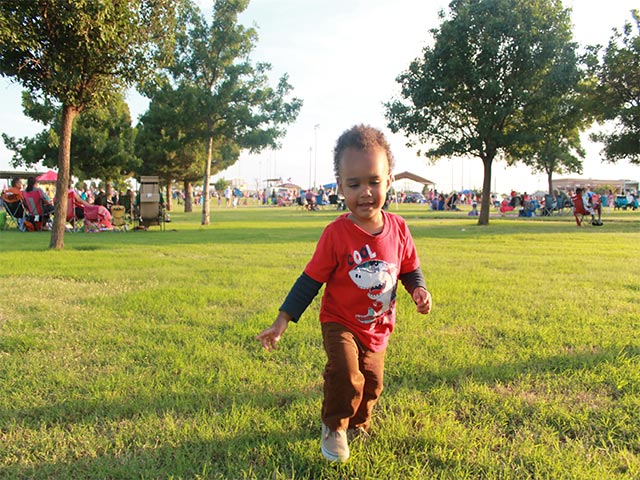
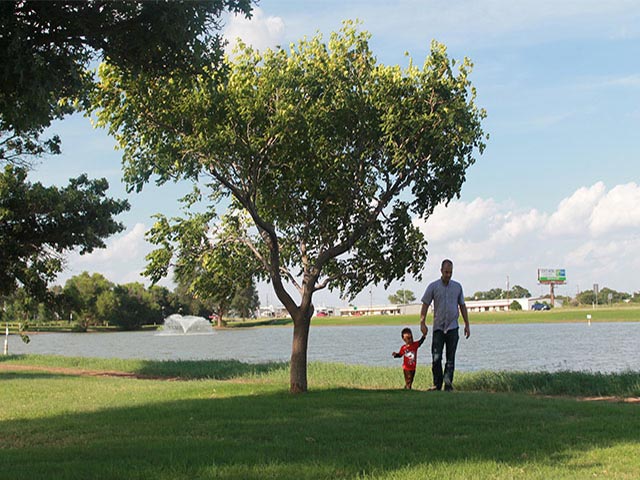
This year’s Independence Day was actually more of a bigger celebration than the others I have experienced here in America. This was Lema’s second celebration and by far the best 4th of July for our family. Since I worked on the actual 4th of July, we managed to attend the celebrations on the 5th that were held in a different nearby city. We spent some precious and fun hours at the park. I packed some snacks, water, and blankets for us to use. We usually enjoy sitting on the blankets than the chairs that are more commonly used at the park.
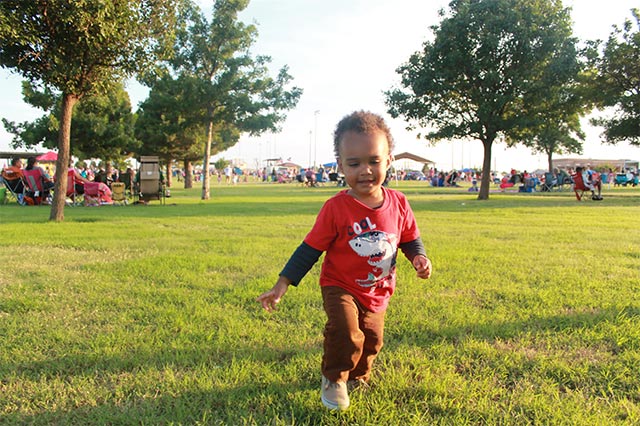
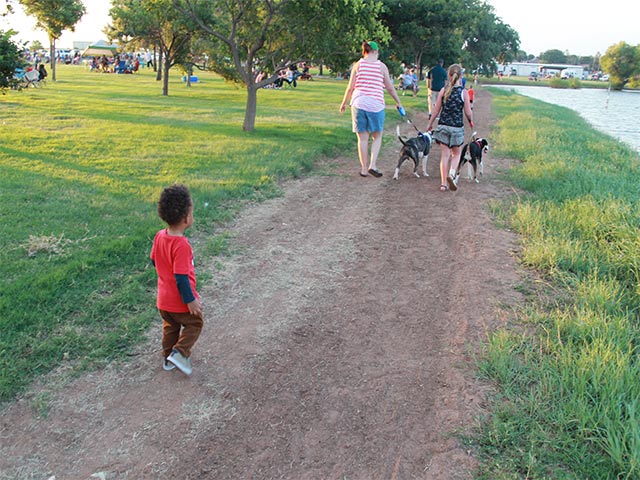
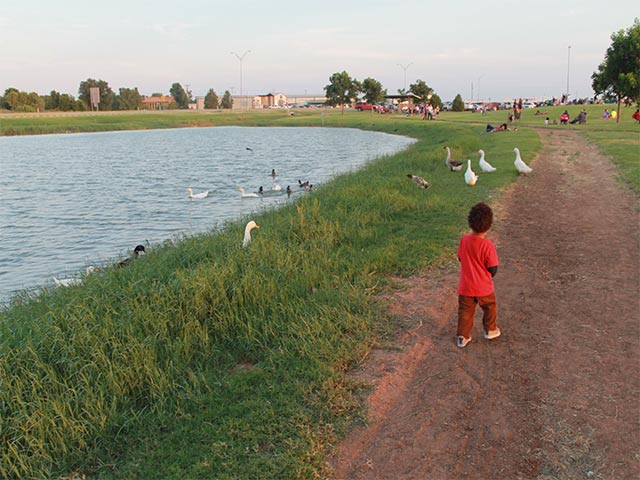
The park had a series of activities lined up leading to the flashy display of fireworks. There was entertaining live music delivered by live bands, a petting zoo, pony rides, several food tents, and a play area for the families to enjoy. Lema seemed content to watch all these activities. He preferred to hang out more by the lake, watch the ducks, and made several attempts of chasing after puppies that frequently passed by our spot.
Lema enjoyed running around and chasing both his daddy and I. He seemed very interested in the ducks that swum in the lake. He kept pointing to them and staring from time to time. We took him on walks and stroller rides as we waited for the initiation of the traditional fireworks ceremony. This ceremony is a very big deal in the US. It’s usually the climax of the holiday. Scores of people come out to the park to watch the event. Lema was fascinated by the flamboyant display of fireworks.
The event ended a little after 4 hours. We were all ready to head home for a good shower and sleep. Happy Independence Day, America!!”
Thanks Nabubwaya, we love hearing from you.
You can read more of Nabubwaya’s experiences raising her one and a half-year old son Lema here.
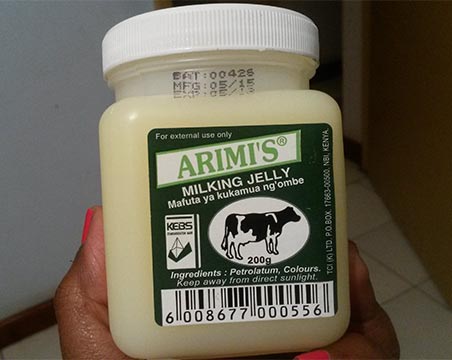
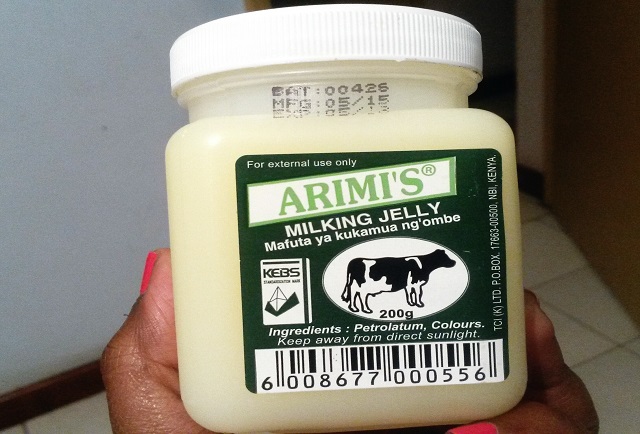
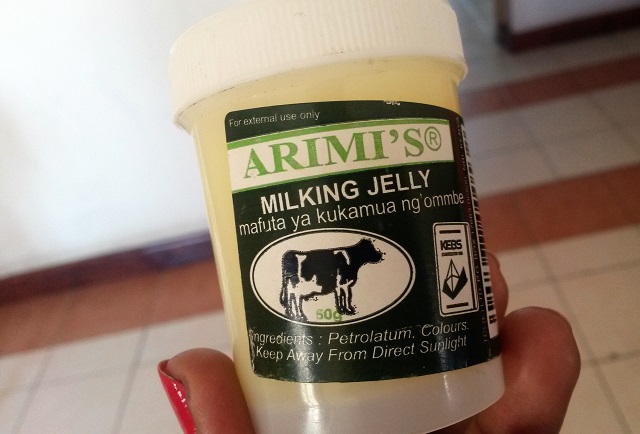
Yesterday, my friend Yvonne passed by me and at that particular time, I happened to be oiling my hands after having just washed them. The oil was Arimi’s. As in ilemafuta ya kukamua ng’ombe. Milking jelly.
So this my friend Yvonne was rather amused that even I, Maryanne, uses oil meant for cows on my skin. She laughed. I laughed too. I laughed because this Arimi’s phenomenon makes me wonder about myself. I wonder because I’m not a cow but yet I use a product meant for a cow’s udders.
So how did I get here?
A fellow mum got me here.
When my son was just a few months old, he got some nappy rash and me being the over-concerned mum, I began dashing to a paediatrician to consult about the nappy rash (first time mum).
But just as I was about to, a friend of mine -a fellow mum stopped me right in my tracks and told me noooooo mama, I have the solution for that rash. And she dug into her bag and unleashed Arimi’s – ile mafuta ya kukamua ng’ombe.
“This worked on my baby’s nappy rash and I’m sure it will sort yours out too,” she confidently assured me.
So I tried out Arimi’s on the nappy rash. And the rash disappeared. Just like that. Needless to say that since then, I have been an Arimi’s convert. In fact, I moved on from using it for nappy rash to use on myself. I use it for my hands, my feet and sometimes on my lips too. *hiding*.
But don’t ever tell a doctor you use Arimi’s on yourself. Most don’t advocate for it. A dermatologist once asked me if I’m a cow hence my use of Arimi’s. She then went ahead to lecture me on it, telling me that that particular jelly is specifically designed for a cow’s udder and not human skin.
But you know what the interesting thing is? I actually agreed with this dermatologist. I agree with her and all other people who share similar sentiments. But yet, I keep going to the supermarket and happily dropping Arimi’s inside my shopping cart. And I’m not even a cow. Sigh.
Thing is, me when I find something good, I stick to it. Arimi’s is something good. I have stuck to it. Happily.
But I also get comforted by the many other Kenyan mums who I meet and who swear by Arimi’s. And yes, we all know that it is mafuta ya kukamua ng’ombe….but yet we are not cows. I don’t understand. Surely, who will conduct a study on us on why we do this? It remains a mystery.
What I do know for a fact is that we mothers tend to take word of mouth referrals very seriously. If something has worked one mum or her baby, I will be sure to give it a try. Because of her strong sentiments about the product, I can tell you for sure that I will select that product over the one that is highly advertised on television, newspapers or billboards. I will be more than eager to try out what another mum has used and has worked for her. I will go out and buy it, even if it is a product meant for cows.
And by the way, there is no chance for confusion when it comes to Arimi’s, because there is a very clear picture of a cow on the container, just incase you overlooked the part that says mafuta ya kukamua ng’ombe, or ‘milking jelly’. It cannot get more clear than that.
So let me ask you, are you also an Arimi’s mum? Why do you use it yet you are not a cow? I would like to know your reasons.
You may also want to watch Catherine’s story below:
Mummy Talesis a platform dedicated to empowering its readers on different aspects of womanhood and motherhood. Read more motherhood experiences of Kenyan momshere. Connect with Mummy Tales on: FACEBOOK lYOU TUBE l INSTAGRAM l TWITTER
Challenges in life are inevitable. But it’s what we do with these experiences that counts. Taita Taveta MP Joyce Wanjala Lay became a teenage mother, but lost her son at just two years old. She then went on to get married later on, but then discovered she had trouble conceiving. Hers has been a journey with infertility which she is not shy of publicly acknowledging. In this video by Merck More than a Mother, Joyce engages in a noble effort, advocating for IVF which will undoubtedly go a long way in helping thousands of Kenyan women become mothers someday. I have re-shared the original video.
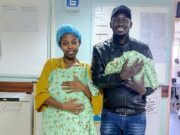
A few weeks ago, I was in Kawangware to meet a new couple – the Mogambi’s. This couple had recently become new parents and what particularly struck me most -and what actually made me want to meet them, was how jovial the man was about being a new dad. His excitement was so infectious I just had to meet him and share his story.
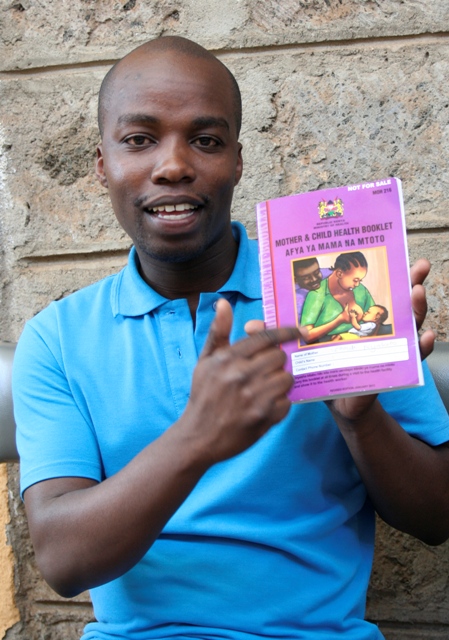
Eric Mogambi, 24, could not stop talking about the birth process of his newborn son Ray Ibrahim, and the fact that he witnessed the delivery. He recalls the moment:
“I was with my wife throughout the labour — which lasted close to 10 hours. Even though it was a long and anxious wait, it was one that I gladly endured. The highlight was when I welcomed my son into the world, being the first person to hold him and even cutting the umbilical cord. It was such a joyous moment,” a proud Mogambi says.
But Mogambi’s close involvement in the life of his son did not start that day.
“When my wife missed her periods and began complaining of nausea, I quickly rushed to the chemist and bought a pregnancy test kit. We were both elated as we watched the test kit yield positive results,” he remembers.
Mogambi then accompanied his wife for her first antenatal visit and continued to do so throughout her pregnancy. This they did at a local private health center called Fremo, located in their Kawangware neighbourhood in Nairobi.
Aside from accompanying his wife for prenatal checkups, Mogambi would also assist her with household chores as the pregnancy advanced.
“I would cook, clean the house and do the laundry when I returned home from work. Since she particularly craved ugali and green vegetables, I would prepare them just the way she liked them,” says the security officer.
So it was therefore only natural that when she went into labour, Mogambi was by her side as they ushered their son into the world.
Interestingly, while growing up in a rural village in Birongo, Kisii county, Mogambi always knew that matters to do with reproductive health were solely a woman’s responsibility. In a predominantly male society, Mogambi had never heard of a man who involved himself in matters of pregnancy and childbirth. So what happened with him?
“When I came to Nairobi, I got work as a security officer at a health centre. It was there that I saw men coming with their wives to the clinic. I found it very odd at first and assumed the men were weaklings. But the more I enquired, the more I discovered that what they did was actually a good thing. They truly loved their wives and were not afraid to show it. It did not make them less of men and I concluded that I would do the same when my time came,” he says.
And indeed, when his wife fell pregnant, Mogambi did exactly that, offering unwavering support to his wife. But it was not only his wife who benefited from the experience. He too was gaining from it.
“During the prenatal checkups, the nurses would give us information about the pregnancy, labour and birth. I learnt new things every time, with each session helping us both psychologically prepare for the labour and birth,” he says.
In addition, the health centre would hold open days for pregnant women each quarter, sessions that Mogambi and his wife attended without fail. It is there at the couple would gain more information about breastfeeding, immunization and family planning options after the birth of the baby. Information that came in handy after their son’s birth.
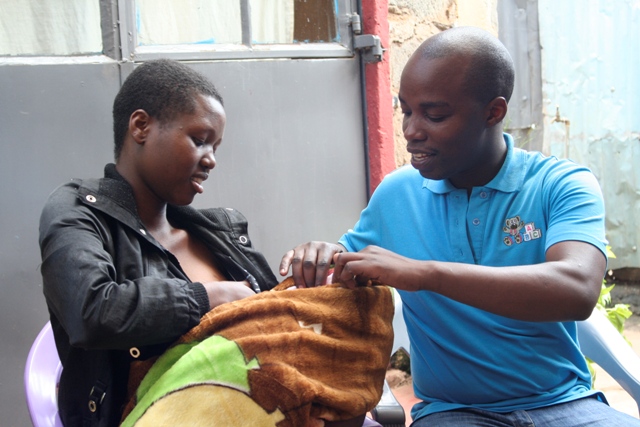
“My wife initially struggled to breastfeed as she could not get the latching technique correct. But I would patiently sit with her and help her correctly position both she and the baby for a comfortable nursing experience,” Mogambi says.
Since his son’s birth in May, Mogambi has been encouraging other men to be more involved in the pregnancy and birth experience of their children.
“Supporting my wife in this way makes me feel proud. It is very fulfilling and I believe it is the most responsible thing that a man can do for his family” he says.
His wife Emma expresses her joy at her husband’s hands-on approach to parenting.
“Because of his continued support, I have always felt relaxed and confident. During my pregnancy, I never worried about anything because he was always there with me. Even during labour when the pains were excruciating, it comforted me so much when he would hold my hand, rub my back and encourage me to be strong. I am lucky to have a man like him,” she chuckles.
So this thing of every visitor being asked to wash their hands before handling a newborn, what do you think of it? Should every visitor who comes to see your newborn wash their hands? The rationale being that at that tender age, babies’ immune systems are not as strong hence leaving them vulnerable to infections.
I know of this new mom who recently hosted her mother-in-law (MIL). The senior woman had paid a visit, more specifically to see her new grandson. It had been a tiresome eight-hour road trip from the village for the elderly lady who was overly excited at meeting the newborn. It is indeed such a joy and blessing to be able to hold one’s own grandchild. I pray that I will be able to do some someday. Anyway, as soon as this MIL entered her daughter-in-law’s house, she happily and lovingly stretched out her arms to hold the baby who was comfortably nesting in his mother’s arms.
But her enthusiasm was abruptly cut short by her daughter-in-law’s reaction.
“Mother, if you could please wash your hands first,” the young mother said as she slightly turned to the side, clinging on to her little boy.
The elderly woman stepped back in shock. How dare the young woman accuse her of being filthy! She did not waste time in expressing her disappointment.
“Child, I have lived many years and held many babies, but no mother has ever ordered me to wash my hands before holding their baby. I can assure you that you are the first!” retorted the visibly offended woman.
But the new mom still insisted. The old lady had to wash her hands before holding her newborn. She was not going to compromise on that. Nope, not at all. But despite her attempts at apologizing while yet emphasizing the importance of washing hands before handling a newborn, her MIL remained terribly upset. She would not even listen to her own son who intervened and tried to explain that it was a mandatory routine in their house that all visitors to wash their hands with soap before holding their baby. The damage had already been done. It was downhill after that.
Eventually, the elderly lady did wash her hands. But she left their house the following day, unexpectedly cutting short her intended week-long visit at her son’s place. She did not want to be hosted in a house where she felt unwelcome because of the germs she had ‘imported’ from the village.
But this couple is not alone. The issue of requesting all visitors to wash their hands before holding the baby is one that is stirring up conflict in many homes. The truth is that many people’s hands are not always clean as some don’t wash them after visiting the toilet, some come straight from the market, some from smoking, some from handling money, while some have just come from blowing their nose into a mucus-soaked handkerchief -and yet they all want to hold, touch your baby and smother them with kisses.
Nowadays, it is almost normal to be directed to a sink to wash your hands as soon as you enter the house, or alternatively be offered some hand sanitiser as you get into the home. But we are soon discovering that what is normal may be interpreted as rude and disrespectful by other people, as is the case above.
So what are young parents who are keen on following this trend supposed to do? How do you ask relatives, especially older ones, to wash their hands with soap before touching your baby without coming off as rude? This, especially in Africa where the elderly are revered and treated with utmost respect? Should you make some exemptions, such as for MIL’s? Or is this just another case of ‘modern’ parents taking things too seriously?
What about you -did you require that all visitors wash their hands before they held your newborn? Did all visitors comply, or did you experience some trouble like this new mom? See comments below and add your voice too.