How do you fold your t-shirts? For the longest time ever, I’ve always folded them one way: I first fold the right side (vertically) then bring it to the middle, then fold the left side (vertically) then bring it to the middle. I then I fold the t-shirt in half. And that’s it. I hope I’ve made sense?
Now, I’ve just come across other ways of doing so, and which I will definitely try out. Have a look at this video below by Tulip, and see the different ways that you can fold your tee’s. Numbers 3 (Japanese fold) and 4 (ranger roll) are the one’s I’ve never tried out. And they look interesting! They are on my to-do-list.
So have you learnt a new way to fold your t-shirt as well? You can follow Tulip for more very helpful household tips.
By the way, this blog (Mummy Tales) has been nominated for a 2017 BAKE awards -in the Best Women and Girls Empowerment category. I will appreciate your support. Kindly click onthis linkto cast your vote (number 21 .a). Thank you for your time.
Why don’t women in abusive relationships and marriages just leave? Why is it so hard for a woman to pack her things and leave a man who causes her so much torment? A man who batters her senseless? Verbally insults her? A man who has no respect for her? Why does she stay?
These are some of the questions that many of us ask when we learn about a friend, relative or colleague in an abusive relationship. I am currently running a series of articles of women sharing –in their own words –their own domestic violence experiences which offer insights and answers to some of these questions that we ask. I started off by sharing Valerie’s experience, who talks about how she endured years of abuse by a husband who would become sexually aroused after beating her up. Read that story here: “Why an Educated, Intelligent Woman Like me Stayed in an Abusive Marriage”
Today, I share the story of Linah, who similarly endured years of abuse by a man she loved.
“When I met my ex, he seemed like a nice and polite man, until I moved in with him a few months later. That was when I began to see the other side of him. I vividly remember the first day he got violent with me. We were in the house and disagreed on something. Next thing I knew, he was all over me, beating me up. In one sentence, he said I had made him angry and in the next sentence, he said he loved me. Then he apologized, saying how sorry he was for beating me.
After that first episode, the beatings became frequent. He would beat me for any reason that entered his head. I particularly remember whenever we had guests at our house, I would always start crying when it was time for them to leave. This is because I knew what would follow next. Just as soon as they were gone, he would start asking me why I had put on ‘that dress’, ‘that blouse’ or ‘that trouser’, while accusing me of flirting with the guests. Then the kicks and blows would come fast, followed by the words: ‘I love you’, ‘I’m jealous’, and ‘You make me angry, that is why I do this’.”
The interesting thing is that everyone who met him thought he was such a gentleman! There was no way you would ever pick him out as an abuser. He was always smiling, calm, gentle and helpful, leaving himself impressionable on anyone who met him.
At that time, I was working two jobs, one of which required me to be on duty at night. He would come to my workplace and park his car in a corner and spy on me –checking if anyone would come see me there. At times he would call me to go outside just so that I could tell him goodnight. He said he did all that because he loved me. Sometimes I concluded it was my fault when he said I made him angry because I really thought his love for me was genuine.
By the way, he would also take my paycheck at the end of the month and monitor my bank account, keeping track of all the transactions I made. My boss knew what was happening. Sometimes when I would walk into the office, she would tell me she was aware that I was being abused, but that she couldn’t do anything until I myself reached out for help. But I denied everything. I couldn’t admit to anyone that I was a victim of domestic violence. It was too embarrassing.
But it wasn’t only my boss who suspected it. Some friends tried to talk to me out of that relationship, but I was already deeply traumatized by years of verbal, physical, emotional, financial and sexual violence. I endured the abuse for three agonizing years because I had gradually come to believe that I was not good enough and the more I got in deep, the harder it became to think otherwise.
I got my freedom one night when we went out to a club. When a long-time friend said hello to me, my boyfriend got so worked up! He pulled me outside and began beating me. He even tried to choke me! It was so bad that fellow revelers called the police -who arrived just in time to catch him in the act. By that time my face was bruised, bleeding and swollen.
Hello friends, hope your mid-week is coming along well. Following a number of online posts I have read of women in abusive relationships, I have seen it necessary to run a series of articles telling the stories of women who have lived through intimate partner violence, in the hope that their stories can help another woman. Today, I share Valerie’s story, and the lessons that we can pick from it.
When growing up, Valerie M. had big plans for her future. She would be married by 27 years and at 30 years, she would retire from work to travel around the world with her husband and their two children. Valerie’s parents gave her a solid foundation and set her on the path to a great future. She attended Loreto Msongari School for her primary education before moving to Braeside High School for her O’ levels. At the age of 20 years, Valerie had graduated from the United States International University (USIU) with a degree in hotel and restaurant management. She was intelligent, bright, smart, and was confident that by 30 years, she would have achieved it all.
But today, Valerie is a 32-year-old single mother, unemployed and separated from her husband. Life did not pan out exactly as she had planned. So what happened?
“It all began when I left Kenya for Malaysia to study for my MBA degree in 2008. In January 2009, I met my prince charming –a Nigerian man through mutual friends. We hit it off immediately. Four months later, we were engaged and in August 2009, we both came to Kenya where he met my family. The wedding, to be held in Nigeria, was planned for December that year.
Two weeks before our wedding, my mother, aunts, uncles and close relatives traveled to Nigeria, as it was important for them to familiarize themselves with my future family. But things started going wrong soon after. My family said there was ‘something wrong’ with my fiancé and his family. Their future in-laws had given them a cold reception, and had completely ignored them for the two weeks they were there. My relatives further observed that my fiancé and his family were treating me more like a maid than a wife-to-be. Their strong instincts told them he wasn’t the man for me. But I ignored them.
Determined to stop our nuptials, just two days to the wedding, my family deceived me and before I knew what was happening, I was on a plane back to Nairobi! This made me very angry. But I worked out a plan. Nothing was going to stop me from marrying my love.
Immediately I arrived in Nairobi, I secretly got in touch with my fiancé and asked him to send me a ticket back to Nigeria. In five days, I was back in Nigeria without my family’s knowledge. Two weeks later, we held our wedding. Only six people witnessed our nuptials –me, my husband, his two brothers, a sister-in-law and the officiating pastor. I admit that I was however sad that none of my family or friends was present for my big day, especially my mother. But I had made my choice.
My new husband and I then returned to Malaysia where I continued with my studies. I wholeheartedly embraced my role as a wife, determined to make my marriage work. My parents had divorced when I was young and I didn’t want the same thing to happen to me so I purposed to make my marriage work, no matter what.
But my marriage didn’t start out as I expected. No matter how hard I tried, nothing pleased my husband. I am a good cook but yet my husband always complained about the meals I prepared. I kept the house clean and neat, but he always said it was untidy. I found myself constantly apologizing for one thing or another. Because I was determined to be a good wife, I stopped going to school so that I could focus on my marriage and work on everything I was doing that seemed to upset my husband.
Meanwhile, he had asked me to disclose to him passwords to all my emails, social media accounts, PIN numbers and bank accounts. Any money I made, he asked me to surrender to him, which I did. I didn’t mind doing so because I thought I was being an obedient wife. I didn’t want to do anything that would look rebellious to him. Interestingly, he never shared any details of his accounts or passwords with me.
For the first six months of my marriage, I never communicated with any member of my family. Due to the acrimonious manner they had left Nigeria, my husband forbade me from communicating with them because of their ‘bad behaviour’. He told me to instead focus on him and our marriage.
But as the months wore on, I began feeling trapped. My husband was always unhappy with me. No matter how hard I tried, I could never please him. We were in Malaysia and I had no friends or family around me. I felt isolated. It was also around the time I fell pregnant. One day, I decided to call my younger brother and as we talked, my husband walked into the room. He suddenly descended on me with kicks and blows, accusing me of cheating on him. I was four months pregnant then. He beat me up like a dog.
I’m in a number of Facebook groups that have thousands of Kenyan moms. And I take note that there are many women suffering abuse from their spouses and boyfriends, in silence. Interestingly, more and more women are beginning to talk about their suffering. They are coming out to do so, even though most are doing so under pseudo’s. Which is fine because this is significant. It is important to say something. It is a first step. A first step to something.
These are beautiful women tormented in marriages and in ‘complicated relationships’. They are staying put because of ‘what society will say’. Staying put ‘because of the kids’. Staying put ‘because he’s an amazing dad’. Staying put ‘because I’ve invested too much work in this marriage to just walk out’. Staying put ‘because I wouldn’t know where to start (he provides everything). Staying put ‘because when he doesn’t drink alcohol he’s a very good man’. Staying put ‘because I have my flaws and no one else can love me the way he does…
I know a number of women in these situations. And I’m sure you also know one or two or three women suffering an abusive relationship. And the question we always ask is: “Why don’t you just leave?” When we learn of another woman suffering in an abusive relationship, we ask: “Why doesn’t she just leave?” And when she dies we ask, “Why didn’t she just leave?”
On the blog next week, I’ll focus on the topic of intimate partner violence. And why she doesn’t just leave. Why she stays. #WhySheStays
If you have an intimate partner violence experience to share (you can remain anonymous), inbox me on Facebook or email me on maryanne@mummytales.com with your story.
If you are in an organization that addresses the issue of gender-based violence, email me on maryanne@mummytales.com with the organization’s details and how those suffering abuse can reach out for help.
Purity Musalia, 30, is a Procurement Officer and a mother of one. Today, she shares with us her journey as a first-time mom, including how she ended up becoming a mother on the same day she was supposed to attend her own graduation ceremony at Kenyatta University. Purity spoke to Mummy Tales writer SYLVIA WAKHISI.
“When I discovered I was pregnant, I remember being so excited but yet very anxious at the same time. With my period late, I had decided to buy a home testing kit and when I tested, two lines appeared, though one was faint. I wasn’t sure if I was pregnant or not, so I took a photo of the results and sent it to my friend, a gynaecologist asking him: “should I be excited?” His reply was: “Congratulations madam!”
Very happy but still somewhat unsure, I rushed to a nearby clinic to do the test again -just to confirm that I was indeed pregnant. And that marked the beginning of my motherhood journey. The day I found out I was pregnant was actually on my birthday and to date, it’s the best birthday gift I have ever received in my life!
Purity during her pregnancy.
Then came the morning sickness, which I actually discovered doesn’t necessarily mean that you feel sick in the morning. There are days when I would feel sick all day and even into the night. I also had so much saliva in my mouth for some strange reason! Luckily my mom had warned me never to spit in public during pregnancy, so I refrained from doing so. What I would do was always carry some lemon and salt in my handbag. I would shamelessly lick the lemon or salt as I went about my business in town, and this helped control my nausea. Expectant women can get away with anything, right?
Then there were the cravings! Unfortunately, I mostly craved junk food –especially pizzas and burgers. I couldn’t survive a day without them. No wonder I gained more than 15kgs during pregnancy. Oh and I also craved lots of sugarcane! Chilled sugarcane. If only my fridge could speak it could tell the story. Other than that I must confess that my pregnancy was smooth. The only thing I had to learn to manage was my hectic life as a working-student-expectant mom. I somehow managed though.
On 17 December 2015, I had planned my day quite well: I was to first go for my clinic appointment then dash to Kenyatta University for my graduation rehearsal. After that, I was to go to the salon to do my hair in readiness for my graduation the following day. However, things didn’t pan out that way…
Do you know that morning sickness can be so severe, to the extent that one can be hospitalized? This is the story of Joan Mwaura, whose two pregnancies were plagued with really bad nausea and vomiting, a condition also known as Hyperemesis Gravidarum. This is her story:
“No words can express the overwhelming emotions when the doctor confirmed that my pregnancy test result was positive. I was 4 weeks pregnant! My husband and I were so excited. How would our baby look like? Boy or girl? I was over the moon and couldn’t wait to share this wonderful news with our parents and close friends.
Early the next day, I woke up feeling nauseous and I was vomiting. I reckoned it was morning sickness and knew I’d be able to handle it. I left for work. However, the frequency of vomiting increased and I even fainted on my way to work. In the days that followed, the nausea and vomiting feeling became quite unbearable and uncomfortable especially while at work and when using public transport.
I saw a doctor who gave me drugs, but they didn’t seem to help much. Nothing would get past my lips -not even water. In addition, everything and everyone around me smelled horrible, which made me vomit even more. I was left very dehydrated and completely stressed out.
In my 5th week of pregnancy, I was admitted in hospital. Initially the nurses were unsympathetic but this changed as they took time to understand that my case was genuine. The intravenous drips they put me on helped a bit, even though I was still unable to eat anything as I would feel so repulsed and..you guessed right -vomit. My days in the hospital were agonizing, with the days being so long and nights hard to bear. The only thing that kept me going was listening to the foetal doppler where I would hear my baby’s heartbeat. That’s what kept me going.
By my 7th week of pregnancy, I could barely stand or make it to the bathroom without help. During my hospital admission, I was ‘chauffeured’ around in a wheelchair until I became friends with the guards, cateress, and even the doctors. Actually one day we jokingly asked the manager to allow us to be paying rent rather than daily bed charges.
As the pregnancy progressed, my health became worse and no medical remedy was working. I was sick so often -in and out of hospital and ended up losing nearly half my weight. At 16 weeks pregnant, I was 39kgs, my veins had collapsed and the drips that would feed me were now connected to the veins in my feet, which was a painful experience. The doctors, realizing my system and organs were shutting down, suggested terminating the pregnancy on medical grounds because the pregnancy had become life-threatening.
While they were still considering this, by God’s intervention, another doctor in the team instead recommended expensive steroids that miraculously helped me to eat. They were also able to re-hydrate me. That was quite a relief! But this was not to last long though, as I would still continue to be admitted many times after that throughout the pregnancy. I was on bed rest for the better part of the pregnancy as any activity would trigger my severe vomiting.
Having embraced a lot of pain during the pregnancy, I was actually not afraid of labour. The only uncertainty was if the baby would be born via Caesarean section or vaginally. Thankfully though, my labour lasted for a few hours and our long-awaited baby Tashley was born on 27 March 2014. When I saw her, I felt the heavy and dark blanket of the pain and agony I had endured throughout the pregnancy go away.
Joan’s daughters.
That experience made me aware of the condition that I had – Hyperemesis Gravidarum. Before my pregnancy, I had never heard of it. I got to learn that it’s an extremely severe form of morning sickness that I had become a victim of.
Well, in January 2015, we realized that we were pregnant again! Tashley was barely 10 months old then! But if I thought the first pregnancy experience with severe morning sickness was bad, the second one was so much worse. In total, I spent about 3 months hospitalized cumulatively. At some point the doctors even recommended termination of the pregnancy just like the first time, but thankfully, it didn’t happen.
Being sick and admitted in hospital throughout the pregnancy made me miss some of Tashley’s milestones. I wasn’t there when she made her first steps; a major milestone that every mother desires to witness. However, amidst all the struggles, our second daughter Wema was born on 21 August 2015 at 36 weeks.
I thank God for my husband who offered his unwavering emotional, spiritual and material support. He took good care of me and was always praying for me. Hyperemesis Gravidarum is a very dreadful condition that I would not wish even on my worst enemy. There are a few lessons I learnt during those moments;
Spiritual and emotional support is extremely key. Hyperemesis Gravidarum can force you to lose the will to live easily.
Hyperemesis Gravidarum treatment can be quite expensive. We were rendered broke. Insurance’s maternity covers have very low limits. Financial support does really help.
Due to its rarity, many people have a lot of misconception and superstitions. A mother struggling with this condition needs to be careful about the options given to her.
Today, and every other day that I look at my daughters, I reflect on the incredible opportunity and joy that being a mother is, amidst the tons of challenges it has taken me to be one. My experience has also made me aware of the heavy costs that some women have to pay, in their journey to motherhood. I share my story today to encourage any mother currently struggling with this condition, to be strong and to hold on to their faith in God. I also hope to educate any woman who plans to get pregnant in the future, just so that she can be aware about Hyperemesis Gravidarum, to know that she can seek help about it, and that just like me, she too can have a positive story to share at the end of it all.”
Thank you Joan for sharing your encouraging story.
Are you a Hyperemesis Gravidarum survivor? Would you like to share your story? Email me on maryanne@mummytales.com and I’ll be in touch with you.
Mummy Talesby Maryanne W. Waweru is a platform dedicated to empowering its readers on different aspects of womanhood and motherhood. Read more motherhood experiences of Kenyan momshere. Connect with Mummy Tales on: FACEBOOK lYOU TUBE l TWITTER
This is the story of one Kenyan mother who survived preeclampsia (high blood pressure in pregnancy) but unfortunately, lost her baby.
My name is Jane Minoo. I am 29 years old and a Public Relations practitioner, based in Nairobi. In 2014, I got pregnant and being a first-time mom, the first thing I thought to do was to get a good hospital or gynecologist. My husband and I settled for the one who had a private clinic in town, and who we believed was the best (or so we thought).
The first three months of my pregnancy were smooth. I regularly saw my gynaecologist who assured me all was well.
However, things started changing in the fourth month. I’d wake up in the morning with my face and feet considerably swollen. Interestingly, by 10am, the swelling would have gone away. When I mentioned this to my doctor, he checked me and assured me that I was fine.
I admit though that other issues were troubling me at the same time. I was a 4th year university student, and my job involved lots of travel. Balancing the two was not easy. In addition, my relationship with my in-laws at that time was not the best, plus there was also my husband to take care of. Add on to that a pregnancy that was becoming difficult. I would tell God to remember me because I felt I was losing it. It was tough.
Meanwhile, the swelling persisted, particularly in my feet. One day, my sister, a nurse, told me to ask my doctor if all was really well. She had become very concerned. I did so, and as usual he said I was fine. My colleagues also had their misgivings, telling me it was too early in the pregnancy to be experiencing that amount of swelling but I would assure them I was fine because my doctor had said so. I added a lot of weight due to the swelling, and my blood pressure also went up.
My husband and I however ignored all the concerns from family and friends simply because our gynaecologist said I was okay. We didn’t know who to listen to so we chose to stick to what he said.
One day, at 26 weeks pregnant, I woke up as usual with swelling on my feet and face. My husband noticed that the swelling had increased, but we brushed it aside knowing that it would be gone by 10am. We then both left for work. I lived far from work and had to connect three vehicles to get there. I remember being so tired with a severe headache that had been disturbing me for several days, but I nevertheless had to get to work (I was on contract basis).
When I got to the bus stop, I noticed people (especially women) were staring at me. I felt weird. I kept checking my face on my wallet mirror and realized that the swelling had not gone down yet. I became alarmed. I experienced the stares and gazes from strangers all through my commute to work.
When I got to the office, the receptionist saw me and shrieked, asking: “Jane….is this you? Are you okay?” Her (very shocked) reaction attracted everyone’s attention and they all looked at me. I started crying, as colleagues came to comfort me. They suggested that I see a doctor immediately.
I requested for some days off from my boss, which she gave without hesitation. At a nearby hospital, my blood pressure reading was high (210/110), with the doctor advising that I had to be admitted immediately. But I told her that I needed to talk to my gynaecologist first, which I did. She called my gynaecologist and all he said to her was: “give her something and let her go home. I will see her tomorrow”. He then switched off his phone.
Jane Minoo, a preeclampsia survivor.
I called my husband, and we agreed that I take the medication as per the gynaecologist’s directive and go home. As the hospital doctor gave me the prescribed medication, she kept insisting that I shouldn’t leave the hospital. She nevertheless requested that once I got near home, I pass by a chemist first to get my blood pressured checked again, and if it was still high, I return to the hospital immediately. I agreed and left the hospital.
The journey home was not easy. The headache was unbearable. I followed the doctor’s instructions and together with my husband, we got my pressure reading at a chemist near home. The pharmacist was not pleased with the results. My blood pressure was still very high. He urged me to see a doctor. We went home and I sat on the couch as my husband prepared something for us to eat.
Suddenly, I felt like I was on fire. I started vomiting nonstop. My head was burning. We got a taxi and returned to the hospital. I was admitted, but had to wait for the doctor on call who apparently was in another hospital at that time. Meanwhile, I was put on a drip which reduced the pain I was feeling in my stomach. We waited for six hours before he finally showed up. By that time, my head was exploding.
The doctor checked on me and requested for a scan the following morning, which showed that baby was okay. Following the scan, I didn’t see the doctor again until 9pm at night, where he instructed I continue with the medication. This was the second day in the hospital and my head was still throbbing. My headache would just not go away. I remember my husband would place a wet “kitambaa” on my forehead and it would dry up so fast. Family, friends, workmates kept wondering why I wasn’t being attended to well and at some point, my family suggested I be transferred to another hospital, but the doctor, who as usual came at 9pm, turned down their request.
One week went by. I was sitting for my final exams at the same time, and so I would leave the hospital, do my exams and return to the hospital. The doctor had instructed the hospital to give me the permission to do so.
One Saturday, I woke up feeling much better. I was sitting for the final paper that morning so I left as usual. I was upbeat, and we were hopeful that I’d be discharged that day. I finished my exams and got back to the hospital at around noon. The nurses came to listen to the baby’s heartbeat but they couldn’t hear it. I was sent for a scan.
During the scan, my husband and I both remember hearing baby’s heartbeat. But as we returned to the ward, something felt amiss. We kept asking for the results, but the nurses were very evasive. I became very uneasy and started suspecting that something was wrong. My fears were confirmed when at 6pm, my husband and I were called to a room and told that our baby’s heartbeat could not be detected, and that my blood pressure had gone down. Things weren’t looking good.
Sadly, they informed us that our baby was no more. Meanwhile, the doctor came in as usual at 9pm and said that the loss was expected. That survival was either for me or the baby.
It was a hard time for us, but I was yet to hear the worst. I was told I had to deliver my dead baby. Imagine my mental agony.
I was induced that night but nothing happened. I was induced again at noon the following day, and I labored till midnight. I just remember doing one push and the baby was out. I didn’t get the chance to see my daughter because I fainted after the push. My husband saw her though. We left her in the hospital and went home the following day, empty handed. Preeclampsia had taken the life of our baby. We were devastated.
The healing process was not easy. I could see the many questions on our neighbor’s faces and other people who knew I was pregnant.
The first three days were particularly unbearable. I would wake up, sit on the couch and cry the whole day. No food. No talking. Nothing.
I couldn’t stand seeing my phone ring. I blamed everyone for my loss. I blamed my gynaecologist for being ignorant and not paying attention to my blood pressure. I blamed my boss for not giving me days off, I blamed husband for not understanding what I was going through, I blamed everyone and everything around me. I wanted to be left alone. I just wanted to die. My husband tried to help me, but at some point he had to call my family to come and pick me because he didn’t know what else he could do to assist.
A call I received from my mother one week later changed everything. She told me to wake up from that couch, take my Bible and read it. She said that I was too young to give up on life. I heard her, and started opening up to my husband and pouring my heart out. That began my healing process.
After three months, I conceived again and gave birth to our daughter in December 2015 -the same time I had lost our first daughter. I gave her the same name I had given our first daughter -Princess Sabrina Akinyi. Everything was smooth during her pregnancy and I didn’t experience any blood pressure issues. But I drew closer to God and prayed every day.
Princess Sabrina Akinyi.
I am now pregnant again -17 weeks. So far so good and I am praying for the best. To God be the Glory.
The reason I’m sharing my story is to encourage other women and their partners to have hope. I’d also like to advise pregnant women to stay away from stress, and even more importantly, they should not ignore any unusual swelling or headaches they have. If people around you are worried about something regarding your pregnancy, don’t ignore them. If possible, seek a second opinion from a different doctor.
My purpose is also to create awareness on preeclampsia because while it appears to be common, not many women know about it. When I lost my baby, I met other women in the hospital who had lost babies through preeclampsia but no one was talking about it.” -END
Do you have any feedback on this story? You may comment down below.
Mummy Talesby Maryanne W. Waweru is a platform dedicated to empowering its readers on different aspects of womanhood and motherhood. Read more motherhood experiences of Kenyan momshere. Connect with Mummy Tales on: FACEBOOK lYOU TUBE l INSTAGRAM l TWITTER
Naomi Kago, 25, is a wife and a mother of two. She is a journalist based in Nakuru County, while her husband, a banker, works in Nairobi. Mummy Tales writer SYLVIA WAKHISI had a chat with this young mom about her motherhood experiences.
“When I discovered I was pregnant with my first child at the age of 23 years, I became terrified. The news totally caught me by surprise. I was young, and wondered if I was really ready for the role of ‘mother’. I was confused, anxious, and repeatedly asked myself: “Would I really hack motherhood at that age?”
Naomi Kago
My fears were compounded by the fact that my husband was working far from me, and I worried over how I would handle the pregnancy without him around. I also worried about how I’d take care of our child by myself -bearing in mind the nature of my journalist job. I contemplated resigning from my job so that I could fully concentrate on raising my child, but on second thoughts I figured that maybe I could balance the two. I remember being so confused about everything but somehow, I hoped things would work out.
Foetal Distress
Two weeks to my due date, I started experiencing labor pains, which went on for 12 hours. At some point, the doctor told me that my baby was in distress, and that I needed to undergo a caesarean section since it had now become an emergency.
Foetal distress refers to signs before and during childbirth indicating that the fetus is not well. It typically occurs when the fetus has not been receiving enough oxygen. Fetal distress may occur when the pregnancy lasts too long or when complications of pregnancy or labor occur (source).
I didn’t know what ‘fetal distress’ meant, and I actually thought it was something that every pregnant woman goes through. I nevertheless had a successful caesarean section, with my son weighing 3.3 kgs at birth. However, the doctor told me that my newborn had to be placed in the incubator because he wanted to be sure of the baby’s health and rule out any danger.
Liam Joseph
My son Liam Joseph is now 1 year and six months and has turned out into a fine, healthy boy. I went back to work when he was only one and a half months and I thank God for the far we have both come.
I got Pregnant Soon After
A few months later Liam was born, I conceived again, and this time round, I found things to be somewhat different. I was more relaxed and knew how to handle the pregnancy, following my experience with my firstborn. But I was still a bit scared because I knew that I would give birth through a caesarean section again. The thought of undergoing surgery is never easy, but thankfully all went on well. My daughter Milan Shanice is now two months old.
Milan Shanice
Raising my two babies who are closely spaced is an amazing experience. To see them grow healthy each day is a blessing and a favor from God, which I don’t take for granted. Motherhood teaches you a lot of things and as each day passes by, I grow very fond of them. I must say that becoming a mom in your early 20s can be a bit hectic but with the right support system, things become much easier to handle. If you know of a young mother around you, give them all the support they need, and keep encouraging them.
Dedicated Husband and Father
I am thankful for the great support system that I have around me –most importantly my husband Brighton Alata. He visits us every weekend and this is when we get to spend time with each other as a family. He is a great father and adores his children.
Naomi’s husband, Brighton Alata who has been a great source of support for her.
I also thank God for family and friends for the support they give us in one way or the other. I must admit that balancing work and family can at times be hectic. There are times when I’ve been forced to cancel reporting assignments that would have taken me far from home. Sometimes I’ve also had to interrupt work and go home earlier than I was supposed to. But so far so good. I’m hacking it :). Balancing work and motherhood is indeed possible.
My encouragement to all moms is, never ever regret having that baby at whatever time and under whatever circumstance. You never know what the future holds for him or her.”
Mummy Talesis a blog dedicated to empowering its readers on different aspects of maternal and newborn health, as well as various issues surrounding motherhood and women. Read more motherhood experiences of Kenyanmomshere. Follow Mummy Tales on:FACEBOOKl INSTAGRAMl TWITTER
At approximately 4:30 pm of Friday the 27th of January 2017, my wife, my best friend, the love of my life, Dr. Eunice Songa-Saraceno, died like a hero. Aged 34, she died young and beautiful, like the heroes of the ancient myths; willing to change her Country she died fighting inequality and injustice, like only true heroes do.” That is how Eunice’s husband, Dr. Luca Saraceno introduces his very emotional memorial tribute to his wife.
I remember reading Dr. Eunice’s thought-provoking blog post regarding the problem that is Kenya’s middle class. She was basically describing me. And most likely you.
Then she died three days later.
Dr. Eunice Songa-Saraceno, formerly of Gertrude’s Garden Children’s Hospital and most recently Kenyatta National Hospital (KNH) used her voice and platform to fight for justice. She leaves behind her husband and daughter aged just one year and ten months. In her blog post, she wrote:
….”We the lucky few in this country, who don’t earn anywhere near a dollar a day, who have running water in our 3 bedroom apartments, who can line up for terrific Tuesdays and fill our bellies with pizza, we have become consumed by distractions. We are distracted by the authenticity of Kim K’s derriere, by the attention seeking empty “debes” on Nairobi Dairies, with odds and bets of Sportpesa, with the ever juicy udakuon Kilimani Mums and with hash-tagging our picture perfect lives on Instagram.
One of my IG posts.
So what about the guy who is a little better off; the one who earns 100 dollars a month like your house-help, the supermarket attendant or even the Kenyan police? They may not be literally starving, but they are living hand to mouth every single month. They give birth in KNH and share the blood stained single bed with two other women because maternity care was made free by the government but the hospital didn’t get more beds. They can’t afford secondary school for their teenagers. They may not be able to make rent this month because Cucu’s arthritis was flaring up again and so they had to send money back home. Then we ask how it is that the policeman asks for a bribe or the public school teacher gives illegal tuition.
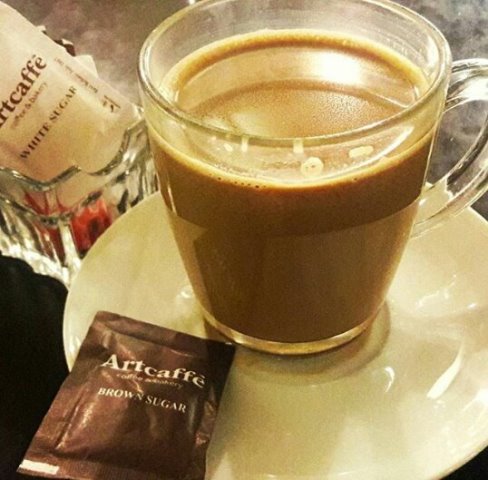
Then there’s you and me; we sip our French vanilla lattes on the Art Caffé terrace and cheer our favourite Premier League time while enjoying cold beers at our local neighbourhood joint. Our children in perfectly pressed uniforms get on the school bus. And we complain about the 1 hour wait at Gertrude’s or Aga Khan because little Kevo has a stuffy nose for the 3rd time this year. We enjoy our weekends at Garden city, T-mall, Sarit Centre and Westgate filling our bellies and our Nakumatt baskets. But while we have been obsessed with these diversions, we have allowed our country to be governed, dare I say dictated by a select few. The people we have entrusted with power have decided to treat our beloved Republic as their own personal playground….”
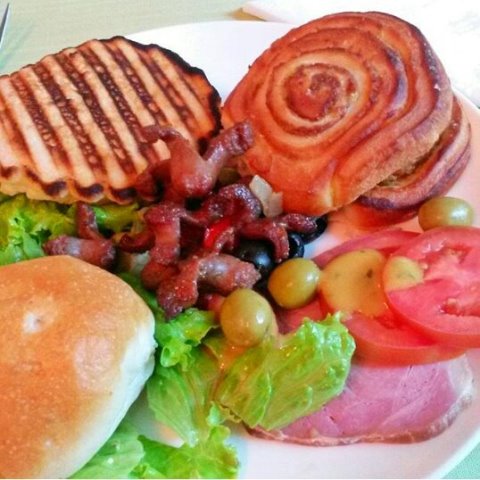
What we enjoy at the fancy cafe’s.
Just three days later, Dr. Eunice died suddenly. You can go over to her husband’s memorial tribute in his post here, and may you be challenged.
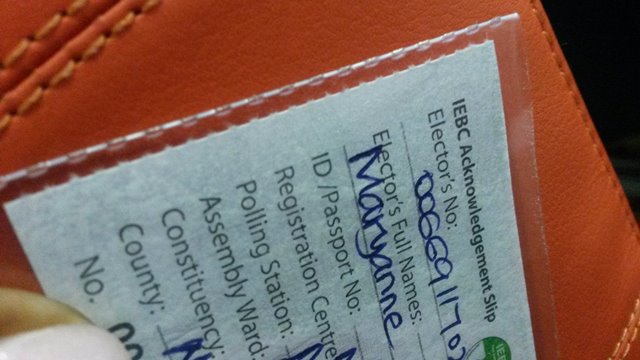
You, just like me, forms Kenya’s middle class. We are the ones that Dr. Eunice addressed in her post. Be the change you want in Kenya. Take action. Do you have a voter’s card? Or do you feel too defeated by the system, and you believe that ‘your vote will make no difference anyway’, because you’ll be electing a leader from the basket of ‘the best of the worst’?
By the way, let me be honest. There was a time I was so into Kenyan politics. I’m not a politician, but I loved analyzing politics. The topic excited me. I knew Kenya’s politics like the back of my hand. Then the 2007 general elections happened. And something died in me. It just died. And got buried. It’s a very personal issue for me.
I am the one Dr. Eunice describes when she asks:
“Why are we the middle and upper class so apathetic when it comes to politics and governance? The point is not to feel guilty about having a good life. I don’t feel bad about it, so why should you? You wake up at the crack of dawn, fight through Nairobi traffic, deal with bills and bosses, deadlines and proposals, loans and losses. Why shouldn’t you enjoy the trappings of success? Those fun idle distractions are necessary but they shouldn’t blind you to what goes on in the real world. Many of us say: so what am I supposed to do about it? How can I change what is happening? I don’t have any power!” Read the full post here.
My voter’s card. My power?
May her words challenge you as they have me.
Rest in Peace Dr. Eunice.
Mummy Talesis a blog dedicated to empowering its readers on different aspects of maternal and newborn health, as well as various issues surrounding motherhood and women. Read more motherhood experiences of Kenyan moms here. Follow Mummy Tales on:FACEBOOKl INSTAGRAMl TWITTER
*Featured photo courtesy: Dr. Luca Sareceno LinkedIn
Let me start off by saying that in this motherhood journey, there are a multiplicity of factors that define what kind of moms/women we are.
Being a wife, a single mom, a widow, experiencing gender-based-violence, being jobless, having a chronic illness, fertility struggles, raising a special needs child, being a teen mom, being a mom with disability… these are all part of what makes up our motherhood experiences and whether we like it or not, they have a significant influence on how we raise our children and how they will turn out.
Because this is all part of the motherhood journey –or part of the journey to motherhood, you’ll notice that moving forward, I’ll be sharing more of these experiences on the blog. Starting off with that of Waturi Wamboye, a wife and a mom.
Waturi Wamboye
When she was a new wife, Waturi knew that one of her responsibilities was to ensure that the house was well kept, that she prepared meals, and that she generally performed all the duties that were expected of her as a wife. However, there soon arose a challenge.
“At some point I couldn’t do it and felt like I had failed in my duties as a wife.”
Thankfully, her husband –Ernest, would step in and help out.
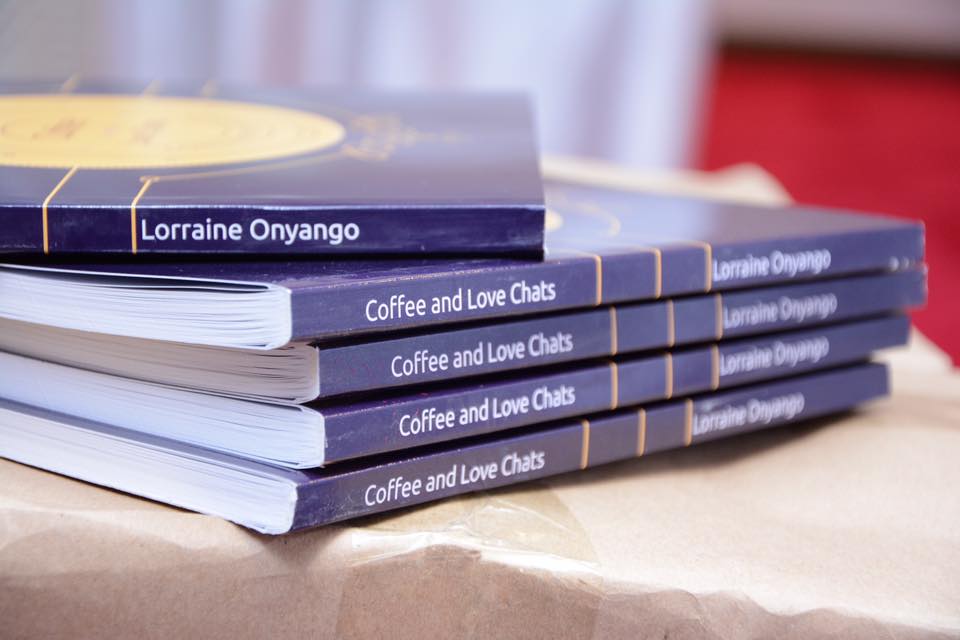
“Sometimes I would get home from a long day at work, then find Ernest cooking. Admittedly, holding strongly onto your roles (as a new spouse) can be tricky, but you realize it’s necessary for either party to step in so that the tasks in need of attention are not neglected. It helped me to relax and also learn how to accept help when needed,” she says, in the book ‘Coffee and Love Chats’ by author Lorraine Onyango.
The Wamboye’s -Ernest and Waturi, with their child.
This happens to be a situation similar to that of many women. The period when it’s just the new husband and wife in the house, when there are no children –yet– and there is no house girl either. The times when the new wife gets home in the evening –tired from work, and immediately gets down to performing house chores; cooking, cleaning the dishes, mopping the floor, doing some laundry or even ironing their clothes…among other duties.
Meanwhile, the husband lounges on the couch scrolling through his phone playing games, WhatsApping, Facebooking, maybe napping, watching TV or simply just hanging around waiting to be served and waited upon by his lovely new wife.
At the crack of dawn, she’s at it again –preparing their baths, making breakfast, maybe packing his lunch….and also getting herself ready for work.
And getting tired of it all.
But it’s not only new wives who go through this as sometimes, moms too experience this challenge –mostly on the days when the house girl is on her day off and there’s chores to be done around the house, and the man doesn’t seem to care much about pulling his weight around and offering any assistance.
I have heard several tales of women in such situations, and even read their rants on Facebook.
“Hubby just sits there as I do all the work. I mean, I know that I’m the woman and it’s expected of me to undertake the household chores, but why can’t he just offer to help? Even just once? House chores can be very exhausting, and I think it’s quite insensitive of him, especially in this day and age. Is it so difficult to just want to help me out?” they ask, resentment and bitterness in their voice. And that’s not good for any relationship.
Well, in Waturi’s situation, at least her husband would help out. And she also has some advice for us all.
“Many mothers and women overwork without looking after themselves since they have so much to do. In order for them to take care of the family properly, they need to look after themselves first.”
The ‘Coffee and Love Chats’ book, which contains the inspiring experiences of nine married couples, including those of Waturi and Ernest.
Hmm…this one is hard small. How do you get your partner to help out? Have you ever found yourself in such a situation? How did you deal with it? What advice would you give? Or does it all boil down to one’s expectations of their spouse, and if there is effective communication in that relationship? Because for sure, being in a relationship where there’s lots of anger and bitterness and resentment is not healthy at all.
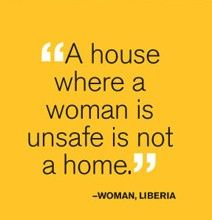
This situation reminds me of a quote I once heard: ‘A Happy Mom is a Happy Home.’ So what happens when she’s not happy?
Mummy Talesis a blog dedicated to empowering its readers on different aspects of maternal and newborn health, as well as various issues surrounding motherhood and women. Read more motherhood experiences of Kenyan moms here. Follow Mummy Tales on:FACEBOOKl INSTAGRAMl TWITTER