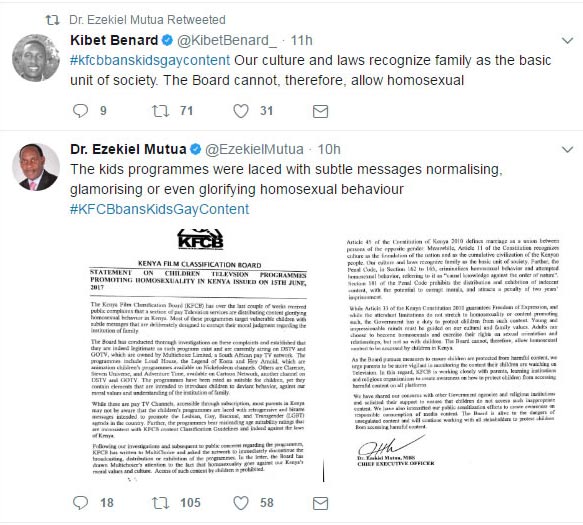
Following public outcry about some cartoons some of our kids watch on pay TV, and which seemingly glorify the Lesbian, Gay, Bisexual and Transgender (LGBT) agenda, the Kenya Film Classification Board (KCFB) headed by Chief Executive Officer Dr. Ezekiel Mutua has written to Multichoice and asked them to immediately discontinue the broadcasting, distribution or exhibition of the programmes.
The six named programmes are:
The Loud House (shows on Nickelodeon)
The Legend of Korra (shows on Nickelodeon)
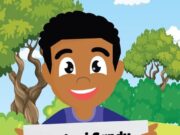
Hey Arnold (shows on Nickelodeon)
Clarence (shows on Cartoon Network)
Steven Universe (shows on Cartoon Network)
Adventure Time (shows on Cartoon Network)
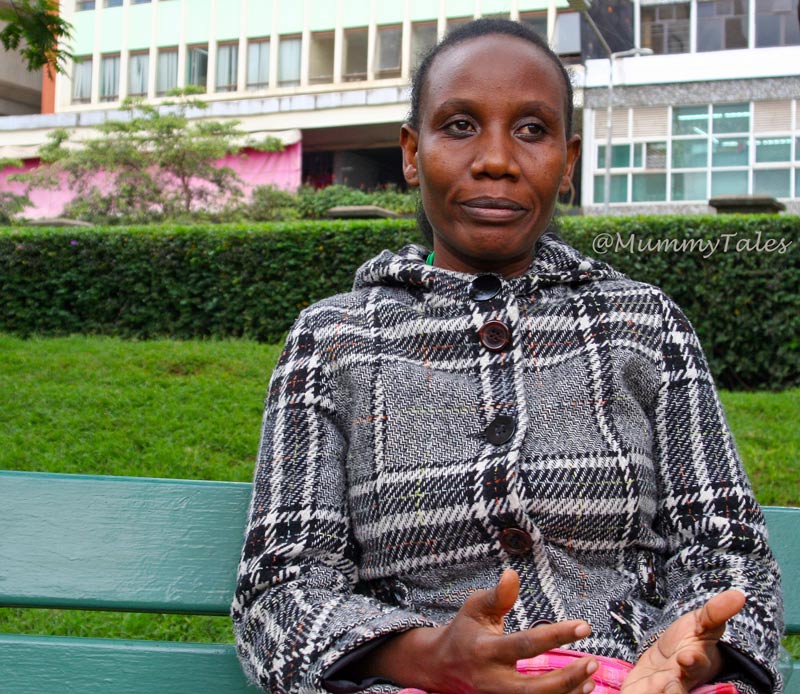
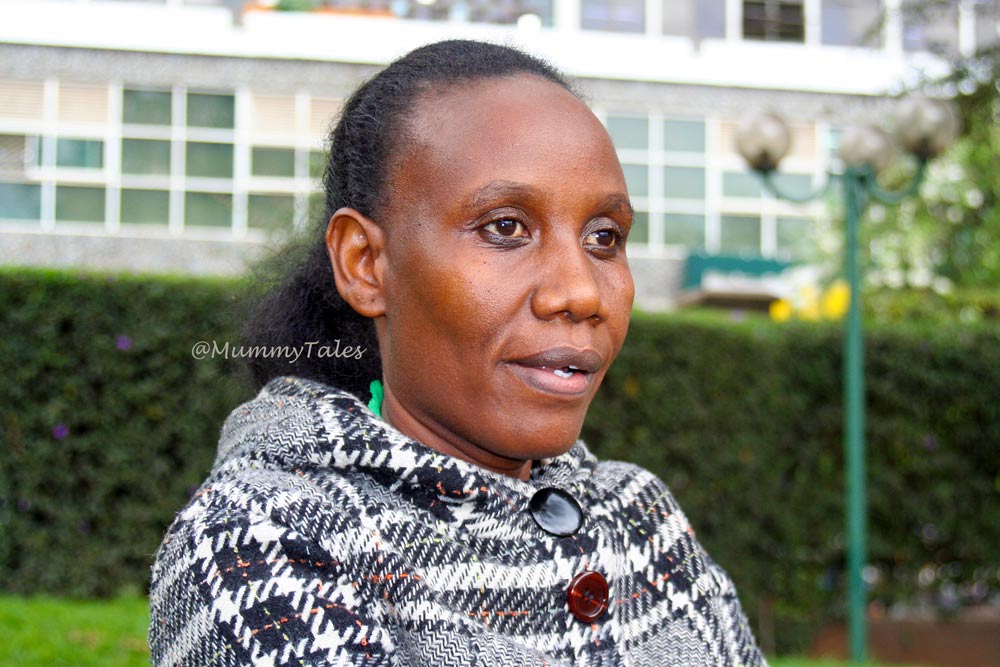
Dr. Mutua (pictured) says that the cartoons are laced with subtle messages normalizing, glamorizing or even glorifying homosexual behaviour, which goes against Kenya’s morals and values.
This is interesting news. Do your kids watch the mentioned cartoons? Do they love them? Have you ever noticed the kind of content that Dr. Mutua is referring to? What do you think of KCFB’s move?
Hello moms. One of the most widely-read blog posts here on Mummy Tales is this one: Caroline Kinyanjui: I Have been with my House Girl for 13 Years. Caroline’s story is an interesting read for many reasons, chief among them being that she’s one of the few moms today who have managed to stay with one house girl that long. So we’re all curious to know exactly how Caroline does it. Be sure to read her story in case you’ve never read it.
Now, I recently talked to a mom who has been with her house girl for 9 years –which is still a considerable lengthy time in this day and age if you ask me. So I asked her if she’d be kind enough to share a few tips on what she’s learnt, and the advice she can offer us on the same. This is what this mom, a human resource and career expert said:
1. I have accepted the fact that no one will do things perfectly in the house the way I want them to be done – apart from myself. When I find something hasn’t been done the way I want, I point it out and if I have time I’ll do it myself. When this happens, chances are that next time I’ll find it well done.
2. As long as the basic chores around the home are done and my children are healthy and happy with the house girl, that is an A+ for me.
3. You can never find that perfect house girl. It is simply impossible. If you keep firing one after the other because of any mistake they do, you’ll keep firing them forever.
4. In the same breath, house girls makes mistakes, sometimes very serious and expensive mistakes, but the way you handle the issue matters. I have dealt with such situations in a sober and mature manner, with an understanding that no one is perfect –including myself. Besides, we all make mistakes at work, in our businesses and unfortunately sometimes with our children. So if an item is not well-cleaned, ironed or even broken, or if the food is not well prepared, communicate with her – and if you cannot cope, just release her.
5. Don’t yell at your house girl, or anybody else for that matter. When someone shouts at you, it demoralizes you and makes you feel terrible, so don’t do the same to her. Remember you leave your children with your house girl when you’re away at work or running errands, so yell at her at your own peril.
6. Sometimes when I get annoyed at things she’s done I relax, take a deep breath and try to rectify what could have gone wrong
7. My house girl did not complete school, but is attending “gumbaru” (adult education classes) to at least learn to read, write and speak some English and hopefully establish a business sometime in the near future.
8. Much as many people may find it hard to accept, a house girl’s work should be respected just like any career. I know of house girls who have educated their children up to university level through their work. As a career expert, I believe that any job that gives you satisfaction, an income and dignity is a career like any other. Nowadays, women are enrolling in colleges to learn how to be professional house girls and domestic managers. I know of one live-in house girl who earns Sh50,000 per month. Through the years, she has been able to give her children a good education. So why wouldn’t she be proud of that and work until she retires?
Well, so those are the experiences of this mom. Just like I have, I hope you’ve picked a thing or two that you can apply in your own situation. So how long have you had your house girl for? What have been your experiences? If you’ve had one for at least more than 5 years, what tips would you share with fellow moms?
The topic of house girls is one that most moms can go on and on and on about. So what’s your experience?
Mummy Talesis a blog dedicated to empowering its readers on different aspects of maternal and newborn health, as well as various issues surrounding motherhood and women. Read more motherhood experiences of Kenyan momshere. Follow Mummy Taleson:l INSTAGRAMl TWITTER
Wairimu is aunt to seven-year old Safari. She dots on the young lad, who has a special place in her heart. Wairimu and Safari’s mom are twin sisters, and the closeness between the sisters has made Wairimu assume many of the responsibilities of raising Safari, who has special needs. Today, Wairimu shares with us the experiences of raising Safari, including the pursuit of an education for him. I welcome you to read her story*.
“When Safari was just three months old, we knew that something was wrong with him somewhere, though we couldn’t tell exactly what it was. His head was still very wobbly and when we placed him on the sofa, he would easily topple over so we had to put a pillow on both sides to prevent him from doing so. Worried, we asked some doctors about his seemingly slow development. But the answer was always the same: that boys have ‘delayed milestones’, meaning their growth lags behind that of their girl peers.
And so assured, we waited and waited…..and continued waiting….
But as we continued waiting, one particular incident was never far from our minds. This was something that happened when he was a newborn.
At only six days old, he had suffered jaundice. Many babies experience mild jaundice, which is a yellow tint to a newborn’s skin and the white part of the eyes. This is a sign that there is too much bilirubin in the baby’s blood. But it usually gets better or simply goes away on its own within a week or two –without causing any problems. However, in rare cases, if the bilirubin levels remain high and without appropriate medical attention, it could lead to brain damage called kernicterus. That is apparently what our baby had. Neonatal kernicterus. Safari was admitted to Kenyatta National Hospital, where he underwent a blood transfusion and was placed under photo-therapy. I remember his little eyes being so tightly bandaged to ensure that no light reached or affected them. I wondered if it hurt him.
But as I mentioned earlier, he wasn’t developing at the rate of most children his age. Something about him still bothered us. At almost two years old, he still couldn’t stand on his own, while his peers were running. But yet, we kept being told that ‘boys achieve their milestones late, so just relax, there’s nothing wrong with him’. Unsettled, we took him to the hospital and eventually, we were given a diagnosis of Cerebral Palsy, a disorder that impairs control of movement caused by damage to the developing brain.
The news was hard to take in. We believe that the neonatal kernicterus contributed to his cerebral palsy. Interestingly, the conversations we’ve had with other mothers who have children with cerebral palsy are almost similar; they all say that their children fell sick at some point soon after birth. For some, it was jaundice, malaria, others meningitis, others something else. But there was a sickness involved somewhere in those first weeks. Same case with Safari.
After we were told he had cerebral palsy, I admit we struggled to accept that his special needs were going to be with him; with us, for the rest of his life. It was slowly sinking that it was not something Safari would outgrow, and there was no miracle cure anywhere…
Now, I’ve just come across the story of Mandy, who, after losing her hearing at the age of 18 years, now uses vibrations in the ground to pursue her dream of singing. To understand what I’m talking about, watch her video below.
Watching Mandy sing and utter the words: “After I Became Deaf I gave up, but Now I want to do More with my Life than Just Give up” has reaffirmed my belief in the #NikoEducatable campaign, which is working towards ensuring that children with disability are able to go to school, receive an education and pursue their dreams. We all know that many parents of special needs children, especially those from disadvantaged backgrounds are unable to send their children to school for many reasons, among them: finances, logistical challenges in regards to getting the child to and from school, as well as lack of any hope for the future of the child with disability.
But the truth is, disability doesn’t have to signal the end of one’s dreams. It doesn’t have to end the dreams of the child, and neither does it have to signal the end the dreams of the parent for his or her child. Just like Mandy in the video, their dreams can still be achieved. A good case example is Regina Mugure, who is pursuing her dream to become a diplomat or a famed journalist. Watch her below.
You too can be a part of these dreams by supporting the dreams of children like Regina, through the #NikoEducatable campaign. See this link for more details.
Mummy Talesis a blog dedicated to empowering its readers on different aspects of maternal and newborn health, as well as various issues surrounding motherhood and women. Read more motherhood experiences of Kenyan momshere. Follow Mummy Tales on:FACEBOOKl INSTAGRAMl TWITTER
Dru, her husband and their son. Photo courtesy: #GodHealDru on Facebook
A few weeks ago, my timelines were filled with the hashtag #GodHealDru. It was hard not to follow the conversation. I didn’t know Dru, but I got to find out that she was a beautiful 34-year-old mom fighting for her life at a Mombasa hospital as a result of pregnancy complications. Her story was so emotional, with the hashtag peppered with stunning photos of her pregnancy, her adorable three-year-old son and her husband. They were such lovely family photos, filled with great joy and happiness. It was so heartbreaking to learn that Dru was fighting for her life as she was in the process of giving life.
Shortly thereafter, photos of her newborn son accompanied the hashtag. Also blood appeals for Dru, who was now in critical condition. Soon, information that Dru was no more began being shared. The news was hard to swallow. I had so much hope that she would make it.
Now, whenever I learn of the news of a woman’s death –especially a death as a result of pregnancy or childbirth complications, it takes me to a certain place. A place so dark, a place full of apprehension. And to be honest, fear. A place where I get to better understand the fragility of life. One moment you’re celebrating life, celebrating forthcoming life, the next minute it’s all darkness. It sadly makes me deeply reflect on the saying that goes like: “A Pregnant Woman has One Foot in the Grave’.
So what happened to Dru, that led to her death?
Below, I share excerpts from Eunice Kilonzo’s narration of Dru’s story in the Daily Nation.
Dru, her husband and their son. photo sourced from: #GodHealDru on Facebook
Druscillah Walowe Mngoda, popularly known as Dru, was wife to Dan Kinyanjui. Her husband says that on the night of Saturday 20 May, they arrived home after an awesome evening at a friend’s place.
“We went to bed, but at 1am she woke up complaining of heartburn. She wanted to brush it off, but when she threw up I immediately rushed her to Nyali Healthcare in Nyali, where we were ably assisted before being referred to Aga Khan Hospital for admission,” Dan says.
While at admissions, Dan heard the four words that would forever change the course of his life and that of his two sons.
Maternity Wing, Code Purple! Someone bellowed from down the corridor.
“I rushed there to find my Babe convulsing,” he says, using the affectionate name, Babe, to refer to his wife of six years. “She was in a fit and foaming, and once she was stabilized I signed the consent forms for her to go for emergency Caesarian section.”
Doctors told him the fit was indicative of high blood pressure complications during pregnancy, referred to in medical terms as eclampsia. If unmanaged, it could destroy the liver, kidneys and even the brain.
What Dru was going through was a severe complication of pre-eclampsia, a condition that affects some pregnant women, usually after the 20th week or the second half of pregnancy, or soon after their baby is delivered.
Dru, who had celebrated her 34th birthday on May 13, and who had just walked into the hospital unassisted, was now motionless after a series of convulsions and violent shaking. Doctors surgically removed the baby — Dan named him Darrell — and, as they wheeled the little chap out of theatre, another team wheeled the mother into the Intensive Care Unit of the hospital. She had slipped into a coma.
In the morning the hospital made an O+ blood donation request. Dru required fresh platelets — the blood cells that aid in clotting — as her body was not producing any. This is because at this point the pre-eclampsia was progressing to a life-threatening syndrome called Hemolysis, Elevated Liver Enzymes and Low Platelets (HELLP).
Dru had suffered a brain aneurism — a bulging, weak area in the wall of an artery that supplies blood to the brain — due to the high blood pressure. That means the blood pressure was so high that it exerted a force against the walls of her arteries that was high enough to damage them and other blood vessels.
This damage restricted blood flow, leading to a swelling in the blood vessels in Dru’s brain and interfered with its ability to function, which explains the seizures.
Dan says the blood in his wife’s brain caused coning — the squeezing of the brain and brain stem through the foramen magnum (the hole in the base of the skull through which the spinal cord passes) as a result of swelling — which led to brain death. Eventually, Dru’s heart stopped.
You can read the full story at the Daily Nation. May God comfort her husband, her sons, her family, friends, and all those whom she touched. May God’s favor be upon the dear ones she has left behind.
I have previously written the stories of other moms who have preeclampsia experiences. Some survived with their babies, some lost their babies, while other moms like Claris did not make it while her son survived. You can read their stories in the links below, and share them with a friend to create more awareness about this dangerous pregnancy condition.
Mummy Talesis a blog dedicated to empowering its readers on different aspects of maternal and newborn health, as well as various issues surrounding motherhood and women. Read more motherhood experiences of Kenyan moms here. Follow Mummy Tales on:FACEBOOKl INSTAGRAMl TWITTER
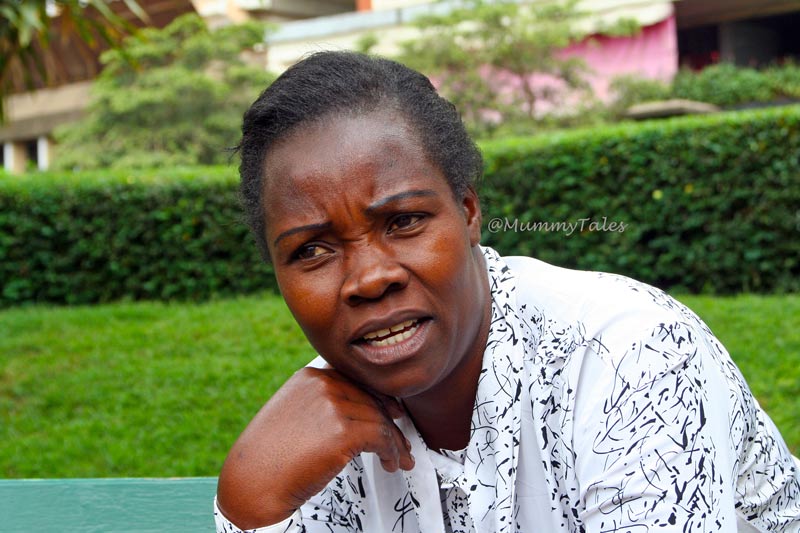
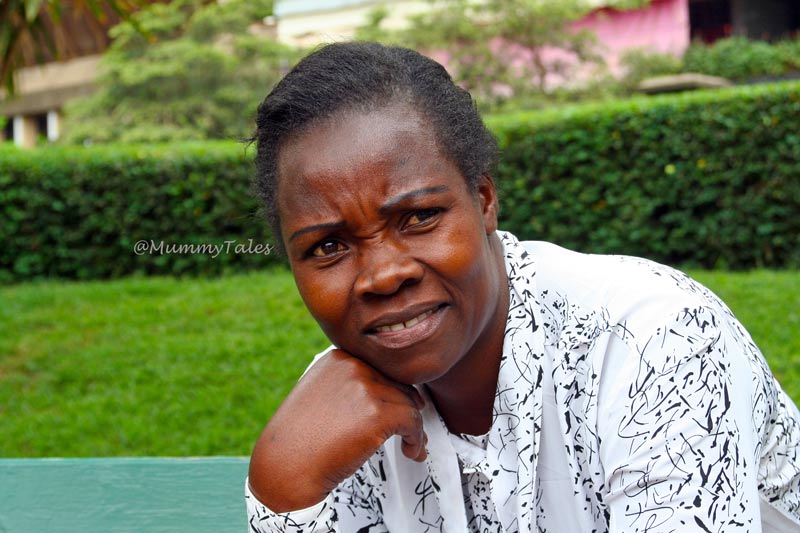
Regina Wanjiru is a 43-year-old mother of four; two daughters aged 24 years and 19 years, and two sons aged 23 years and 16 years. I recently met Regina and today, I bring you her story, where she talks of her parenting journey, which includes raising Dennis, her special needs child. Regina’s story has lots of lessons to learn. May you be encouraged by her story. Read on…
When Regina gave birth to Dennis 16 years ago, she immediately knew something was wrong.
“I already had three children, so I knew the birthing process. So when Dennis didn’t cry immediately I delivered him, I knew there was a problem. I became worried, but this was relieved when three minutes later, Dennis let out a faint cry,” she remembers.
Prolonged Labor
It had been a long journey to delivery for Regina. On her Expected Due Date (EDD), she had gone to the hospital in what she believed was the onset of labor pains. But the nurses informed her that they were just false alarms, and told her to go back home.
Three times she went to the hospital –each time sure she was in labor, but each time, she was sent back home asked to return when ‘she was in real labor’.
Finally, at 42 weeks pregnant, exhausted and in pain, Regina went to the hospital and this time round, she was more firm.
“I told the nurses I wasn’t going to return home, come what may. I was too tired. I was induced and a few hours later, I delivered my son Dennis, who didn’t cry immediately after birth. The cause for the delayed cry, the nuses informed me, was that I had been in labor for too long and so he was tired. I remembered the times I had go the e to hospital ready to deliver, but kept being turned away. I felt so bad.”
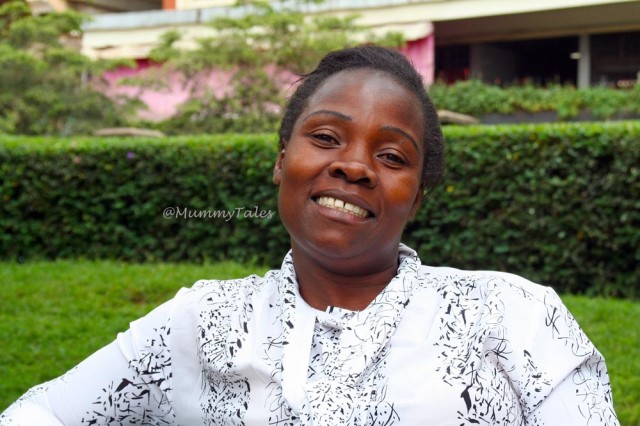
Regina Wanjiru, talking about her motherhood experiences..
Brain Damage
After leaving the hospital with her newborn, life went on well, until four months later when once again, something about Dennis alarmed her.
“I noticed he wasn’t able to hold his head up without support. His head was always dropping to the side, as though his neck muscles were weak.”
Regina took Dennis to the hospital where for the next six months, he attended therapy two times a week. The therapy helped, and he was able to gain some measure of head control. But the tribulations were still not over. By the time he was celebrating his first birthday, Dennis was still unable to stand on his two feet –even with support.
“His legs would always be curled up, and he was unable to stretch or straighten them. His back was also very weak, and he was never able to sit up unassisted.”
When Regina took him to the hospital, she was told that Dennis may have suffered brain damage at birth –most likely because of her prolonged labor.
“I was casually informed that my child had cerebral palsy. I didn’t know what that was or what that meant, and no one took time to explain it to me. I didn’t even know to pronounce it. I left the hospital unaware of the long journey ahead of me.”
But more was yet to come.
Deaf and Dumb
When Dennis was three years old, his mother noticed something odd with his speech. It wasn’t as developed as his peers.
“All he ever did was smile, laugh and make sounds –but never produced a word.”
She took Dennis to hospital with th the se concerns. But the insensitivity of the nurse who attended to her is something she’ll never forget.
“Mama, wacha hata kuongea. Huyu moto wako haskii. Kwani hujawai jua hivyo wewe mama hiyo miaka yote?” (Your son doesn’t only have a speech problem, but he is also deaf. Haven’t you ever figured that out all those years?), the nurse rudely said before dismissing her.
30 year old Vellah Murengu is a mother of two; 7-year-old daughter Edel and 4 year-old son Larveen. A Legal Assistant in an NGO, Vellah talks about some of her motherhood experiences, as narrated to Mummy Tales writer SYLVIA WAKHISI.
“Life as a mother has been very eye-opening for me, based on the different experiences I have gone through. Starting with the pregnancies. Both of my pregnancies were characterized by different experiences, including weird cravings and developing a dislike for certain things and people.
With my first child Edel, I remember disliking food. Would you believe that all I ever seemed to drink was Krest (the soda) and eat roasted clay? (don’t ask). I would buy the small pack of roasted clay for Sh50 from the supermarket twice or thrice a day, and happily munch on them. At the same time, I had low haemoglobin levels in the early months of pregnancy. The doctor told me to consume lots of beetroot for this, though I absolutely detested it.
Interestingly, with my second pregnancy, I loved all foods and ate almost everything. My only issues were lots of back ache and swollen feet. I even has to be put on bed rest at some point.
Life as a New Mom
Before the arrival of my daughter, I read lots of articles on motherhood and had lots of conversations with my friends who were already moms. By the time I was due, I had immense knowledge on motherhood. That notwithstanding, I still was very anxious, but I managed to go through new motherhood just fine. I thank God because I never had issues with my babies in the first three months as is usually the case with newborns. I would sleep through the night and only wake up to breastfeed.
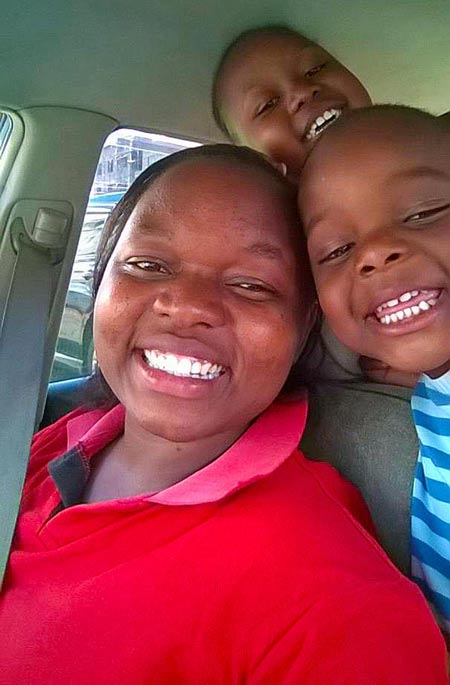
Vellah with her children.
House Girl Challenges
When it comes to house girls, my experience is similar to that of many other moms. It’s not an easy journey. There is a time you wake up in the morning to go to work and she tells you that she is leaving! You ask yourself so many questions but you have to remain calm and think fast on what to do next because you can’t force her to stay when she has already made up her mind. When it comes to house girls, I have had my share of ups and downs with them…
There’s a time early this year I kept moving from pharmacy to pharmacy looking for a drug the Dermatologist had prescribed for my son’s eczema flare up.
The Dermatologist had prescribed three different drugs but for some reason, there was that one particular drug that was out of stock in all the pharmacies I went to. Yet, I couldn’t start him on the other two –without that critical missing one.
Thing is, in this Nairobi, moving from one place to another can be quite an experience. You spend a significant amount of time in traffic just to get to your destination. If you’re driving, many pharmacies are located in places where nowadays you have to pay parking fees –whether in malls, hospitals, or in the City Council slots. Then, when you finally get to where the pharmacy is located, you spend endless minutes searching for a parking spot or double parked, waiting for one to open up.
Nairobi traffic.
Finally, relieved, you get to the pharmacy. But then, you most likely spend more time in the queue waiting for your turn to be served. By the time you’re done with the whole process, you’ve spent almost an hour –or more. Or sometimes when you learn the price of the drug, you feel as though it’s on the higher side, so you decide to compare prices first with at least two or three more pharmacies before you make a decision. Other times, after a long wait in the queue, your turn finally arrives, only to be informed that the drug is out of stock.
That happened to me when I was searching for my son’s eczema prescription. After quite an arduous search for that specific drug that spanned days, I eventually found a pharmacy that had it –actually the last pack! I was so relieved and did a small happy dance.
But my jubilation was short-lived when I was alerted of a new problem.
It had been slightly over a week since the Dermatologist had written the prescription, and so the Pharmacist couldn’t dispense the drug. I was told that I had to go back to the Dermatologist again and get a fresh prescription. Seven days had already passed, so they just couldn’t give me the drugs. Period.
I was mortified!
I tried to plead my case, saying that in fact the reason why I had delayed getting the drug ‘within the seven days’ was because I’d been moving from pharmacy to pharmacy searching for that elusive drug in vain. I didn’t even know there was a thing like that –that a prescription is only valid for seven days. Anyway, the Pharmacist actually sympathized with me, but said those were their pharmacy rules, and rules had to be followed. Sigh. So what I did was to request him to be kind enough to save that drug for me, because I’d be back.
Suffice it to say that I had to return to the Dermatologist. And plead for her not to charge me consultation fees for ‘seeing her’ again, and getting a fresh prescription.
Eventually I got the drug and my son got sorted, but I assure you that it was such an exhausting experience!
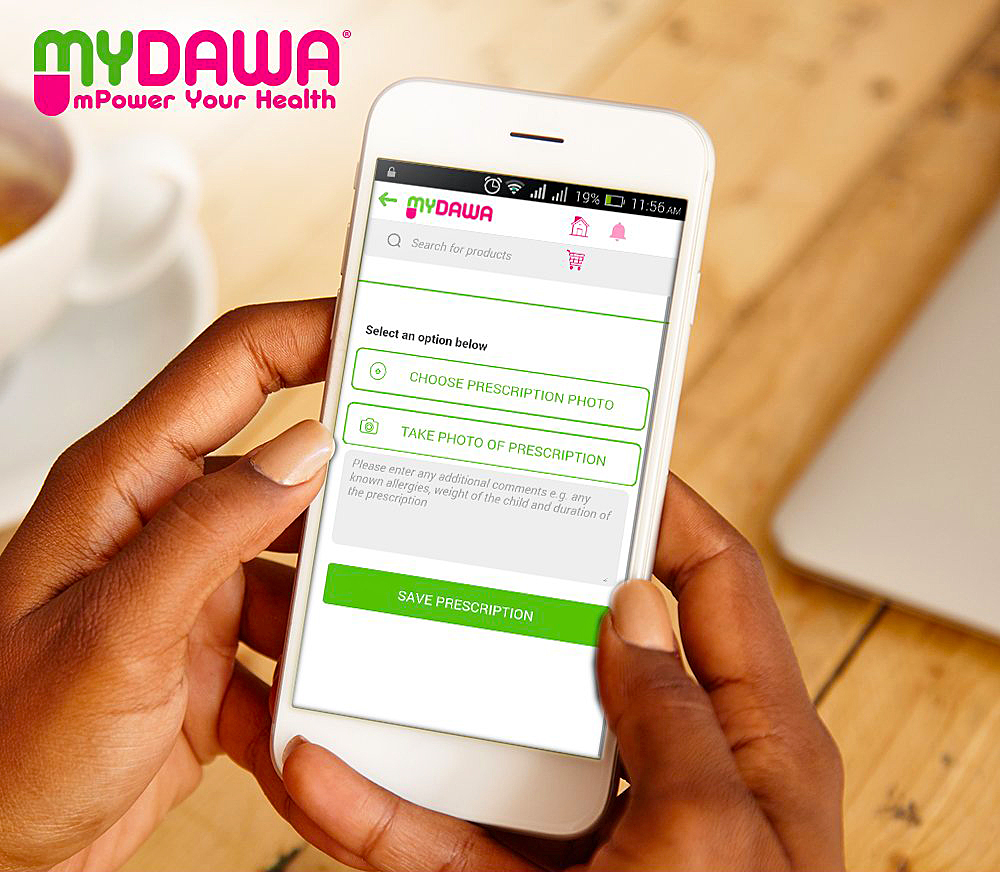
So it was with great relief when I recently came to learn about a new way of buying medicines that is so convenient, easy, and more importantly –time saving. I’m talking about MYDAWA, which is a new e-health service that enables you to purchase medicines at your own convenience. For example, if you have a prescription such as the one I had for my son’s eczema, you can just take a photo of it using your smartphone from wherever you are, then upload it. Once uploaded, the team at MYDAWA, who include pharmacists, will verify the details and get back to you shortly.
Once confirmed, they’ll package your order in a sealed tamper-proof bag with your name labelled on it, to ensure it reaches you safely. The sealed package containing your order (medicines and other health and wellness products you may have ordered) will then be dropped off at a pharmacy of your choice and convenience. You can choose the pharmacy nearest to you, your home, or your office where you can easily pick it at a time of your convenience, such as on your way home or during your office lunch-hour break. And by the way you don’t get charged any service fees, transaction or delivery costs.
This was such welcome news to me because next time I have a prescription, I don’t have to undergo the hassle I underwent, which was very time-consuming I must say.
So if you, just like me, would like to enjoy the safety, ease and convenience of purchasing prescription medicines, over-the-counter medicines, a wide range of health, wellness and beauty products among other items, and have them delivered at the nearest pharmacy to you so that you can pick them on your way home, then click on this link and sign up for the service. You can also download the MYDAWA App here. The App will make your online purchasing of drugs so much easier.
Indeed, with the numerous commitments that characterize our daily lives as women, as moms, MYDAWA is such a welcome relief.
So, have you ever had an experience moving from pharmacy to pharmacy searching for a drug, in vain? What did the experience feel like?
35-year-old Stella Mwaromo is a mother of three; two daughters aged 16 years and 6 years, and her 13-year-old son Rogers. I had a chat with Stella on her experiences as a mother, focusing more on raising a special needs child. Her son Rogers has epilepsy and intellectual disability. Read on…
One day, as Stella Mwaromo bathed her five-month old son Rogers, he suddenly began shivering and shaking uncontrollably. Assuming that he was feeling cold, she immediately got him out of the water and quickly covered him up.
A few days later, the shivering and shaking started again, but this time round, Rogers wasn’t being bathed. It wasn’t even cold, so Stella wondered what could be wrong. He didn’t have a fever either.
“I just held him in my arms as he continued trembling, until he went calm on his own,” remembers Stella.
However, the ‘shivering and shaking’ episodes continued over the next few weeks, prompting Stella to seek medical treatment.
Brain Damage
At the hospital, the doctor took his birth history and sent them for some tests, including an electroencephalogram (EEG). She was then informed of the diagnosis.
“The doctor said Rogers had ‘some extent of brain damage’. At birth, Rogers had been diagnosed with severe jaundice, and had stayed in hospital for one month undergoing treatment. The doctor explained that the jaundice could have been responsible for the brain damage, hence the regular ‘shivering and shaking’ which he told me were called seizures.” she says.
Rogers stayed in hospital for almost two months, undergoing treatment. But even after being discharged, he would keep falling sick every so often to the extent that Stella, who was an Early Childhood Development (ECD) teacher, was unable to return to work after maternity leave.
“He was a sickly child, and we were always in and out of hospital. Later on I was even told he had epilepsy. Focusing on anything else other than Rogers became difficult,” she says.
But as Rogers continued to grow, Stella and her husband noticed something else about him.
“Rogers was a very active child –way more active than his peers. He was rough, aggressive and never be able to sit still. He also had a very short attention span and would do things impulsively.”
With this kind of erratic behaviour, his education became a great challenge.
“It was very difficult to retain him in any school. The teachers would always call me, telling me that my son was ‘too much’. Apparently, Rogers would disturb other children, snatch their crayons, their snacks, bully them, get into fights and was basically very disruptive. His behaviour was also very unpredictable and the teachers never knew what he would do next. He was too much too handle, they would say, before asking us to withdraw him from their school.”
Any school that Stella and her husband would enroll their son, there would always be complains about his behaviour.
Many times, Rogers would stay home as his parents looked for a new school. It was never easy, Stella says, since all the schools in the neighborhood had heard about Rogers, with none willing to accept him.
Disaster struck when one day, during one of those periods he was out of school, Rogers, aged six years, was walking to the shop together with the house girl who was holding his hand.
“He suddenly released himself from the house girl’s grip and bolted into the road and was hit by a motorbike. He ended up in the ICU, in a coma and with broken limbs.”
At that time, Stella was eight months pregnant with her third child…
I’d like to thank you so much for your support; for reading, for regularly coming to check the new posts that I’ve put up, for your comments, tweets, for participating in the poll questions, and for sharing posts with your friends. I sincerely thank all those who voted for the blog. May God bless you abundantly.
I’d also like to acknowledge and thank all the brave women who have allowed me to share their stories here on the blog. These stories continue to inspire many, and I believe that the lives of many women have been impacted as a result. Thanks too for the guest writers who send me their stories and of course, a special thanks to Sylvia Wakhisi as well.
Is Blogging Worth it?
It has been a great journey for me since I began the blog six years ago, when I was eight months pregnant with my first son. That was in March 2011. When I started the blog, I thought it would be just about me and my motherhood experiences (and I thought only my family and friends would read it –out of obligation, perhaps even pity for me), but over the years I’ve come to realize that there are so many motherhood experiences to be shared, to be told; experiences that I personally haven’t undergone or may never go through, but yet, they need to be told. They must be told. Hence why the blog now incorporates the experiences of other women, other moms, and even dads!
This is a photo of my first son and I when he was 3 months old. #Nostalgia
I must admit that it’s been a journey of ups and downs, where many times I have asked myself: “What am I doing? Is all this hard work worth it? Is blogging really worth the hassle?” But because I’m so passionate about inspiring people through my writing, I keep going. And going. And so going! Whenever I’m typing out a story, I literally get a ‘high’. I absolutely love writing as I feel so inspired by the stories I tell! Doesn’t it just feel so great when one gets such joy from what they do for a living? That’s me and this blog. Besides, this is my ministry, so I will keep doing it.
Then also, when I receive emails from you my readers, telling me of the encouragement you get from the different stories, the renewed hope that you get, when you tell me that you’re now more alert during pregnancy because of the information you’ve read here (especially these pre-eclampsia stories), I’m encouraged to keep going. It also becomes motivating when I receive awards :).
So, I appreciate all of you my readers for keeping it here, and I will continue to carry on with the noble work of sharing inspirational stories of women, mothers, girls and children here, stories that I hope can inform us and help us learn something new, stories that will encourage us and restore our faith in God, stories that will give us hope.
And by the way, I’ve been able to receive a number work opportunities over the years as a result of this blog. Also, various partnerships with different brands. So is blogging really worth it? Yes it is!
If you have an experience regarding pregnancy, childbirth, about raising children or general issues about being a woman or being a girl, you can reach me through maryanne@mummytales.com, inbox me on Facebook or reach me on Twitter @MummyTalesand I’ll be in touch with you.