








Home Blog Page 25

Here’s a New Technology that’s about Saving the Lives of Premature Babies -the IncuBlanket by Warmilu

3

On Tuesday this week, I was invited to attend a presentation about a new technology for newborns (especially preterm babies) that’s deemed to be life-saving for them. At the meeting, I met doctors, nurses and other health service providers involved in maternal and newborn care. There were also researchers and innovators – mostly those involved in health innovations.

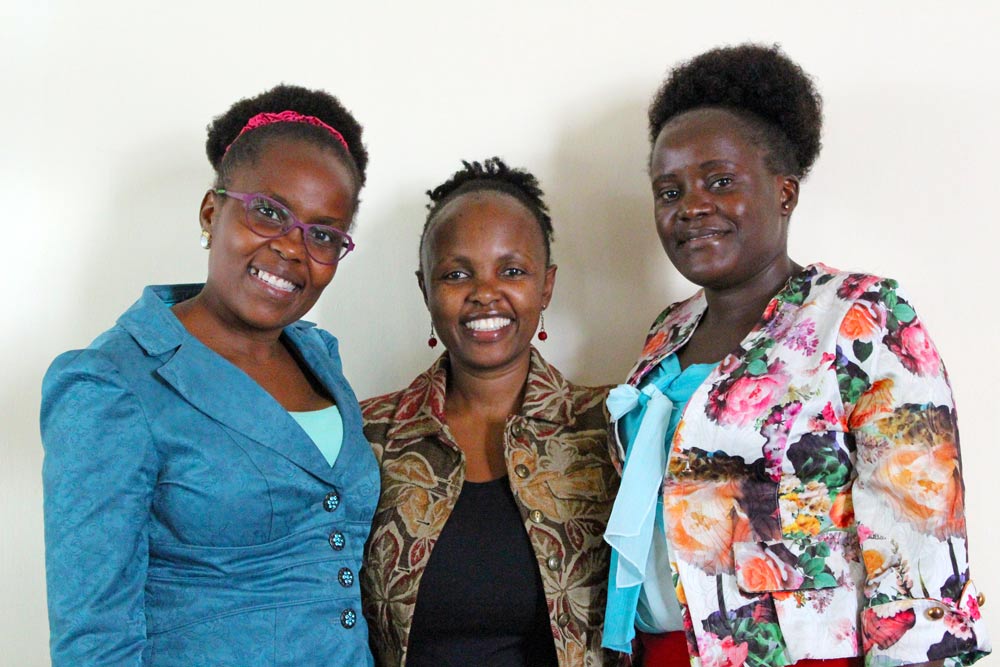
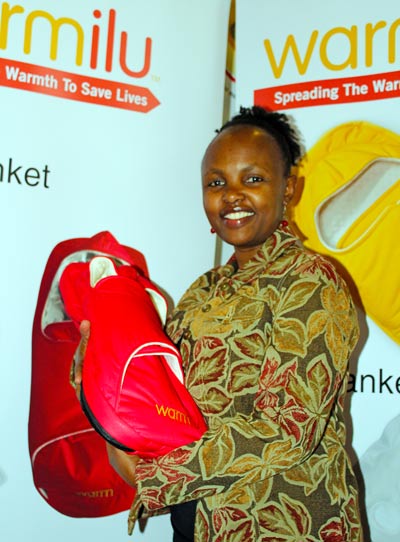
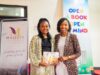
I met fellow motherhood bloggers Santina Nyagah (left), myself and Lourdes Walusala (right) at the meeting.

So the technology is called the IncuBlanket, which is basically a non-electric baby incubator or baby warmer. We all know that warmth is a basic need for all newborns, and when it comes to preemies, this cannot be overemphasized. They risk developing hypothermia if they are left without warmth.

By the way, did you know that in Kenya, 26 preterm babies die daily? Kenya is ranked no. 15 globally with the highest number of premature births out of 188 countries. Preterm and low-birth weight babies need extra care to keep warm and grow well.

Now, incubators can help save the lives of these infants but unfortunately, many health facilities around the country don’t have electric incubators and other life-saving resources for warmth. Reasons? The electric incubators are quite expensive, with most facilities unable to afford them. Aside from that, there’s issues of electricity –blackouts, lack of generators, maintenance and repairs, the expertise required in handling this etc etc that just make the whole issue of electric incubators quite challenging in rural areas and other low-resource settings. But yet, many of the newborns who die could be saved if they are provided with basic warmth during their first hours, days and weeks.

The acute shortage of incubators in public hospitals in Kenya has led to the risky practice of babies sharing this medical equipment. Because of the shortage, babies spend less than the normal amount of time in the incubators to make room for new arrivals. 1 is the number of newborns one incubator is meant to house. Sharing incubators puts newborns at risk of contracting deadly infections. 805 is the number of under-fi­ve deaths due to direct preterm birth complications every month (MoH).

So because of this, there’s a number of people coming up with innovations that are trying to address this issue. Warmilu is one of them, developers of the IncuBlanket.

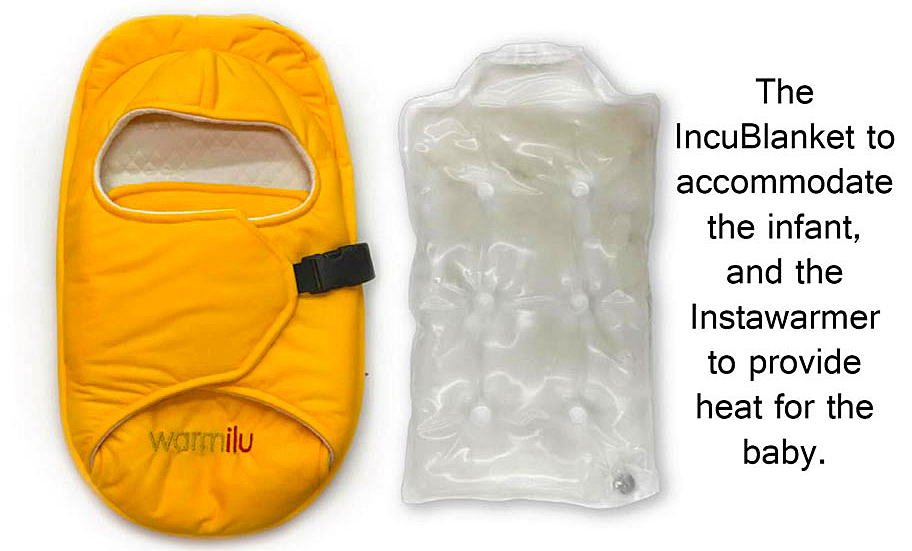
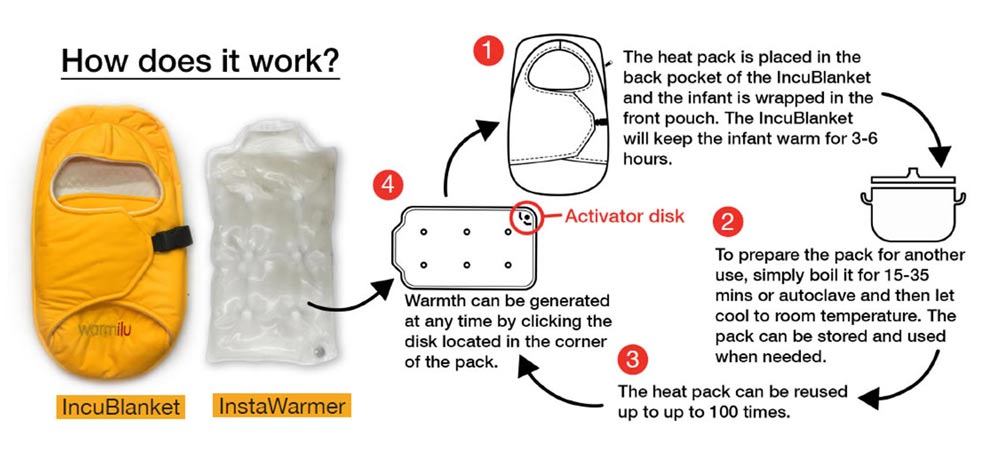
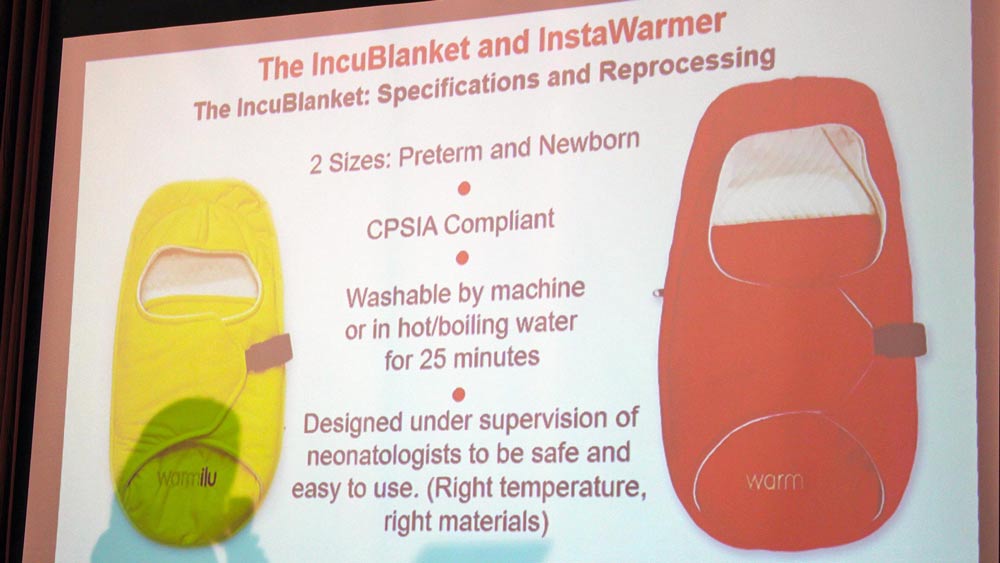
The IncuBlanket uses technology to generate non-electric, regulated (safe) and long-lasting warmth. It was specifically designed to thermoregulate infants who are at risk of becoming hypothermic and serves as an alternative traditional incubator, a transport incubator and/or as a supplement to Kangaroo Mother Care. It is also an all-round baby warmer.

The system basically consists of a blanket specifically designed to accommodate an infant, and an heating pack (InstaWarmer), which is activated instantly with the click of a disk. It is charged by simply boiling it in hot water for 15 – 35 minutes. The IncuBlanket is suitable for health facilities in rural areas where electricity and electric incubators are a great challenge. It has the potential to save millions of infants, especially premature babies.

The IncuBlanket has so far been introduced in Kenyatta National Hospital, Pumwani Maternity Hospital both in Nairobi, as well as the Moi Teaching and Referral Hospital in Eldoret. There are plans to introduce it to more health facilities around the country.

So now, this meeting was in a hotel room, and it was all theoretical. Me I’m more of a practical person, and so I told the organizers that I would like to get a more hands-on-experiences with moms who have actually used this, to get their feedback about it. Like go to the ground and ask moms – does this technology make sense to you? Do you think it can be improved, and if yes, what exactly? Also, I’d like to hear from the health workers about their experience with it –and if it’s also practical down there ‘on the ground’. If that happens I’ll be sure to come back and share that information with you.

Each IncuBlanket costs around $100 by the way. Do you think this is something that our local hospitals can afford? Would they afford to have a number of them in their facilities, especially those that can’t afford the electric incubators? Also, what do you generally think about it? What questions do you have about its use? If you work in the maternal and child health field, is this something that your organization would be willing to learn more about?
See my little demonstration about it in this video below 🙂 and be sure to subscribe to my You Tube channel here as I’ll nowadays I’ll be posting content there as well, so you don’t want to be left out. Otherwise? Plans for the weekend?

You can read more about the IncuBlanket by Warmilu here.

Mummy Tales is an organization dedicated to empowering its readers on different aspects of womanhood and motherhood. Mummy Tales is the top Women & Girl Empowerment blog in Kenya (BAKE 2017 awards) and 2016 top Women & Girl Empowerment blog (African Blogger Awards). Read more motherhood experiences of Kenyan moms here. Follow Mummy Tales on: FACEBOOK l YOU TUBEINSTAGRAM l TWITTER 

Overcoming Alcohol Addiction: What 17 Years of Recovery Look Like – Chris Lyimo

0

Hi guys hope you had a great weekend. In my post today, I share this story: “My recovery from alcohol addiction included dealing with the relationships and the people I had harmed in my life. My mother was number one. I had wasted her resources –I had hit her… then there was my twin sister who had since passed on… I had also lost a son who for the three months he was alive I drunk through them all… I needed to deal with this…”

This is the story of Chris Lyimo, who talks about how his years of recovery from alcohol addiction looked like. Chris got married in his 40’s to Wandia Njoya -he’d been sober for 17 years at the time he was getting married and that, for him, was good preparation “because I wasn’t husband material 17 years before that. I really wasn’t -I was a mess,” he says.

In this video, I share excerpts from the testimony Chris gave during an event I attended last month by Sitara Trust. It is a powerful testimony which I believe we could learn from, especially those who are dealing with alcohol addiction and recovery in their families, know of a colleague or friend who is, or have dealt with the issue before. If you feel Chris’s testimony could help someone and their family, feel free share Chris’s testimony with them.

Also see more videos on the Mummy Tales You Tube channel here and remember to subscribe 🙂

Of Mothers who Leave their Children Behind to Come Work in Our Homes

0

House girl issues. This is usually a topic that many Kenyan moms can bond for hours over. As in bond like really bond! While some of these conversations revolve around their positive experiences with house girls, most are, unfortunately, negative. ‘Too much drama,’ we say.

Interestingly, most of the house girls we employ are themselves too, moms -whether they are live-ins, day scholars, or the ones who come for vibarua on a need basis. Many are mothers who have made the sacrifice to leave their own children behind to find work in the city and in our homes –work that includes raising our children.

But, do we ever know their story?

Today, I have a guest post from an ardent Mummy Tales reader, who we will identify only as Yunita. Read about the observations she made one day about the issue of house girls and the sacrifices they make to provide for their children, and her reflections on that. Read her story below, but before then you could also watch this video where I talk about the questions you need to ask while interviewing a house girl.

Now to Yuanita’s story. She writes:

“How does Angelina manage to do it? I still wonder. Angelina – quiet, demure, petite had just received a phone call which she’d answered in her mother tongue. It must have been important, because she answered it immediately.

After the call, she’d dropped her phone in her handbag, breathed in deeply and composed herself, focusing her attention fully on me.

“Pole mama”, she said, “Ni dada yangu anapiga kutoka nyumbani. Mtoto wangu mkubwa anawasumbua huko”. (I’m sorry, it’s my sister from back home. She says my daughter, who stays with them, is being problematic).

Also Read: The Day I Found out my House Girl was HIV Positive

Angelina had come for a ‘kibarua’ in my house for the day. She went on to share with me how her two daughters – aged 16 years and 13 years – were being raised by her elder sister.

“Wakati nilitoka kwa baba yao, walikaa kwa mama yangu. Lakini mama tulimzika mwaka jana. Sasa dada yangu ndiye anawaangalia.” (when I separated from their father, I left them with my mother, who sadly died last year. They are now staying with my sister).

Apparently, her daughter had been found engaging in some devious behavior and after being reprimanded about it, she had threatened her aunt with statements to the effect that “nitarudi kwetu”. (I’ll return to my home)

“Huyu mtoto wangu ati anasema atarudi kwao. Kwao vipi na hata hajui ni wapi?” she told me. (the girl is threatening to return to her place, does she even know where that is in the first place?

“Huko mahali anajaribu kusema ataenda nilitoka akiwa na miaka minne tu kama huyu wako,” she said, pointing at my daughter who was taking her breakfast. “Hata baba yake hamjui, sasa anafikiria ataenda wapi?” (she threatens to return to her father’s home, but I left there when she was just four years old. Her father doesn’t even recognize her, so to which home exactly does she think she’ll go?

I continued listening to her.

“Mimi nafanya vibarua. Naosha nguo, nachota maji na hata mjengo naenda kama iko kazi. Sibagui. Mimi kazi yoyote najua, ninafanya. Ile tu yenye sifanyi ni ile ya kuuza mwili lakini ingine yote mimi nafanya,” she said. (I undertake lots of menial work for pay. I don’t choose. The only job I cannot do is that which involves selling my body).

I nodded understandingly.

“Ile pesa napata kutoka kwa hizi vibarua ndio ina support hao watoto wangu na pia dada yangu,” she went on. (The money I make is what supports my children back home, together with my sister who is raising them).

Angelina had chosen to place her children in the care of close family members while she worked, because she believed that she’d better cater for their needs this way.

When I think about it, I’m in awe of Angelina and many others like her. I can’t imagine what a mother goes through having to be separated from her children for whatever reason – and the amount of trust and goodwill that must exist between her and those she leaves her children behind with.

That a mother, whose desire is that her children get the best, would perceive that her children’s best interests would not be represented if they remained in her care. That she must give them up in an act of love. I think that’s a heart-rending dilemma. And anyway, in this day and age, who raises somebody else’s children anymore, especially when the biological parents are still alive and in good health?

As I saw Angelina off later that day, I thought of the few times I’d been away from my family – three weeks at the most – and I cringed at the memory. I have traveled for work quite a number of times and each time I felt as though I’d literally left my heart behind and couldn’t wait to get back home to my young daughter.

So I celebrate Angelina and her contemporaries, acknowledging the heavy weight they must bear upon their shoulders. It’s not easy for any mother having to leave her children under the care of others, just so that she can fend for them. I also have deep thoughts for their relatives, who take on the task of raising their children.” –END

And those are Yunita’s sentiments. What do you think about her experience? Also, have you ever thought about your house girl in that light – about the possible sacrifices she’s had to make to be in your house? Share your thoughts.

Do you, just like Yunita have a motherhood experience to share? Write me at maryanne@mummytales.com and I’ll be in touch.

Kenyan Natural Hair and Beauty Brands

0
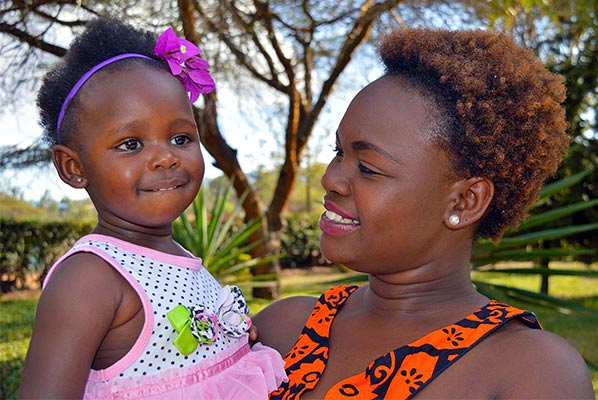
Ruth rocking her beautiful natural hair together with her daughter Sanaa.

Are you part of the naturalista’s in Kenya? As in women who are rocking their natural hair? Me I am! 🙂

And then also, if you’re like me who believes in promoting local brands, then you’ll be happy to go through these images that I’ve put together of Kenyan natural hair and beauty brands from which you can see some of the products that are available, and which you may be interested in trying out.

Also Read: The Fashionable Kid: Sanaa and Ruth

By the way, which products do you already use on your hair? Which ones would you vouch for? Which ones work best for your hair? Which would you recommend? Share!

See video below and meanwhile, see more videos on my You Tube channel here 🙂

How to Perform a Self-Breast Examination to Check for anything Unusual

0
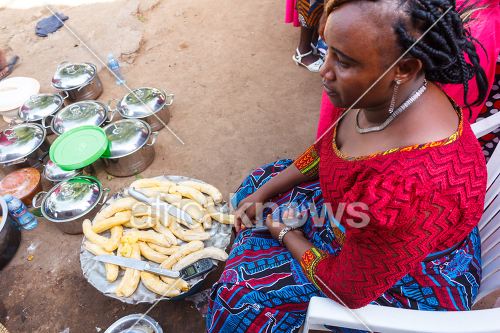
Photo courtesy: Africa Knows

At what age should you perform a self-breast examination? When should you examine your breasts? How do you examine your breasts properly? What exactly should you be looking out for when doing the examination? Do you know how to identify unusual signs of the breast at the early stages?

Well, today I share information by Prof. Ronald Wasike, Consultant Breast Surgeon, Aga Khan University Hospital on the issue of breast self-examination, which provides answers to the above questions. Read it and share with your friends.

At what age should women perform Self-Breast Examination and why?

If you are a woman aged 20 years and above, it is important to take just a few minutes each month to examine your breast and ensure they are healthy. Regular examination enables women to identify any alarming signs changes in their breast early (more importantly is to have self-breast awareness) and if treatment is needed, it can be started as soon as possible to ensure better treatment outcomes. In most cases the problem may be a cyst or a small growth that can be dealt with easily. If it is cancer, then early detection gives a greater chance of effective treatment and cure.

When should I examine my breasts?

You need to examine your breasts at the same time each month as they will change in shape and feel different during your monthly cycle. One to two weeks following your monthly period is the best time. If you have reached menopause, the examination could be done on the first day of each calendar month.

Also Read: “Don’t Touch Soya! Looking Back, Soya Could Have Been the Source of my Breast Cancer” -Hon. Beth Mugo

During the first examination, you should note the normal size and the shape of each breast, the feel of the breasts (either one being larger or higher than the other is normal) and the position of the nipples. Knowing your body well makes it easier to spot any changes.

How do I examine my breasts properly?

Undress to the waist and stand relaxed in front of a well-lit mirror with your arms by your side. Turn from side to side for a complete view of the breasts and make sure that the part of the breast going towards the armpit is normal. Take your time.

To ensure you examine your breasts properly, you need to know where the boundaries of the breasts are. The boundaries are clearly recognisable below the nipple and on the inner side of the breast but the upper and outer parts fade away into the skin. Imagine your breast shaped like a water droplet with the top stretching towards the armpit (and sometimes extending into it).

Check for any changes in shape or size, as well as discolouration, very prominent veins or whether either nipple is turned in.

With your hands on your hips, look at your breasts, again turn from side to side and look underneath; push your hands inwards towards the hips until you feel your chest muscles tighten. Look again at your breasts while you keep pressing and note any puckering (creases) of the skin or retraction of the nipples.

Place your hands lightly on top of your head and again look at your breasts carefully. This position emphasises any differences in size or shape of the breasts. Now concentrate on the nipples and look for any excessive upward or outward change of the either nipples.

Stretch your arms high above your head; again, this emphasises any differences between the two breasts. Finally, look down at your breasts and squeeze each nipple gently to check for any bleeding or discharge, which is unusual for you. Make sure that the top part of your arms is not swollen.

How do I feel my breasts (palpation)?

Many women who have not reached menopause have rather lumpy breasts just before their periods and for some women, this may persist for the whole month. In such cases, it becomes easier to detect any unusual lumps during examination.

Lie down comfortably on a flat surface with your head on a pillow and slightly raise the side that you are examining. Use your right hand to examine your left breast and vice versa. Examine one breast at a time.

Also Read: Elizabeth Muema: Crocheting for Cancer is my Ministry 

With your left shoulder raised, feel your left breast using the three middle fingers of your right hand. Keep your fingers flat and close together; start from the collar bone above your breast, pressing the breast gently but firmly towards the body, tracing a continual spiral.

Move your fingers in small circles, working right around the outside of the breast.

Continue to work systematically over the whole surface of the breast, checking for any lumps.

Now place your arm comfortably above your head with elbow bent and carefully repeat the examination of the whole breast, paying attention to the outer part which can now be felt with more certainty.

You may find a ridge of half-moon shaped firm tissue under your breast, this is normal as this tissue helps to support the breast.

Finally, examine the tail of the left breast ensuring that you go right up into the hollow of the armpit.

Now repeat the same for the right breast. If you think you have found something wrong, or if there is a noticeable change since the last examination, consult your doctor without delay, it does not matter how uncertain you are. Take note of the change since the last examination or the location of the just identified lump, but leave it alone until you see the doctor.

Most lumps are not cancerous. If the lump is cancerous, it can be treated early enough, sometimes even without requiring mastectomy but breast conservation surgery.

What should I look out for during examination/Warning signs?

  • Unusual difference in size or shape of the breast
  • Alteration in the position of either nipple
  • Dimpling of the skin surface
  • Unusual rash on the breast or nipple
  • Unusual discharge from the nipple
  • Unusual discrete lump or nodule in any part of either

You May Also Like to Read:

“A Walk Through my Cancer Journey” -Wanjiru Githuka

Wanjiru Githuka, a cancer survivor. Read her story on Mummy Tales.

Facts:

Breast cancer constitutes 20 per cent of all women cancers in Kenya with 4,465 new cases and 1,969 deaths being reported every year according to Globocan statistics 2012-2014.

Breast cancer affects more women with less than 10 per cent affecting men. However, these numbers can be reduced with increased awareness on the disease including simple interventions like performing self-breast examinations, to identify unusual signs of the breast at the early stages and seek treatment in good time to ensure better outcomes.

I hope the information above helps. Share it with a friend 🙂

Mummy Tales is an organization dedicated to empowering its readers on different aspects of womanhood and motherhood. Mummy Tales is the top Women & Girl Empowerment blog in Kenya (BAKE 2017 awards) and 2016 top Women & Girl Empowerment blog (African Blogger Awards). Read more motherhood experiences of Kenyan moms here. Follow Mummy Tales on: FACEBOOK l YOU TUBE l INSTAGRAM l TWITTER 

“My Daughter Died Suddenly at Two Weeks Old. I Attempted Suicide Twice after That” Vivian Gaiko’s Story

1
Vivian Gaiko

By Maryanne W. Waweru

I believe that every one of us has a story to tell –a story that can impact the life of another person. This is what Mummy Tales is all about –telling tales of women, of mothers, of dads –stories that we can learn from, draw inspiration from, stories that help us see things from a different perspective, stories that heal, stories that help renew our faith.

If you have a story you’d like to share, email me on wawerumw@gmail.com

Today, I share the story of 26 year-old Vivian Gaiko. Vivian is a mother of two –a beautiful daughter –Princess Amani, and an adorable son, Ivan Lemayian. Amani is no longer with us. She left too soon. This is Vivian’s story, in her own words.

“My firstborn, Princess Amani was born on 2 April 2014. I delivered her after undergoing 12 hours of labor, only to have to go for a caesarean section after they found out that I had CPD (cephalopelvic dispropriation). CPD is when a baby’s head or body is too big to fit through the mother’s pelvis.

When I first laid my eyes on my daughter Amani, my heart melted with love. She was adorably cute and the best thing that had ever happened to me. I had even deferred a whole academic year just to be with her. I enjoyed every moment of being with her.

Vivian with her husband after her graduation last year.

Baby was Dehydrated

Two weeks after Amani was born, I returned to the hospital for my post-partum (caesarean) wound checkup, which is recommended by doctors. My daughter was checked first and after examining her, I remember the nurse telling me that my baby wasn’t okay. While she hadn’t been feeding a lot, I’d thought that maybe it’s because she’s a girl… there’s this myth that girls don’t feed a lot.

The nurses then took Amani and put her on drip -she was dehydrated. I remember the search for an IV line on her being so traumatizing. She was poked severally just to get a vein. She was so tiny -I really felt sad for her. I was also so stressed by all that was happening –it was all moving so fast such that when asked to express breast milk for her, I could barely get a milliliter.

We spent two nights in the hospital but there was no improvement. She remained on oxygen, and was feeding through tubes. On the morning of 18 April, she started bleeding from the nose.

We sought a transfer to Kenyatta National Hospital (KNH). There, they took the history and drew blood samples for lab tests. The tests request sheet was written ‘sepsis’. From my studies (I have a Bsc. Medical Laboratory Science and Technology), I knew this was a very serious condition where there’s an overload of bacteria in the blood. Newborns succumb to sepsis if it is not detected early since their immune system is not mature to fight the bacteria. Things weren’t looking good.

Vivian, with a picture of her and her daughter.

Amani Breathes her Last

At 7pm that evening, Amani was still on oxygen and a drip. All this time I was praying for God to preserve her life, even asking him to take mine instead. Thank God for my husband and my parents who were present all through.

At around 8pm, my baby girl started having an attack. Her heart stopped and despite the doctor’s efforts to resuscitate her, they weren’t able to bring her back. We never even got her lab test results. The day was Good Friday.

I started praying –praying that God would take my life and put it in her lifeless body. When we went home, I couldn’t sleep. I had such a hard time trying to understand that my daughter was no more. It just wasn’t making any sense. I prayed that she would come back to life on Sunday with Jesus (the resurrection). I steadfastly held on to that hope.

In the meantime, my family members were organizing for Amani’s burial for the following day (Saturday) at Lang’ata cemetery. I wanted them to wait until Monday, because I was hoping for my miracle on Sunday, but they said there was no need for waiting. The burial plans went on. During the burial, it was only my physical body that was there; the rest of me was absent.

The following day, Sunday, is when I was hoping my daughter would be brought back to life through a miracle…

Continue Reading Next Page

Teenage Pregnancy in Kenya: Why Ivanna Waweru is Empowering Young Mothers

4

Ivanna Waweru, 21, was a teen mom who had an unplanned pregnancy. It was not a smooth journey, and today, she endeavours to support other young women who find themselves in a similar situation. This she does through the Weza Dada Foundation. A mother of one, Ivanna is a student pursuing a degree in Counselling Psychology. This is her story.

“My motherhood journey has not been a walk in the park as I got pregnant when I was 18 years old. It was a tough situation since it was an unplanned pregnancy and right from the beginning, I had to pull myself together since I soon realized I was going to be a single mother. I had to be strong.

When I was seven months pregnant, I enrolled for a diploma course in Counseling Psychology. This happened because my mother insisted that she was only going to support my baby and I as long as I went back to school. I am absolutely grateful for having the support of my mother – I know other teen moms haven’t been as lucky.

My graduation was such an emotional time for me; my baby and my diploma are literally twins! Now I’m pursuing my degree, and I have to balance my studies and being a mom to my little boy. It certainly hasn’t been a walk in the park, but as time goes by it gets easier and I acquire better coping skills.

What Inspired you to start Weza Dada?

While my mom caters for my financial needs well enough, I started feeling the need to do something to earn some money as I grow towards becoming financially independent. I have started small businesses since my son was born –some have not succeeded while others are still ongoing.

Also, at some point I realized that my emotional challenges were still stressing me very much. Young motherhood can be tough, and many times I would feel alone, overwhelmed and just too tired! Sometimes I hated myself and I honestly wasn’t fully functioning. There were moments when I didn’t want to meet friends and just I felt so unworthy.

 As I was going through this, I thought of the young moms out there who didn’t have the kind of financial support that I had, and were also having to deal with the kind of emotional stress that I was going through. I started feeling the need to reach out to them.

Also Read: My Husband’s Sudden Death when I was 19 Years-Old was a Reality Check -Ann Mitu

It also happened that my studies in Counselling Psychology had ignited a passion in me for working with people. In fact, when I undertook my academic research at Kenyatta National Hospital where I focused on the topic of challenges faced by young mothers, I especially developed an intense soft spot for young mothers, because I could empathize.

This experience fueled my decision to start an initiative which I hoped would work towards assisting young mothers –giving them hope and helping them improve their lives.

Young moms during one of Weza Dada’s events held last July.

So I started connecting with young moms through social media; on WhatsApp and Facebook and with time, I took these interactions offline to where we’ve been able to meet up physically. That’s the story behind Weza Dada’s beginning.

Weza Dada’s Activities

So far, we have had three successful meetings: at Uhuru park and two at Le 63 Lounge at Uhuru Gardens. During these events, we’ve had different speakers share their experiences whilst encouraging us. They speakers were Thitu Kariba, a wellness and fitness coach who spoke about ‘Young moms taking control of their lives’, and Wairimu Kiragu, a life coach who spoke on ‘Courage and authentic living’.

During our third meet up, we trained young moms on making shaggy and pompom mats, because we want to encourage them to engage in their own income-generating activities in a bid to be financially independent.

Wairimu Kiragu speaks to young moms during a Weza Dada forum.

Through my interaction with young moms, I’ve come to realize that many young moms’ problems are compounded when they have to rely on other people for their subsistence. But when they are able to go to school, get employment or run their own businesses, they are able to better support themselves and their children. In the coming months, I hope to have more business empowerment opportunities for young moms while at the same time encouraging them to advance their education.

We also continue to have our discussions on our online platforms where we encourage, share and learn from one another.

What have been Your Notable Sucesses?

We have reached over 200 young mothers in Kenya through our social media platforms and events. We have also had young mothers reconcile their lives and have a better outlook about life.

Through this project, I have been able to connect with great minds –women mentors –who have been helped me gain insightful, eye-opening experiences.

We have also managed to recruit volunteers; we now have four committed volunteers and I’m sure this will improve the quality of delivery of services during projects, trainings and events.

What challenges have you experienced so far?

Finances largely. I have a plan in mind for the young mothers but due to lack of funds I have not been able to execute them. We sometimes have to charge the young mothers to attend the events we organize, and many times they don’t have the money to pay, yet they need the information we share during these forums. We don’t turn away any young mom though.

I’m however hoping by introducing trainings and actualizing some income generating activities, we will sustain our projects and activities.

Also, coordinating people with different personalities from different walks of life can be difficult and sometimes I want to give up but my passion for the betterment of young moms keeps me going.

What are your Bigger Plans for Weza Dada Foundation?

I intend for this initiative to grow into an international organization that focuses on girl and women empowerment. I hope to see more women realize better life outcomes financially, emotionally and psychologically. I hope to see these women in turn become mentors and serve as inspirations to other girls, young women, and young moms.

Soon, we’ll start outreach programmes for young girls in high schools to enlighten, educate and mentor them on topical issues facing them, and how they can overcome some of the challenges involved.

Parting Shot

Motherhood has taught me that no matter what happens in life, you can shape your destiny. You need to get up, dust yourself and trudge on with your best foot forward. God is the best support system and prayer really goes a long way in helping one overcome their challenges.

I have found out that there is truth in the statement that ‘what doesn’t kill you makes you stronger’. I am one strong young woman who believes that nothing is impossible. I also know that loving yourself is key in achieving your goals. No matter the situation you find yourself in, the sky is the limit; dream, commit yourself and work hard. Find your purpose and live it.

Ivanna can be reached on ivanna@wezadada.org  

If you know of another young woman who is undertaking a women and girl empowerment initiative, then let me know via maryanne@mummytales.com and I will help tell their story.

Mummy Tales is a platform dedicated to empowering its readers on different aspects of womanhood and motherhood. Read more motherhood experiences of Kenyan moms here. Connect with Mummy Tales on: FACEBOOK l YOU TUBEINSTAGRAM l TWITTER

Six Kenyan Men Talk about Life after the Death of Their Wives (Part 2)

0

This is part two of the show that aired yesterday on Victoria’s Lounge on NTV, featuring six Kenyan widowers talking about their life experiences following the passing on of their dear wives. In case you missed part 1, you can catch up with it here.

Related: George Ojwang: Remembering my Wife Claris, Two Years On

Follow Mummy Tales on Facebook and Twitter for more stories surrounding family and parenting. 

Six Kenyan Men Talk about Life after the Death of Their Wives

0

How does life become, for men who lose their wives? What emotions do they go through? How do they cope? For those who have children -young children, how does life pan out?

These are the stories of six widowers who share their stories of loss and grief. This is Part 1 of it, as aired on Victoria’s Lounge with Victoria Rubadiri. Watch Part 2 here.

Related: The story of the Dru, who passed on while giving life

Related: Kambua’s #Anatimiza Song that Features Janet Kanini

The Caption to this Photo of Husbands Committing to ‘Wait’ with their Spouses has Touched Many

0

Hello good people, hope the week’s been good to you so far. Now, last week, I shared details about an event that was to happen on Sunday 24th – and it did. The event was for couples who are waiting wombs –that is wives and husbands who are dealing with infertility challenges, but are hopeful that they’ll become parents someday.

Related: List of Upcoming Events of Interest to Mums

I spoke to Hadassa Trip –founder of Waiting Wombs Trust and whose story I wrote here, and she told me that the event was successful. There are two photos she shared via @waitingwombsKE that particularly warmed my heart -and the hearts of many others too. See the caption of it below, as shared by Hadassa:

“Husbands committing to wait with their spouses”

Husbands committing to wait with their spouses

Many times, men are unwilling to share their experiences with regard to infertility in their relationships, and even more than that -we know of many women who have been abandoned by their husbands on account of their inability to bear children. So I found that that gesture by the husbands in that photo to be quite encouraging. Hadassa also shared another photo with the caption:

“The wives also committed to wait with their husbands. Marriages were restored. It was amazing!”

The wives also committed to wait with their husbands. Marriages were restored. It was amazing!

If you are dealing with infertility issues or know of a friend or couple who is, just know that you are not alone, there are many other couples in similar situations, and there is support for you. You can always get in touch with Hadassa through email: waitingwombs@gmail.com or through Facebook and Twitter. She will respond.

I’m actually glad to see so many women and men coming out today to speak about this very sensitive issue, which is going a long way in shattering some of the myths and misconceptions associated with infertility. The more we talk, the more we broaden our understanding of things, and the more we become less judgmental and condemning as a society. And the more we learn how to give thanks, and have faith in God.

Related: Meet Winnie Maina, a Surrogate Mom in Kenya

In previous years and decades, many women just suffered in silence, in loneliness, bearing the heavy physical, emotional and mental burden of being shamed, ridiculed and discriminated against because of their inability to have children. However, it’s a relief that that veil is gradually being lifted through the efforts of brave women like Hadassa and her supportive husband, and men such as those in the photo.

Patricia Atieno, during my interview with her.

You may also like to read this story that I published recently about Patricia:

You’d Rather Have Given Birth to a Mad Man, than Never Having Given Birth at all”

Like Mummy Tales on Facebook here, and follow us on Twitter here to keep abreast with new posts and carry on with more conversations regarding womanhood and motherhood.

Read Hadassa’s story: Why are you Wasting your Husband? Editah Trip talks about her 7-Year Journey of Trying to Conceive 

Hadassa and her husband Ken.

top featured image: models, AfricaKnows

Advertisement

POPULAR POSTS

error: Not Allowed