














Home Blog Page 55

Giving Birth in Kenya: Negligence During Delivery Cost my Son His Good Health

63

This has got to be the saddest and most emotional article I’ve read in a long long time. It is titled: ‘Ultimate Sacrifice of a Mother’s Love.

The article is by Betty Muindi, as originally published here in The People Daily newspaper.

**I was lucky to have a smooth pregnancy and faithfully attended all prenatal clinics. I was healthy and energetic even as my day of delivery neared. I ate healthy and read a horde of magazines and books on antenatal care to ensure I did the right things.

I counted days to my expected day of delivery, but the events of August 30, 2011, a week to my delivery day changed my life forever. How can I ever forget this day? I walked to Jamaa Mission Hospital for my normal antenatal visit at around 7.30am en route to work. I was not in any pain or discomfort. This was a normal check-up in preparation for delivery date.

As I lay on the examination table, one ‘Dr Wangwe’ exclaimed, “Aah your birth canal has opened! I see no need of you carrying this pregnancy anymore. I will send you to the maternity ward, they will induce labour and you will have your baby today.”  “What? I don’t even have my baby clothes and I still have to report to work! “I retorted. “Tell your husband to bring the clothes, this baby must come today,” he replied conclusively.

This was my first pregnancy. I had no idea what had just happened. I walked to the wards still not in terms with the sudden change of events, but there seemed to be nothing I could do. I was shown a bed and as soon as I lay on it, a nurse induced my labour. “Please press the bell by your bedside if you need anything,” he said and left.  Two nurses checked in for night duty and that is where my nightmare began.

I laboured the entire night; I was helpless, desperate and at one point vomited on my bed. This earned me a thorough tongue-lashing and they warned me not to ring the bell again until I saw blood or water! I will never forget their faces.  The doctor came to see me at 8am the following day and when I told him my pain had disappeared, he burst my water and lined a drip on both of my hands.

Shortly after, contraction pains intensified. At 9am, there were signs of baby coming, the nurse injected more medicine into the drip to increase the contraction. “That pain is not enough to push the baby,” she said and left. She came back again at 1pm and injected more medicine into the drip. I felt like my skin was being peeled off.  At 5pm, my husband came and could not take it anymore, I was still in so much pain and my birth canal had not opened an inch.

We demanded for a Caesarian Section, but there was no doctor available to take me to theatre. They could not refer us to another hospital either because we needed a doctor’s referral note, yet there was no doctor on sight.   After an hour of pushing, finally the ‘doctor’ came at 6pm. I asked him to take me to theatre but he refused. “Ruth, you are going to push this baby whether in labour or not.”

He called one of the male nurses who pressed my womb with his elbow while he forced me to push the baby. Barely 15 minutes after, the baby came out.  “My baby has not cried… My baby has not cried,” I remember crying. The doctor pulled the baby up and said, “Have you seen what you have done to the baby?” This is when I looked and saw the sex of my baby. It was a boy, ‘Thank God’ I said to myself.

But wait a minute… my baby’s head was severely pressed on the sides. “Ruth look at what you have done to the baby,” the doctor kept repeating. “But you forced me to push the baby while my birth canal had not fully opened,” I cried. I saw the doctor injecting my poor baby with some medicine perhaps to trigger some pain so he could cry, but nothing happened. He was then put on oxygen to help him breath and placed him in an incubator.

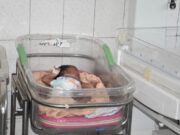
I only smiled when my husband came to the ward and told me our baby was the biggest, light skinned and the most handsome in the nursery, but he was in the incubator shivering. He weighed 3.3 kilogrammes. When I was finally able to see my son, he had not stopped shivering, blood oozed from his mouth and he laid on soiled beddings in the incubator.  On the second day after delivery, his condition had not improved and we asked for a paediatrician to tell us why he was that way, but there was no in-house paediatrician.

Hours later, a man called Dr Kyalo from Metropolitan Hospital arrived — his name also appears in the birth notification slip — and assured us that the baby was stressed due to prolonged labour and he was just tired and in no time, he would come along. We believed him.  But then my hopes were dashed again when on the third day another nurse disclosed that our son was in a bad state and that his condition would not improve in the incubator.

She advised we take him to a hospital with an Intensive Care Unit (ICU). We called hospitals with an ICU in vain until midnight when one nurse told us that she had secured a place for him at Kenyatta National Hospital (KNH) and that we needed to hurry. But then, we could not leave the hospital. We had to clear the hospital bill first, but only when the cashier arrived the following morning!

We were boiling with anger, I was crying so hard in fear of losing my son. My husband and his brother almost turned physical before the nurse agreed to carry our son to the ambulance. We finally arrived at KNH but again they were not expecting us as no one had called to book us in. The ICU was full and we only got a bed at 3pm the following day. After two hours in the ICU, a jar of meconium and amniotic fluids was removed from my baby’s lungs and his condition was critical.
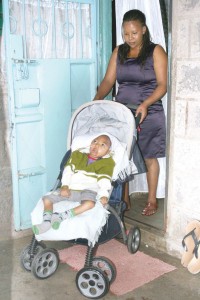
The doctor said that the damage could have been minimized if Jamaa Hospital had his nose and mouth suctioned to remove mucous and fluids from his lungs immediately after he was born and not three days later. He insisted he needed a medical report from Jamaa. At Jamaa, my husband would only be given the report in exchange for payment of the hospital bill, which had sky rocketed to Sh 60,000 and only revised to Sh 32,500 after he protested.

He paid the bill but to his shock, they refused to give him the medical report. The matron said that the person they had told us was a doctor was only a nurse dressed in a doctor’s coat and that she could not give us a report.    My baby stayed in the ICU for a month, and when he finally opened his eyes, he was transferred to nursery still under close supervision for another month.

When we asked the doctor why our child could not cry like the rest, he broke the bad news, “Due to prolonged labour and administration of too much Pitocin (the drug for inducing labour), your son inhaled meconium and amniotic fluids and suffered a birth asphyxia. Your son suffered severe brain damage, which means he will require support 24/7 for the rest of his life. Your son is a special child now.” I could not believe it, I went into denial.

My dreams had been crushed, my son’s future had been stolen, my desire of having a normal child shattered. I had lost my son to severe cerebral palsy, epilepsy and asthma. Going home with a special child after two months in hospital was not easy. The neighbours talked ill of us. I was ashamed to go out and I felt I didn’t belong to this world. I took my son for therapy thrice a week for 10 months at Sh500 per session.

It became too expensive for us because he also needed occupational therapy, which cost Sh500. That was Sh5,000 a week and since we could not afford it we couldn’t take him anymore. My son feeds from a tube stuck on his chin. He is blind, deaf and dumb and has never been able to sit at the age of two years eight moths. He is also not able to swallow foods. We were never prepared for this; the painful seizures, difficulty in breathing, sleepless nights, therapies, recurring ailments due his low immunity, which mean rushing him to hospital two to three times a week.

He is in pain every second of his life. He can’t live without anticonvulsants and antibiotics since his chest is still very wet. He has pneumonia that keeps on recurring due to his wet chest, he coughs and sneezes every minute. We have been emotionally and financially drained. I have gone to every school I know including Dagoretti Special School to secure him a space with no luck. He needs to be somewhere he can get therapy every day.

I have never slept since my son was born, because he needs to feed every two hours. If he is not feeding, he is either in convulsing or coughing. Morning comes when we are still seated and I still have to report to work. He gets comfortable when seated. The biggest challenge has been house girls who leave him alone and disappear while am at work. I look at Neville everyday and feel so sad to think how different his life could have been if we had been cared for properly.

Today we are here two years eight months down the line because of God’s grace and prayers of people have prayed for us every time we shared Neville’s story.**

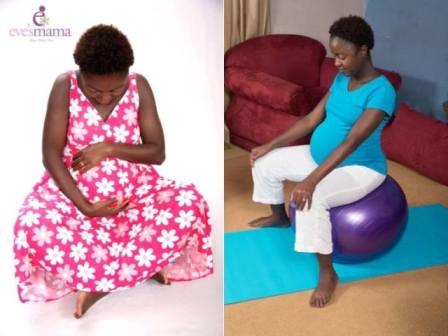
A Helpful Tip for Pregnant Women that Can Help Baby Engage: By Lucy Muchiri of Evesmama

0

Are you pregnant? Do you know of a lady who is? Lucy Muchiri of EvesMama gives some helpful advise to all pregnant women. Lucy is a well experienced midwife who I have featured here before. On how to help baby engage during pregnancy, here is the advice that Lucy offers:

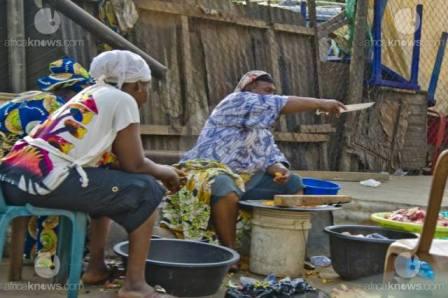
“Majority of African women in the rural areas work while squatting, bending or seated on curved stools or on the ground with their legs apart. There is a theory that this helps open up their pelvis allowing the baby to engage on time, and eventually making the birth easier. To help achieve the same effect, the pregnant woman can sit on an exercise (birth) ball for some time during the day. Towards the end of pregnancy, she can also do some squats and sit in the tailors position everyday. This will help baby engage.”

How I Spent my Yesterday with the FreMo Birth Center Community in Kawangware

1

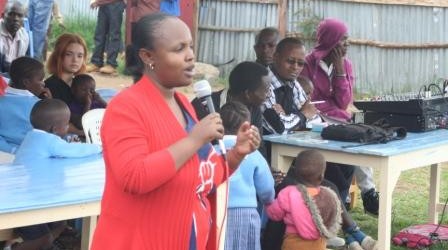
I spent yesterday in the company of moms in Kawangware, sharing, talking and learning about maternal health and our children’s education.

This was during the opening of a primary school called FreMo School. The opening of this school has an interesting background story.

Three years ago, a young man named Moffat Osoro opened a tiny one-roomed clinic in Kawangware that hoped to serve pregnant women and new moms. Today, FreMo Medical Center has grown, and it takes up 9 rooms, which include two delivery rooms, a post natal room, an immunization and child welfare room, a laboratory and a pharmacy. Moffat has been assisted by his brother Fred in this endeavor.

FreMo delivers about 200 healthy babies each year.

Three years later, in February this year, Moffat thought of starting a school that would cater for children who had been birthed at FreMo, as well as their friends and relatives who live in the Kawangware area. And in just three months, his thought became a reality.

So how did I come to meet Moffat?

Sometime last year, I stumbled across the Clinic’s Facebook page, and I have since then been regularly following the updates, which are all about mothers and their babies in Kawangware. Moffat is the one who updates the page.

Eventually, two weeks ago, I called Moffat and told him I’d be interested in visiting this clinic which produces sch amazing stories. While there, we had a long chat and he took me through a tour of the facility. I was quite inspired and impressed. In his 32 years, Moffat has done quite alot with himself and for the mothers of Kenya, specifically those around the Kawangware and Riruta Satellite areas. His is commendable, considering he has zero medical background or training. I intend to write his full story soon.

So yesterday was an open day for the parents of Kawangware at FreMo’s new school. However, I noticed that most of the parents present were moms. I think the dads were out looking for unga. And school fees. I hope.

Moffat had invited me to the function to speak about my experiences as a mother and a journalist who writes on maternal health –and how the two tie in together. I was more than happy to oblige.

So yesterday was a day very well spent with fellow moms, and glad that the sun was out unlike today when it is cold, rainy and oh so muddy.

But is all good.

Here are some photos from the event.

Yaaay! Mummy Tales Won at the Kenyan Blog Awards! Thank You!

4

The Bloggers Association of Kenya (BAKE) held their annual awards last Saturday 3 May 2014. The awards fete Kenyan bloggers who excel in specific categories. My blog had been nominated in the Best Topical Blog category, and I won! :) I want to thank you for your support, for reading my posts, for voting for me, for your feedback via comments and your emails, for sharing my posts with your friends, for our conversations on Facebook and Twitter, and for generally sharing this journey with me. A big thanks to everyone who is a supporter of this blog. May God bless you.

I dedicate this win to my three awesome boys – Baba Kitty, Kitty and Ello, without whom this blog would never have been. Literally.

And above all I thank God for the blessing of motherhood which I don’t take for granted, and I thank him too for the writing passion he gave me. I soooo LOVE writing waah!

Have a blessed week ahead, and keep reading.

Lillian Maingi-Barasa: Salon Magazine’s Editor With a Passion for Giving Back

3

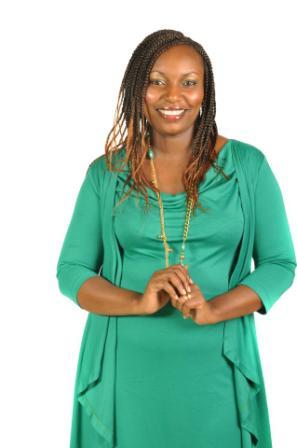
Lillian Maingi-Barasa, or Makena as she is commonly known, is mom to three girls. She is also the editor of Salon Magazine. And she is also involved in an initiative that helps young girls. I had a chat with her, and here is how she gives back to society in her own way.

MT: What is your initiative all about?

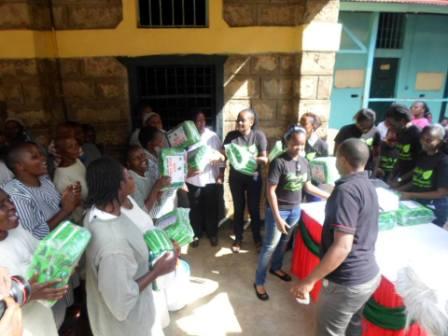
LMB: I donate sanitary pads to schools and women’s prisons.

MT: When did you start doing so?

LMB: I stared about four years ago.

MT: What made you start this initiative?

LMB: I have always wanted to give back to the society, and the pads seemed close to my heart. I have never lacked pads in my life, but I usually experience extreme cramps (even at this age). So I tend to think of that girl who besides dealing with cramps has nothing to use…So if  I can provide the pad so that she worries only about the cramps, then atleast I may have solved one problem for her.

MT: What are some of the activities you have undertaken so far?

LMB: We have donated pads in Marigat, Meru Women’s Prisons, children’s homes and primary schools in Meru.

MT: How do you go about these activities? How do your mobilize people? How has the response so far been?

LMB: I mobilise my friends who help me buy these pads. Some send me money, others bring physical pads. A friend introduced me to a place where they make subsidized pads and with only 450 shillings, I am able to buy a year’s supply of pads for one girl. That is an average cost of lunch in Nairobi today.

MT: What have you learnt so far with regard to this initiative?

LMB: That people are always willing to help, and all one needs to do is to ask. I also learnt never to assume that because I am okay, my neighbour is. Until I asked my former school what they would need help in, sanitary pads were the last things I would have expected them to ask for. I had imagined they would say revision books or some mentorship program.

MT: How many girls have you been able to reach?

LMB: We kept 300 girls in school last year in various places, and this year we are hoping to keep a bigger number. We have also dignified 150 women prisoners in Meru correctional facility.

MT: Where do you get the pads from?

LMB: I buy pads from Saidia Dada Network and Pads for Schools Kenya. That is where I get them in bulk and at an affordable cost.

MT: Have you incorporated any partnerships along the way?

LMB: Thankfully, Meru FM came on board this year and are really helping with publicity and fundraising. I also partner with Turudini Mashuleni Initiative, which is a mentorship program.

MT: What do you envision as the future of your initiative?

LMB: I hope to get a solid fund where I can supply pads to as many girls as possible, without necessarily calling on my friends to skip their lunches every month! I fear it will get a point where they might get tired of giving!

MT: You are a mum. Tell us more about that.

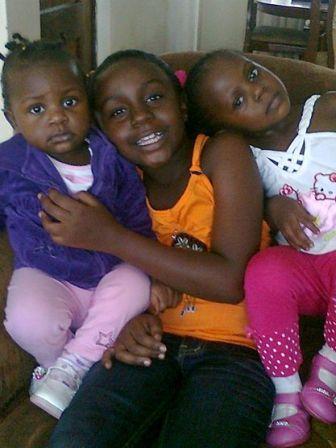
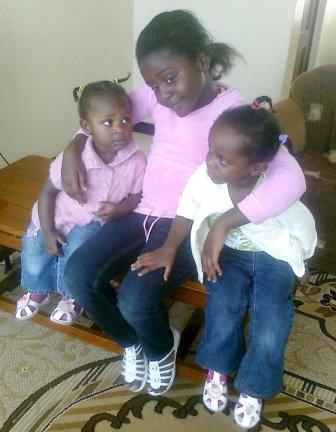
LMB: I have three girls who are my reason for living. They are 11, 5, and 4 Years. My 11 year old is towards teenage and we have started serious talks about sexuality and relationships. It is very important for each parent to be the first source of such information so that when they receive it out there, they have a reference point. This means that you have to be as honest as possible with information. We have also discussed menstrual periods because I don’t want her to think she is sick when that time comes.

My other two are almost like twins and want to do everything together. This includes choosing their clothes, colours of their shoes all the way to their panties. Of late, I have noticed they are growing different characters. The middle one is ‘more of a lady’ and the last born is a perfect ‘tomboy.’  They are also very particular about their colours with one being Miss Pink and the other Miss Purple. Their collective Nickname is Power puffs but the last born has an extra, HP (Honey moon Package). She was born exactly nine months after my wedding!
I am forever grateful to God for choosing me to be a co- creator with Him.

MT: Thanks Lillian for being a Mummy Tales guest, and kudos for the good work you are doing.

Also see previously featured moms who are paying it forward:

Maryanne Kariuki of A & J Initiative and Shamim Okolloh, and old girl of Kaimosi girls. If you know of a mom who is giving back to society in her own small way, let me know on maryanne@mummytales.com and I will tell her inspirational story.

Do Your Children Have all Their Immunizations? Are They Up To Date?

0

If you have a child who is around 2 years old, I’m sure you’ve probably lost track of the number of times your baby has had a jab or an oral vaccine administered to them. And rightfully so, because newborns and little children are at greatest risk for infectious diseases because their immune systems are still developing, and so it is best that they be immunized. Many life-threatening and preventable diseases occur earlier on in life, and if vaccines are administered to them at that young age, they are unlikely to suffer from these diseases.

Immunization is known to be one of the most successful health interventions that help prevent thousands of deaths and disability of people across the world. Kenya ofcourse is no exception, and many of us are alive today because our moms ensured we got the necessary vaccines at the right time.

The basic principle of immunization is to administer into a healthy person a vaccine that prevents them from getting a certain disease. Take note of the word a ‘healthy’ person. You may have noticed that if your child was unwell at a time when he was due for a jab, then the doctor advised you to wait until baby finished his medication and was certified as healthy before he could be given the vaccine.

Kenya Vaccines Schedule

About the schedule of vaccines, when I was a new mom, I thought that the issue of vaccination was standard across all health facilities –whether public or private. But I have come to learn otherwise.

What I now know is that there are primary / mandatory vaccines (those in the national immunization programme), and then there are ‘booster’ vaccines, which are largely found in private health centers.

The Ministry of Health has a standard schedule for the vaccines, which details when (at what age) each respective vaccine should be given to a child. In this schedule, the completion of all the primary vaccines is within the child’s first year.

At the private health facilities, they have slightly different schedules. While they too administer the primary vaccines (government ones and at the recommended times), they have what are called ‘boosters’ or additional shots.

About these boosters (and vaccines in general), the best thing is to do your research about them, ask questions –and ask the right people (specifically your health care provider) about what you are unsure about. I have noted that there is lots of information out there about vaccines, lots of speculation by we moms, some doubts, some rumors, some fact, some neither here nor there… We share all this information during our chama’s, on Facebook, at our workplaces during teabreaks, after church, at weddings, while shopping at Toi market –basically anywhere a kamukunji of moms can be found. While this is not necessarily a bad thing, it sometimes one can get very confused about this whole vaccination affair, especially the booster shots. So the best thing is to always ask a medic if you are unsure about something.

And then, always remember to keep your child’s immunization card/booklet somewhere safe and take it with you to the hospital at all times, especially when you are taking baby for the next dose of vaccine.

Remember, the best gift you can give your child –is good health.

Incase you wonder about all those initials, and about the diseases that the vaccines prevent, here’s a guide:

BCG: Protects against Tuberculosis

DPT: Combined vaccine that protects against Diptheria, Tetanus and Pertussis (whooping cough)

HIB: Protects against Haempphilus influenza type B

HBV: Protects against Hepatitis B

OPV: Protects against Polio

PNEUMONIA: Protects against Pneumonia and otitis media

ROTAVIRUS: Protects against infections caused by Rotavirus

VARICELLA: Protects against Chicken Pox

HAV: Protects against Hepatitis A

INFLUENZA: Protects against Influenza

MEASLES: Protects against Measles

YELLOW FEVER: Protects against Yellow Fever

MMR: Protects against German Measles, Mumps and Rubella

CHOLERA: Protects against Cholera

MENINGITIS: Protects against Meningitis

The ‘Chips are Stupid Without Aromat’ Ad Has Upset Many Kenyan Moms

8

That Aromat Ad!!!

I am a fan of television, especially between 7pm – 11pm because that’s when I get to tune in to the news bulletins – the Swahili one and the English one, and in between watch the local productions which I love very much – mainly those on Citizen TV.

Naturally, I get a sample of ads during this ‘prime time’ where products and services juggle for that coveted viewership.  I’ll not bore you with the phenomenon of ratings and ad spots and the hefty prices advertisers pay to advertise their products or services during ‘prime time’.

My issue is with the content of some ads.

I will specifically single out the Aromat ad that has been running over the last couple of days –more so around the hours I am attuned to television.

The ad implies that ‘Chips are Stupid’ without Aromat.

Like really?? Stupid?? Really??

I wonder, why use that kind of language to communicate to mass audiences about convincing them to buy a (your) product? I am not in the advertising industry, and I don’t know the processes of getting and ad from the creative guys, to final approval by client, to having it aired in television stations, and the bottom lines, but I just seem to wonder how many people that ad passed through before it was finally certified as ‘fit and perfect to air’.

The ad has definitely rubbed many moms the wrong way. There is even a Facebook page called ‘Parent’s Against Aromat’s Chips are Stupid Advert’. And that’s just one forum where mothers are expressing their deep disappointment and disgust. There are many more.

So what exactly is irking these moms?

The use of the ‘stupid’ in the ad.

As we raise our kids, one of the greatest lessons we teach them is how to address people with respect. We tell them to use the right language as they talk to others. We tell them not to use inappropriate words. The way I know it, the word ‘stupid’ falls in the category of words not to be used in any conversation –whether by an adult or a child. Teachers and religious leaders (such as Sunday school teachers) help us reinforce some of these lessons.

So for them (and we) to see the word ‘stupid’ being freely used on national television –whether during prime time or off-peak, is quite disturbing. A few moms have had their children point out to them that the Aromat ad is using ‘bad language’. The kind of language that their mothers and their teachers emphasize should not be used.

Now, I would like to say that I do know that it is our responsibility as parents to guide our children in the right direction, instilling values and principles in them in the hope that they will grow up to be model citizens. I am also not ignorant of the fact that this is the real world, and our children probably come across other inappropriate words as they go about their daily lives because we cannot be with them 24-7. Some of our children use public transport to and from school, and it would be no surprise to know that they have heard worse.

But it does not go to say that it is okay that words such as ‘stupid’ should pass unnoticed when used on national television –during general viewing.

To the people over at Knorr, I can tell you for a fact that many mothers are terribly upset by that ad, and it has left a bitter taste in their mouths (pun very much intended). And by the way, aren’t most household items –more so those to do with the kitchen, a woman’s forte? Aren’t most moms responsible for the household budget? Yet ‘stupid’ is the kind of language you are using to appeal to us to buy your product? SMH.

I heard somebody argue that the use of the word ‘stupid’ in that ad was not meant in a bad way, that it meant ‘stupid in a good way’. I still have no idea what good stupid means.

Then again, this is advertising. I hear an advert is considered very successful if it evokes strong emotions by the audiences, and if it generates conversation. If people are spending time talking about it, sharing it on social media, and creating Facebook pages about it, then it is a good thing.

So Knorr, if those are the benchmarks of a successful campaign, then your ad has been successful no doubt.

I hope you will now move on to the next level of addressing the concerns of hundreds of parents, especially moms who are terribly upset by your ad.

Thrush in Breastfeeding Moms: What Is It and How Can it Be Treated?

0

What is thrush?

Thrush is a common and harmless yeast infection in a baby’s mouth that can affect your nipples during breastfeeding. Yeast is a normal part of everyone’s digestive system, but when there’s an overgrowth, an infection sets in.

Many infants first come in contact with yeast as they travel down the birth canal (you can have a vaginal yeast infection during pregnancy and not be aware of it). After your baby is born, or during labor and delivery, antibiotics taken by you or your baby can trigger a case of thrush. That’s because antibiotics, which get into your breast milk, kill off “good” bacteria that keep yeast in check.

So, for example, a baby delivered by c-section can develop a yeast infection if his mother is given antibiotics right after surgery. Similarly, antibiotics given to moms during labor for group B strep can also set the stage for an infection.

Your baby can pass thrush on to you, so it’s important to seek treatment for yourself and your baby at the same time. Otherwise, you may pass the infection back and forth.

Sometimes it’s hard to pinpoint any one cause of thrush. Some women and babies are simply more susceptible than others to yeast. It thrives in warm, moist, sugary environments, and that’s exactly what your baby’s mouth and your nipples provide during nursing.

Some common signs of a yeast infection in breastfeeding mothers are:

  • itchy, pink, red, shiny, or burning nipples (may be cracked) (Note that pink, tender nipples can also be a sign of a bacterial infection, or dermatitis, which should be diagnosed and treated by a dermatologist.)
  • deep, shooting breast pain during or after feedings
  • a vaginal yeast infection

Most young babies have symptoms, but older babies might not. Those who do may:

  • have white patches on the inside of the lips and cheeks that look like cottage cheese and aren’t easily washed off. If you notice a white coating on your baby’s tongue but nowhere else, it’s probably just milk residue.
  • cry when nursing or sucking on a pacifier or bottle. The white patches mentioned above may be painful and make feeding uncomfortable if the infection is severe.
  • have raised, patchy bright or dark red diaper rash with distinct borders. Small, red spots frequently appear around the edges of the main rash. The affected area is red and may be tender or painful, and the rash can creep into the folds of skin around your child’s genitals and legs. It almost never appears on the buttocks.

What Can I Do?

If you suspect thrush, contact your healthcare provider for diagnosis and treatment. Thrush should only take a few days to cure if the treatment is effective and/or aggressive, and you and your baby need to be treated at the same time.

Your provider may recommend that you apply an antifungal prescription medication cream called Nystatin to your nipples to treat the yeast on your breasts so that you and your baby won’t pass the infection back and forth. Or she may recommend applying an over-the-counter antifungal cream like Lotrimin or Monistat to your nipples after every nursing for a week to ten days. If you’re still in pain after this treatment, you may be prescribed a more potent antifungal medicine like oral Diflucan.

To ease any deep breast pain, you may want to take 600 mgs of ibuprofen every six hours (maximum of 1,200 mgs over 24 hours) until the worst is over and your treatment starts working.

To treat your baby’s thrush, your pediatrician will likely prescribe Nystatin. You’ll “paint” the medicine on the white patches with the enclosed applicator (or your finger) several times a day for ten days. Be sure to give the Nystatin after nursing so the medicine will stay in your baby’s mouth longer. It may take a week to clear up the infection.

If the infection doesn’t seem to be clearing up, call your doctor. Some babies with thrush also develop a yeast diaper infection. If that happens, your doctor can prescribe a fungal cream medication to use in the diaper area.

NB: This article is an original publication of Baby Center.

Malaria in Pregnancy: Why It Shouldn’t Be

0

Today, April 25 2014 is World Malaria Day, and I have been going through a couple of articles written with this regard.

And I have learnt something new today.

I didn’t know that people in malaria-prone regions are always advised to wear light-colored clothing that covers all the skin. Why? Because this is one of the best strategies to keep the mosquitoes away because mosquitoes get attracted to dark colors. Okay –that is totally new information to me!

While we are still talking malaria, let me share some information about pregnant women and malaria.

Malaria in pregnancy is a big problem, as it poses significant risks for both the mother and her baby. Pregnant women are especially vulnerable to malaria because pregnancy reduces a woman’s immunity to various infections, malaria being one of them.

Why malaria is dangerous in pregnant women is because it increases the risk of:

–          Illness on the part of the pregnant woman

–          Anaemia

–          Her having a spontaneous abortion

–          Her delivering a stillborn child

–          Delivering a premature baby

–          Having a baby with a low birth weight

In Africa, 200,000 newborns die each year because of malaria in pregnancy. Kenya has it’s contribution to this, because in 2012, slightly over 108,000 pregnant women in Kenya were diagnosed with malaria. That is a very high number :( . It is also interesting to note that 1 in 7 pregnant women who live in malaria-endemic zones in Kenya (where malaria prevalence is high), do not seek antenatal care. Meaning that for those who lost their babies because of malaria, this need not have happened. It is a sorry situation because malaria is very much preventable and it is very much treatable.

So what can women do to prevent and treat malaria? WHO recommends the following package of interventions for the prevention and treatment of malaria during pregnancy:

–          Use of long-lasting insecticide treated nets

–          Intermittent preventive treatment

–          Prompt diagnosis and effective treatment of malaria infections.

Where children are concerned, 1 out of 11 mothers does not believe that malaria medicine can provide relief for a child who has fever. Some mothers believe that a child’s fever should first be treated with herbs.

While most of us know the facts surrounding malaria prevention and treatment, it is our responsibility to share this information with others who don’t, especially fellow women.

Most of us have hired housegirls in our homes who help take care of our babies, and when some of them share their cultural beliefs with us, we laugh at them, tickled by how retrogressive some of their thinking can be –especially in this day and age.

However, we do them no justice when we fail to share with them the correct information. The price for ignorance is usually hefty, and it is always sad to learn that women die, babies die because of the myths, superstitions and various cultural beliefs that we have in our society. So in our own individual capacities, let us share the information we have. It never hurts, and the best thing is that you could be saving a life!

pictures courtesy: WHO

Have You Heard of Infant Massage? It Can Help Your Baby Sleep Better…

5

Have you ever heard of infant massage?

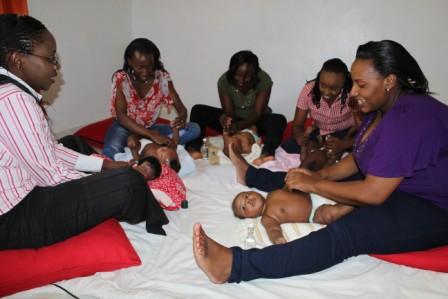
As in massage that is done on an infant using the right technique, not just those haphazard up and down movements that you do on your little one’s legs then call it a massage (well, atleast that’s what I did on my sons when they were infants). When I used to massage my boys, I used to do so mainly to get them to stretch their legs, and just to bond with them as I gazed into their pure white eyes :) and they in  turn gazed into my weary red eyes filled with lack of sleep. :( But it is only recently that I have come across information about a certain technique to massaging infants that has a much wider range of benefits for both baby and mom/dad.

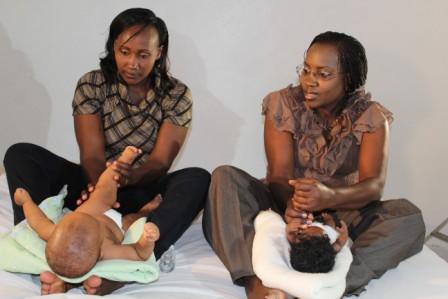
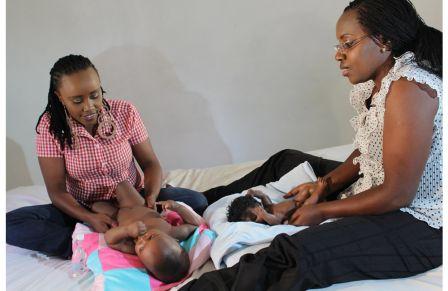
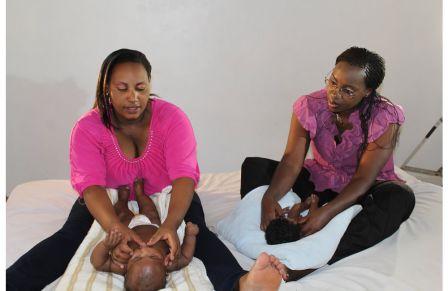
I learnt of this through a lady I met last week, and her name is Susan Muriithi of Toto Touch. In a conversation we had over coffee, she explained to me what exactly infant massage is, and though there were no practical’s (Ello is no longer and infant), I wished that I had met her before.

But before I go on, let me elaborate more on infant massage.

It is the art or method of lovingly stroking your baby in a sequence of moves that help strengthen the bond with the baby, as well as enhance baby’s growth and healthy development. Susan tells me that there are over 45 strokes involved in infant massage, which are all easy to learn and so much fun to watch and do –especially when you see how your little baby responds.

Infant massage helps relax babies and helps them sleep better. And when the little one sleeps well, then both mom and dad are happy, because we all know how frustrating it can be when a baby refuses to sleep. Especially for new moms! (ask me, I so know this). So anything that can help baby sleep better is more than a welcome relief. :) So what are the other benefits of infant massage on baby?

  • It helps baby feel loved
  • It helps boost their immune system
  • It helps in sensory stimulation
  • It helps improves their skin condition
  • It definitely helps improve their blood circulation
  • It helps their digestion
  • It helps balance their respiration
  • It helps provide relief for teething pains

The massages by the way are done on the baby’s legs, feet, abdomen, chest, arms, face and back.

Benefits of infant massage for parents.

As a parent, you learn to understand and respond to your baby’s cues.

  • You learn the techniques necessary to comfort, calm and soothe your baby.
  • It provides an additional avenue for close nurturing and contact.
  • It generally is an amazing tool for helping parents become closer to their babies.

Infant massage is Susan Muriithi’s forte. She trains both moms and dads on how to massage their little ones, for the clear benefits of both.

Susan is a Certified Infant Massage Instructor (CIMI), a Lactation/Breastfeeding Consultant, and a Registered Nurse. She is also the Chairperson of International Association of Infant Massage Kenya.

This is what she says about her passion for newborns:

“There is nothing more rewarding for me than supporting new families. Being a valuable part of helping with new life is an amazing type of gratification. I love what I do! I am passionate about babies, I am always eager to support new parents by empowering and encouraging them. I love helping new moms and dads discover the joys of parenthood.”

As a nurse, and as a mother herself, Susan is able to combine her professional expertise and personal experiences to offer well-grounded services to both infants and their moms. She believes that every parent should experience the benefits that come from early bonds that are loving, healthy, and secure, and one of the best ways to achieve this is through infant massage.

So if you are a new mom, or know of a new mom or new parents who can benefit from learning how to massage their newborn, then get in touch with Susan. She offers private lessons to moms and couples, or if you are in a group of new moms in the same neighborhood or chama, then having her over would be such a great ‘plan’ as you would learn together.

It would also be a good ‘gift’ to a new mom incase you’re lost of ideas on what to get her. During a baby shower, you can also let the expecting mom know that you will have Susan teach her how to massage her newborn when the time comes (Susan by the way is also a lactatian who teaches new moms how to properly breastfeed their newborns so she’s quite an invaluable resource for new moms).

Here are some testimonies from parents who have done the infant massage with Susan.

After the stomach massage, Milles passed a lot of gas and 3 diapers of poooh one after the other, and he was soo relieved, and slept for many hours.Susan is doing a great job and all mothers especially with infants should contact her. first time moms will also benefit a lot. am a blessed mom and i enjoy massaging my son everyday.” –Maggie.

“All those with problems of colicky babies and babies who groan and strain, Susan Muriithi can help. She is a certified infant masseuse (sp). She comes to your home shows you how to do it and when. Vital parts to touch and bonding techniques. Better allow her to help. She helped me massage my son in the morning and he is so relaxed now…no more groaning and straining and he is still asleep.” –Carol Nekesa.

“Having a baby bath and massage lessons done at home was the best thing for me and my baby. i learnt a lot,from the sessions and continued massaging my son daily after his bath and he feels so relaxed and sleeps for longer hours without being fussy. Thank you Susan.” –Lisa

So if you want to try out infant massage, then get in touch with Susan. She’ll sort you out.

Susan’s contacts:

Telephone: 0723 553 188 or 0734 553 188

Email: susan@tototouch.co.ke

Facebook page: Toto Touch Website: Toto Touch


Susan is certified by the International Association of Infant Massage.

NB: Additional info from Infant Massage USA.

Advertisement

POPULAR POSTS

error: Not Allowed