















Home Blog Page 56

Thrush in Breastfeeding Moms: What Is It and How Can it Be Treated?

0

What is thrush?

Thrush is a common and harmless yeast infection in a baby’s mouth that can affect your nipples during breastfeeding. Yeast is a normal part of everyone’s digestive system, but when there’s an overgrowth, an infection sets in.

Many infants first come in contact with yeast as they travel down the birth canal (you can have a vaginal yeast infection during pregnancy and not be aware of it). After your baby is born, or during labor and delivery, antibiotics taken by you or your baby can trigger a case of thrush. That’s because antibiotics, which get into your breast milk, kill off “good” bacteria that keep yeast in check.

So, for example, a baby delivered by c-section can develop a yeast infection if his mother is given antibiotics right after surgery. Similarly, antibiotics given to moms during labor for group B strep can also set the stage for an infection.

Your baby can pass thrush on to you, so it’s important to seek treatment for yourself and your baby at the same time. Otherwise, you may pass the infection back and forth.

Sometimes it’s hard to pinpoint any one cause of thrush. Some women and babies are simply more susceptible than others to yeast. It thrives in warm, moist, sugary environments, and that’s exactly what your baby’s mouth and your nipples provide during nursing.

Some common signs of a yeast infection in breastfeeding mothers are:

  • itchy, pink, red, shiny, or burning nipples (may be cracked) (Note that pink, tender nipples can also be a sign of a bacterial infection, or dermatitis, which should be diagnosed and treated by a dermatologist.)
  • deep, shooting breast pain during or after feedings
  • a vaginal yeast infection

Most young babies have symptoms, but older babies might not. Those who do may:

  • have white patches on the inside of the lips and cheeks that look like cottage cheese and aren’t easily washed off. If you notice a white coating on your baby’s tongue but nowhere else, it’s probably just milk residue.
  • cry when nursing or sucking on a pacifier or bottle. The white patches mentioned above may be painful and make feeding uncomfortable if the infection is severe.
  • have raised, patchy bright or dark red diaper rash with distinct borders. Small, red spots frequently appear around the edges of the main rash. The affected area is red and may be tender or painful, and the rash can creep into the folds of skin around your child’s genitals and legs. It almost never appears on the buttocks.

What Can I Do?

If you suspect thrush, contact your healthcare provider for diagnosis and treatment. Thrush should only take a few days to cure if the treatment is effective and/or aggressive, and you and your baby need to be treated at the same time.

Your provider may recommend that you apply an antifungal prescription medication cream called Nystatin to your nipples to treat the yeast on your breasts so that you and your baby won’t pass the infection back and forth. Or she may recommend applying an over-the-counter antifungal cream like Lotrimin or Monistat to your nipples after every nursing for a week to ten days. If you’re still in pain after this treatment, you may be prescribed a more potent antifungal medicine like oral Diflucan.

To ease any deep breast pain, you may want to take 600 mgs of ibuprofen every six hours (maximum of 1,200 mgs over 24 hours) until the worst is over and your treatment starts working.

To treat your baby’s thrush, your pediatrician will likely prescribe Nystatin. You’ll “paint” the medicine on the white patches with the enclosed applicator (or your finger) several times a day for ten days. Be sure to give the Nystatin after nursing so the medicine will stay in your baby’s mouth longer. It may take a week to clear up the infection.

If the infection doesn’t seem to be clearing up, call your doctor. Some babies with thrush also develop a yeast diaper infection. If that happens, your doctor can prescribe a fungal cream medication to use in the diaper area.

NB: This article is an original publication of Baby Center.
Malaria in Pregnancy: Why It Shouldn’t Be

0

Today, April 25 2014 is World Malaria Day, and I have been going through a couple of articles written with this regard.

And I have learnt something new today.

I didn’t know that people in malaria-prone regions are always advised to wear light-colored clothing that covers all the skin. Why? Because this is one of the best strategies to keep the mosquitoes away because mosquitoes get attracted to dark colors. Okay –that is totally new information to me!

While we are still talking malaria, let me share some information about pregnant women and malaria.

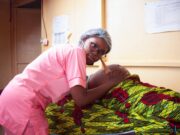
Malaria in pregnancy is a big problem, as it poses significant risks for both the mother and her baby. Pregnant women are especially vulnerable to malaria because pregnancy reduces a woman’s immunity to various infections, malaria being one of them.

Why malaria is dangerous in pregnant women is because it increases the risk of:

–          Illness on the part of the pregnant woman

–          Anaemia

–          Her having a spontaneous abortion

–          Her delivering a stillborn child

–          Delivering a premature baby

–          Having a baby with a low birth weight

In Africa, 200,000 newborns die each year because of malaria in pregnancy. Kenya has it’s contribution to this, because in 2012, slightly over 108,000 pregnant women in Kenya were diagnosed with malaria. That is a very high number :( . It is also interesting to note that 1 in 7 pregnant women who live in malaria-endemic zones in Kenya (where malaria prevalence is high), do not seek antenatal care. Meaning that for those who lost their babies because of malaria, this need not have happened. It is a sorry situation because malaria is very much preventable and it is very much treatable.

So what can women do to prevent and treat malaria? WHO recommends the following package of interventions for the prevention and treatment of malaria during pregnancy:

–          Use of long-lasting insecticide treated nets

–          Intermittent preventive treatment

–          Prompt diagnosis and effective treatment of malaria infections.

Where children are concerned, 1 out of 11 mothers does not believe that malaria medicine can provide relief for a child who has fever. Some mothers believe that a child’s fever should first be treated with herbs.

While most of us know the facts surrounding malaria prevention and treatment, it is our responsibility to share this information with others who don’t, especially fellow women.

Most of us have hired housegirls in our homes who help take care of our babies, and when some of them share their cultural beliefs with us, we laugh at them, tickled by how retrogressive some of their thinking can be –especially in this day and age.

However, we do them no justice when we fail to share with them the correct information. The price for ignorance is usually hefty, and it is always sad to learn that women die, babies die because of the myths, superstitions and various cultural beliefs that we have in our society. So in our own individual capacities, let us share the information we have. It never hurts, and the best thing is that you could be saving a life!

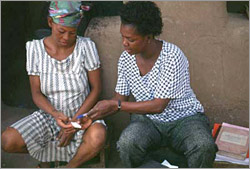
pictures courtesy: WHO

Have You Heard of Infant Massage? It Can Help Your Baby Sleep Better…

5

Have you ever heard of infant massage?

As in massage that is done on an infant using the right technique, not just those haphazard up and down movements that you do on your little one’s legs then call it a massage (well, atleast that’s what I did on my sons when they were infants). When I used to massage my boys, I used to do so mainly to get them to stretch their legs, and just to bond with them as I gazed into their pure white eyes :) and they in  turn gazed into my weary red eyes filled with lack of sleep. :( But it is only recently that I have come across information about a certain technique to massaging infants that has a much wider range of benefits for both baby and mom/dad.
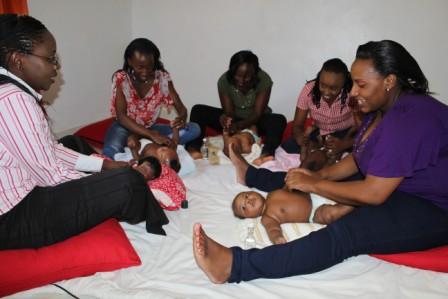
I learnt of this through a lady I met last week, and her name is Susan Muriithi of Toto Touch. In a conversation we had over coffee, she explained to me what exactly infant massage is, and though there were no practical’s (Ello is no longer and infant), I wished that I had met her before.

But before I go on, let me elaborate more on infant massage.

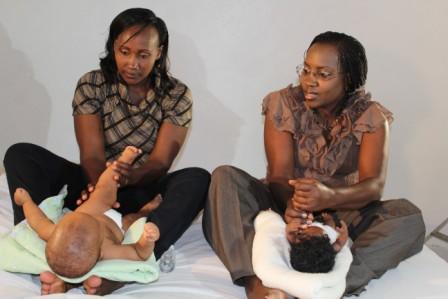
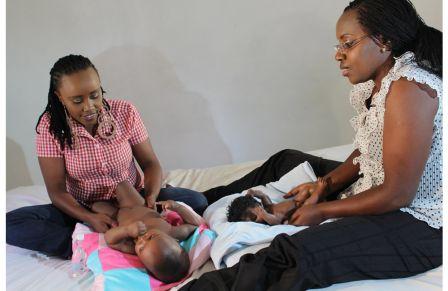
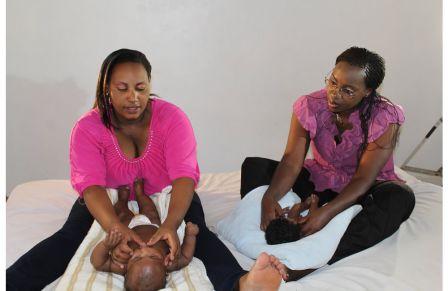
It is the art or method of lovingly stroking your baby in a sequence of moves that help strengthen the bond with the baby, as well as enhance baby’s growth and healthy development. Susan tells me that there are over 45 strokes involved in infant massage, which are all easy to learn and so much fun to watch and do –especially when you see how your little baby responds.

Infant massage helps relax babies and helps them sleep better. And when the little one sleeps well, then both mom and dad are happy, because we all know how frustrating it can be when a baby refuses to sleep. Especially for new moms! (ask me, I so know this). So anything that can help baby sleep better is more than a welcome relief. :) So what are the other benefits of infant massage on baby?

  • It helps baby feel loved
  • It helps boost their immune system
  • It helps in sensory stimulation
  • It helps improves their skin condition
  • It definitely helps improve their blood circulation
  • It helps their digestion
  • It helps balance their respiration
  • It helps provide relief for teething pains

The massages by the way are done on the baby’s legs, feet, abdomen, chest, arms, face and back.

Benefits of infant massage for parents.

As a parent, you learn to understand and respond to your baby’s cues.

  • You learn the techniques necessary to comfort, calm and soothe your baby.
  • It provides an additional avenue for close nurturing and contact.
  • It generally is an amazing tool for helping parents become closer to their babies.

Infant massage is Susan Muriithi’s forte. She trains both moms and dads on how to massage their little ones, for the clear benefits of both.

Susan is a Certified Infant Massage Instructor (CIMI), a Lactation/Breastfeeding Consultant, and a Registered Nurse. She is also the Chairperson of International Association of Infant Massage Kenya.

This is what she says about her passion for newborns:

“There is nothing more rewarding for me than supporting new families. Being a valuable part of helping with new life is an amazing type of gratification. I love what I do! I am passionate about babies, I am always eager to support new parents by empowering and encouraging them. I love helping new moms and dads discover the joys of parenthood.”

As a nurse, and as a mother herself, Susan is able to combine her professional expertise and personal experiences to offer well-grounded services to both infants and their moms. She believes that every parent should experience the benefits that come from early bonds that are loving, healthy, and secure, and one of the best ways to achieve this is through infant massage.

So if you are a new mom, or know of a new mom or new parents who can benefit from learning how to massage their newborn, then get in touch with Susan. She offers private lessons to moms and couples, or if you are in a group of new moms in the same neighborhood or chama, then having her over would be such a great ‘plan’ as you would learn together.

It would also be a good ‘gift’ to a new mom incase you’re lost of ideas on what to get her. During a baby shower, you can also let the expecting mom know that you will have Susan teach her how to massage her newborn when the time comes (Susan by the way is also a lactatian who teaches new moms how to properly breastfeed their newborns so she’s quite an invaluable resource for new moms).

Here are some testimonies from parents who have done the infant massage with Susan.

“After the stomach massage, Milles passed a lot of gas and 3 diapers of poooh one after the other, and he was soo relieved, and slept for many hours.Susan is doing a great job and all mothers especially with infants should contact her. first time moms will also benefit a lot. am a blessed mom and i enjoy massaging my son everyday.” –Maggie.

“All those with problems of colicky babies and babies who groan and strain, Susan Muriithi can help. She is a certified infant masseuse (sp). She comes to your home shows you how to do it and when. Vital parts to touch and bonding techniques. Better allow her to help. She helped me massage my son in the morning and he is so relaxed now…no more groaning and straining and he is still asleep.” –Carol Nekesa.

“Having a baby bath and massage lessons done at home was the best thing for me and my baby. i learnt a lot,from the sessions and continued massaging my son daily after his bath and he feels so relaxed and sleeps for longer hours without being fussy. Thank you Susan.” –Lisa

So if you want to try out infant massage, then get in touch with Susan. She’ll sort you out.

Susan’s contacts:

Telephone: 0723 553 188 or 0734 553 188

Email: susan@tototouch.co.ke

Facebook page: Toto Touch Website: Toto Touch


Susan is certified by the International Association of Infant Massage.

NB: Additional info from Infant Massage USA.

Have You Heard of The Mother Goose Baby-Care, Kenya? The Place Where You Can Leave Your Little One for the Day?

3

I am going to detail to you a few scenarios which you may or may not have been caught up in, and then let you know of a possible solution for you -incase you are ever caught up (again) in a similar situation. Most moms by the way, myself included, have been caught up in one or two of these situations. So here goes:

Scenario One:

It is early Monday morning, and your housegirl did not turn up last evening from her day off.:( She did not call or text, and when you tried reaching her, her phone was mteja or it was going unanswered.

But you MUST get to work because of the meeting that you cannot miss. None of your relatives is available to help watch your baby, and even if there is one, she is at the other end of town and with all the Nairobi traffic, you will waste your entire morning on the road.

So what do you do?

Scenario Two:

Your housegirl has requested to take both Saturday and Sunday off to attend to some personal matters. She has given you ample notice, but you still can’t cancel your Saturday engagements. And you can’t find anyone to sit your babies.

So what do you do?

Scenario Three

You have a day-bug housegirl, but she calls you in the morning as you are preparing to go to work, telling you she can’t make it to work because of the matatu strike, she is unwell, or her child has fallen ill. And you must go to work.

So what do you do?

Scenario Four

Your housegirl is not feeling well and requires to be on bed rest, or take a few days leave. Obviously she can’t take care of your little ones. But you’ve exhausted all your leave days meaning you must go to work.

So what do you do?

Scenario Five

You are so tired of the drama of live-in housegirls, and you now prefer to leave your baby at a day care center as you go to work, and pick him/her up as you head home in the evening.

But you don’t know of a good, clean, reliable and trusted place where you can leave baby. Is there such a place?

Scenario Six

Your child is in lower primary, and they leave school in the early afternoon. Yet, you don’t quite have have somewhere reliable where he can while the time away before you return home from work.

Is there a place where you can take him, where they can spend those few hours before you pick him? Somewhere where he can be doing his homework and engaging in other meaningful activities?

Now, if you have ever, or incase you are ever caught up in any of the situations described above, then you will be pleased to know that there is a day care center where you can comfortably leave your baby while you go tend to your other duties.

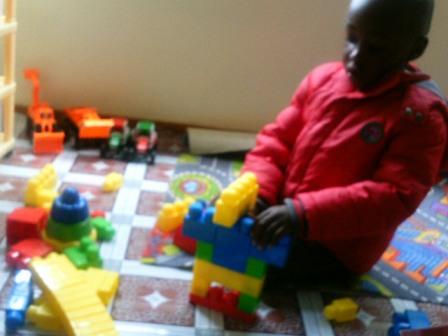
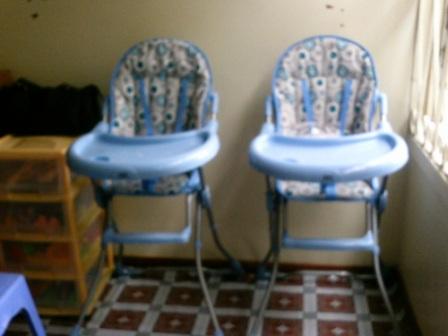
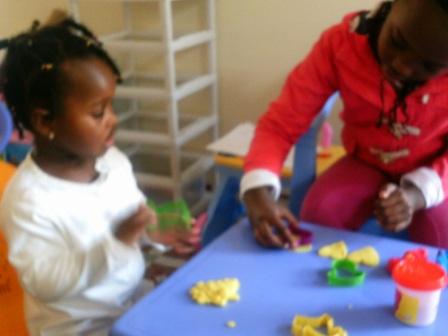
MOTHER GOOSE BABY-CARE KENYA, is the place. It is located in Langata Estate, Nairobi, and has skilled, trained, and caring nannies –who have all undergone training in childcare management and caregiving.

The Mother Goose Baby-Care Kenya takes babies from as young as 3 months. The nannies taking care of these little ones, ensuring that they are held, cared for, carefully watched, and above all –encouraged to explore the little world around them. The nannies strive to ensure that when you return to pick your little one up, you will be greeted by a cheerful, clean, healthy and smiling baby.

CHILDREN’S SCHEDULES:

Mother Goose takes care of these babies according to their own individual schedules. That is, they feed a baby when he is hungry, change the diaper very often and a baby takes a nap when is sleepy. For that reason, the center works with each individual parent to come up with a schedule that fits best the baby.

NB: On some occasions, photos of the days’ activities are made and put on the walls. Parents can get a copy of their child’s ‘good moment photo’ if requested. Parents are also able to see the nursing forms of their children, which shows how many times the baby was fed, diapers changed, and the general appearance of the baby for the whole day.

BABY’S FOOD

When you leave your child, you have the option of bringing their food along, or you can allow them to eat meals provided at the day care center. The meals are of a balanced diet, freshly cooked and prepared in a very hygienic kitchen. Different menus are offered for children and feeding records kept for each baby.

DAILY PROGRAM:

The daily program is grouped as follows;

Monday to Friday, 6.30 a.m to 6.30 p.m. This program is for infants and toddlers whose parents work full-day. The child can be dropped at The Mother Goose Baby-care Kenya center from 6.30 a.m. and picked not later than 6.30. We encourage that parents who prefer to this program to register as permanent parents for cheaper monthly fees.

Drop-ins and half day program for infants and toddlers. The program does not have any specific time to drop or pick the young one. Drop-ins are for temporary parents who will bring their children to the center when the need arise. Therefore, they are temporary parents. Drop-ins full day is for not more than 10 hours and half-day spending is child care for not more than 5 hours. However, a parent can register as a permanent parent for daily half-days. Go to rates page for charges.

School going afternoon program Monday to Friday 3.00 p.m. to 6.30 p.m. After the lower primary school leave their schools early in the afternoon, they come to spend the rest of the day at The Mother Goose Baby-care Kenya, before the arrival of their parents in the evening. At the center, they do their homework and enjoy the activities planned for them by their caregivers.

The Mother Goose Baby-care Kenya weekend program. This program is for infants and children of not more than 12 years. Saturday and Sunday program begins from 7 a.m. till 6.30 p.m. weekend program suits parents working during the weekend or busy with other activities. Children spend their time at the center with fun making events or visit other places for learning and experience.

Night shift program, Monday to Friday, 6.30 p.m. to 7.00 a.m. The program is for infants and small school-going school who cannot be left alone at night when the parent is working.

Weekend nights program 6.30 p.m. to following day at 7 a.m. This program favors parents who need to have their romantic time alone without the interference from their little ones.

Click here for the center’s charges / rates.

NB: All programs of The Mother Goose Baby-Care Kenya are planned by a team of qualified and professional staff who ensure that they not only cater for the needs of all parents who may be interested to their services, but they offer maximum fun, learning and enhance positive development to all children.

Visit the Mother Goose Facebook page for more details.

Contact Details: 0723 412 689 or email: mothergoosekenya@gmail.com.

OTHER SERVICES Offered by Mother Goose Baby-Care Kenya include:

The Mother Goose Nanny Agency Kenya which offers various types of nanny work groups (live-in nanny, live-out nanny, part-time nanny, night nanny, weekend nanny, holiday nanny, au-pair nanny, mother’s helper, personal assistant or house manager.

Training of nannies. See this link for The Mother Goose Nanny Course Outline.

I hope now you know you are well sorted –if and when the need will ever arise. :)

Shamim Okolloh: It is my Mission to Help Girls in my Old School (Kaimosi Girls) get an Education

7

A few years ago, Shamim Okolloh started a noble initiative in her old school. That of helping girls in her former high school complete their secondary school. And there is an interesting story behind why she is doing so. I had a talk with her about this. Read on.

Education for many young children across the world is a privilege. Kenya is no exception. Even with free primary education, a significant number of children are still unable to go to school, and even for those who manage to go to school, staying IN school is sometimes an even greater challenge. We see these stories in the news all the time.

And this is a situation that 33-year-old Shamim Okolloh is all too familiar with. She tells me:

“Going to school is a normal affair for many children until one day, it can’t happen anymore. When they can’t walk into the classroom to take their lessons as usual. When teaching is interrupted in class and they are handed a letter asking them to leave the school immediately and only return when their parent or guardian has cleared the balance.”

These are situations that Shamim experienced when in primary school, in instances that would see her leave class and spend the rest of the afternoon at the steps of Consolata Church until it was time to go home.

When she went to high school, it was a little bit different. She attended Kaimosi Girls in Western province, and it is here that Shamim longed to see her name among those supposed to be sent home because of school fees arrears. She longed to see her name on that list because that meant at trip back home to Nairobi to enjoy the weekend, complete with a warm shower and chapo’s to boot!

Shamim envied those who got sent home, wishing she would be in their shoes. The girls who would be sent home for school fees – some would return after a few days, others a few weeks, others months. Some never returned at all.

One day, while in Form 2, she received a letter from her classmate Kate.

In the letter, Kate was asking Shamim if she could talk to her parents and ask them if they could help pay her (Kate’s) school fees. Kate was desperate and was looking for anybody who could help her complete her studies, even asking friends such as Shamim to plead her case to her parents.

Sad to say that Kate never made it back to school.

Shamim however completed high school, and went on to secure admission at Spelman College in Atlanta, USA.

But while in her third year of college, she had to return home as she was unable to secure enough funds to enable her complete her studies. It is during this time that memories of her schoolmates who would be sent home for fees came back to her, flooding her mind.

However, there was some luck for her back at her campus –Spelman College.

Female alumni contributed funds to the campus, and it is through the generous giving of these women that Shamim was able to receive a partial scholarship to enable her complete her studies. Through their giving, Shamim was able to complete her studies.

In 2010, she also secured a full scholarship to attend the Clinton School of Public Service in Arkansas.

It was through the giving acts of others that planted a seed in Shamim’s heart.

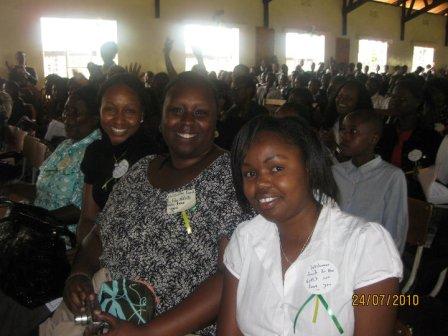
She made it her mission to set up a similar fund to assist girls at her former high school –Kaimosi Girls who were unable to pay their school fees.  In 2010, she was able to get a few Kaimosi Old Girls together for their first reunion at the school. These alumni raised about Ksh 80,000/ for scholarships. The reunions are an annual affair, and last year, they raised well over Ksh 400,000 from old girls around Kenya and the diaspora.

The Kaimosi Alumni Reunions happen every year during the second term (June/July), and in addition to the scholarships, the old girls award top students, staff and a teacher of the year. The support given continues all-year round with a mentorship program.

Shamim is based in Little Rock, Arkansas (US), where she works at an international NGO (Heifer International). She is also owner of Mimi Mwafrika, a small business that provides hand crafted fashion accessories to the American market.

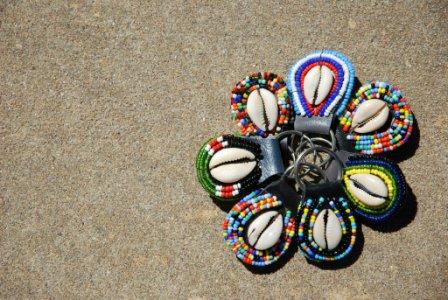
She sells beaded key chains for $5, with the proceeds going towards the Kaimosi Old Girls scholarships. Last year, her goal was to sell 100 key chains which she sold out. This year, her target it so sell 200 key chains in her ‘Keys 2 Education‘ campaign. Shamim’s initiative has to date assisted over 100 girls at her old school.

“For me it’s been a blessing. We are all volunteering our time, investing our treasures and seeing the vision take off with so much support and pride from the Kaimosi Girls High School family is great example of how ordinary Kenyan women, many who are mothers, build community through philanthropy.

One thing I have learnt from the Kaimosi Old Girls Initiative is that women who share an experience can rally together to support each other in reaching a common goal. The Kaimosi old girls don’t know each and every student who has benefits from the scholarships, but we encourage each other week in and week out, have fun and get the job done.”

Shamim is a mom to a 10-month-old baby boy, and I ask her about her motherhood journey.

“Motherhood journey has been great – so many unknowns but I’ve learned to have somewhat of a plan then go with the flow. Being in the US and blending raising an American child while infusing my childhood and culture has been interesting. Plus working, taking care of the household (there are no housegirls here or at least ones we can afford), raising a child, establishing a small business and philanthropy all in one big sufuria. At the end of most days I thank God for him choosing me to raise His child and I pray in my journey both as a mother and global citizen I fulfill my purpose.”

And that is how Shamim is making a difference. Remember it is never too late to start something, however small. Be encouraged to do something that will change someone else’s life.

If you know of a mom who is giving back to society in her own way (or you are one), tell me about it on maryanne@mummytales.com

See last week’s featured mom – Maryanne Kariuki whose birth of her premature twins birthed the A & J Initiative.

Here are more images from Shamim.

Thank you Shamim for sharing your story with us. God bless -Mummy Tales.

What should you do Before you get Pregnant to Ensure a Healthy Pregnancy for You and Your Baby?

1

Are you planning on becoming pregnant? Do you know what measures you should be taking to ensure that you have a healthy pregnancy and a healthy baby?  Our guest writer today tells us more on this.

By Dr. Stephen Mutiso, Consultant Obstetrician/Gynaecologist

A healthy pregnancy culminating into birth of a healthy baby is the ultimate desire of any mother. The outcome of any pregnancy is determined long before conception. To optimize pregnancy outcomes, it is important to have good health prior to conceiving.

Achieving good health before pregnancy includes adopting a healthy lifestyle. A healthy eating habit ensures you have adequate nutrients such as folic acid –which are important for baby’s good growth.

Diet rich in fruits and green vegetables provide high levels of micronutrients, hence should be encouraged to be taken by women contemplating getting pregnant. Weight reduction for those who are obese is important as obesity is associated with bad pregnancy outcomes. Ceasation of smoking and alcohol and other substance abuse is critical as these substances are harmful to the growing baby.

In addition to lifestyle changes, it is important to have a health check up by your gynaecologist before getting pregnant. This health checkup usually 3 months before conception, and is called preconception care. The goal of preconception care is to provide the woman with the best chance of a having a healthy pregnancy and a healthy baby. Preconception care involves review current and past medical and pregnancy history, physical assessment and laboratory testing to screen and detect any new and pre-existing diseases. If you have any chronic disease, it is important to inform your doctor. Any new or preexisting diseases must be treated or controlled well before pregnancy.

Education and counseling are important services offered during preconception care. Key topics usually covered include diet, HIV and other STDs, smoking and alcohol cessation. Folic acid supplementation is also provided during preconception care.

Chronic medical diseases which may affect pregnancy include: diabetes, hypertension, asthma, heart diseases, obesity, hypothyroidism, sickle cell anemia, HIV, Hepatitis, Venous thrombosis, kidney disease and epilepsy. Chronic medical diseases should be put under control before becoming pregnant. In some cases, a change in treatment may be needed because some medications are harmful to the baby.

Preconception care therefore is not a luxury but a very key intervention to improve pregnancy outcome. It’s very necessary for every woman regardless of age and number of previous births. If you’re planning to get pregnant its important you adopt a healthy lifestyle as well as schedule an appointment you’re your gynaecologist.

Dr Stephen Mutiso is based in Nairobi, and he provides a wide range of gynecological services, including; antenatal services, delivery, Vaginal Birth after Caesarean (VBAC), Obstetric Fistula, Infertility issues and Fibroids among others. He has admission rights in various private hospitals.

He is based at Kenyatta National Hospital Doctors plaza, Suite 26/27

Telephone: 0722 678 002 or 0788 306 674

Email: mutisoh@yahoo.com   —    Website: www.drmutiso.com

Giving Birth in Kenya: What Happens to a Woman’s Family After She Dies While Giving Birth?

4

Every two hours in Kenya, a woman dies during pregnancy or childbirth. Quite unfortunate.

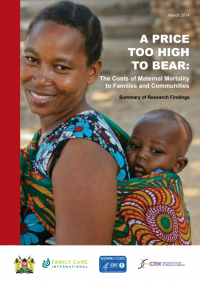
A new report on maternal health in Kenya has further amplified the devastating impact of a mother’s death on her family and in her community. The study: ‘Price Too High to Bear’, reveals that that the unfortunate deaths of these women (mostly preventable), gravely affect her immediate family, the survival of her newborn, the health and opportunities of her surviving children, as well as the economic productivity of her family and her community.

The report by Family Care International (FCI), the International Center for Research on Women (ICRW), and the KEMRI/CDC Research and Public Health Collaboration in cooperation with Kenya’s Ministry of Health highlights the financial costs of the deaths of mothers in poor remote communities on their households, as well as the impact of these costs on family well-being.

The study was undertaken in three sub-counties in Western Kenya (Rarieda, Gem and Siaya town -all in Siaya County) between 2011 and 2013. These were the key findings:

The loss of a mother harms her surviving family members, her children’s health, education, and future opportunities.

The report states that of the 59 maternal deaths in the study, 14 women died during the last three months of pregnancy, one died during labour, and 44 died post-delivery. It is also important to note that over 70% of the maternal deaths occurred in the course of a normal delivery, while the remaining ones who died had experienced a caesarean section, use of forceps, or other intervention during delivery.

The link between maternal death and high neonatal mortality was also demonstrated:

Of the 59 women who died, 31 infants survived delivery. Of these, 8 died in the first week of life, with another 8 dying in the next several weeks. This left a total of only 15 surviving babies from 59 pregnancies.

In most of the households, the women who died used to carry out various tasks in their homes. These women used to contribute an average of 61 hours of household work each week, with tasks including; childcare, cooking, laundry, and fetching water and firewood. Following their deaths, the women’s husbands, mothers-in-law, older children, or other surviving family members had to pick up the slack, with 88% of families reporting that this had reduced these members’ ability to contribute earnings to household income.

Some of the deceased women were also involved in farming. For these, their deaths in some cases forced the household to allow land to lie fallow, or to cultivate fewer crops. Some families indicated that they had lost crops after the death of the woman, because surviving household members were not able to allocate to farming the time they had when the woman was alive.

For the surviving school-going children, they were in some cases withdrawn from or forced to miss school, because economic disruptions made it difficult to afford school fees. The household could no longer afford to pay the school fees, because the mother’s income was not available any more. Even when there was some money, it was used to hire casual farm labour.

Where children continued their schooling, often their grief and new household responsibilities negatively affected their schoolwork. In a number of cases, families reported that children withdrew from school altogether. Others who remained in school often had less time for schoolwork — and less time to actually attend school due to the additional household chores and because they had to take care of their younger siblings.

Social, emotional and other non-­economic consequences

In many parts of Western Kenya –where the study took place, a ‘household’ is made up of all those who eat under the same roof. Before the mother’s death, majority of individuals in the household ate in the woman’s home. But after she died, only about a quarter of individuals from her household continued eating in her house. Of those who changed where they had their meals (most of them children aged below 18 years), they said they did so because of the death of the mother. In most cases, children began taking meals in the home of their grandmother. Other children were removed from household and given out to relatives for foster care.

When a woman dies, her funeral costs are a crippling hardship for her family.

Funerals are a big deal in Africa, and Kenya is no exception. Many communities strive to give their departed relatives a ‘grand, respectable’ send off which could see them spend huge amounts of money. Across all wealth levels of households interviewed, families’ funeral costs exceeded their total annual expenditure on food, housing, and all other household consumption. On average, economically active members took a month off from work during the funeral period. Given the already high costs of the funeral, this lack of economic activity is an additional burden for the household.

Those are just some of the key findings of the study. Indeed, it only goes to show that Kenya continues to have a high maternal mortality rate, despite commitment from the government to address the issue. It only means that the country needs to pull up its socks in reducing maternal mortality rates. Meanwhile, 2015 is just around the corner, and I wonder if my country will be able to achieve MDG5, that of reducing maternal mortality.

I can only hope for the best.

Do you have a motherhood report you’d like to share? Email me on maryanne@mummytales.com

Mummy Tales is a platform dedicated to empowering its readers on different aspects of womanhood and motherhood. Read more motherhood experiences of Kenyan moms here. Connect with Mummy Tales on: FACEBOOK l YOU TUBE l INSTAGRAM l TWITTER

Your Children’s Dreams are Not about You!

0

Two significant events happened last week in the Kenyan scene. The 2013 KCSE results were released, and our golden girl, Lupita Nyong’o, won Kenya’s first Oscar award.

For those who received their exam results, they begin a new chapter in their lives. There are those who will advance their education as they pursue their dreams. Others will not pursue the education path, but will still engage in activities that are in line with their dreams. Unfortunately, others will be lost, unsure of what to do next.

I’d like to talk about the role that parents play in helping their children pursue their dreams. Most parents desire to see their children succeed in life, and grounding them in a good education is one of their greatest investments.

When I was growing up, it was drummed in our heads that we should pass our exams so that we can become doctors, pilots or lawyers. Those were the three main enviable careers. And they are good professions no doubt.

However, not everyone -including ‘A’ students, are tailored for these professions. While the jobs might be dream careers for bright students, this is not the case for all of them. For some, their passion may lie in other fields, such as the arts. And the best parents can do is support them.

There is this parent who once said it would be such a ‘waste’ for him to invest years of time, energy, hard work and finances to educate his straight ‘A’ daughter, only for the child to say she wants to pursue her dream career in fashion design. To him, a straight A student should become nothing less than a neurosurgeon and not a tailor (his reference to a fashion designer). Sadly, this is the thinking of many parents.

Then there are parents who try and make their children live their own dreams. Take these parents who had always excelled in sports. They knew their two sons would automatically follow suit, and even get sponsorship into prestigious universities abroad -courtesy of their sporting acumen.

One son excelled in basketball, while the other was very good in soccer. But when the one who played basketball was form two, he announced his intention to quit the sport. He wanted to concentrate on photography as his main extracurricular activity. His parents were greatly disappointed. They spent weeks trying to talk to him out of it. The boy was good in academics, and with his superb basketball record; he stood in good stead for a scholarship. His parents had spent years strategically angling him for that scholarship ever since he was little. But the young man had made up his mind and would not budge. These parents learnt that sometimes, children don’t possess the same passion or talent that you do — even if they are your own flesh and blood.

No doubt, it can be heartbreaking when your child is set on pursuing a career that is not in line with what you want for him, especially when you have an alternative career you know he would excel in. However, sometimes you just have to step aside and let them make their decisions, and if they are realistic enough, allow them to pursue them and offer them your support. Remember, your children’s dreams are not your dreams. They have their own lives to lead.

Going back to Lupita, I heard her, in one of her acceptance speeches; thank her parents for always supporting her and allowing her to pursue her acting dream. Just look at where that has gotten her!

Lupita has opened the doors for many young people, and her success has no doubt changed the thinking of many parents. Her words: “no matter where you are, your dreams are valid” ring so true. So don’t dismiss your children’s dreams, for you just may never know how far they will go.

I published this article in The Star Newspaper on Wednesday this week.

Mums Giving Back to Society: Maryanne Kariuki of A & J Initiative

10

Maryanne Kariuki is a Sales Professional at an IT firm in Nairobi. She is also mother to three children –a girl aged three years and a set of twins aged eleven months. Besides her full-time job, Maryanne has another passion –that of working with less advantaged children in our communities. This she does through an initiative she founded, called A & J initiative.

It all began with the premature birth of her twins. I had a chat with Maryanne about her journey into this personal initiative.

Mummy Tales: What is the A & J Initiative all about?

Maryanne: It is an initiative that is biased towards children, where I rally volunteers to give back to the community by donating clothes, toys, and their time. We do this to add a smile to children who are less advantaged. The A & J Initiative targets orphanages and hospitals where we play and have quality time with the children.

Mummy Tales: What led to the formation of A & J Initiative?

Maryanne: A & J’s journey began last year during my second pregnancy. I was carrying twins, and my pregnancy was classified as “high risk”. This pregnancy was a difficult one right from the very beginning, as I had so many issues ranging from bleeding, cramps, an open cervix… actually at some point the doctors told me that most likely I would miscarry. This was not good.

However, one of the doctors advised that we could do a McDonald (cervical) stitch, which he thought would help my womb hold the weight of the babies. I decided to take his advice and did the procedure and miraculously, I carried the babies till 6 months and gave birth naturally to 1kg preterm babies –my son Avie and daughter Jamie Mwanyota. It is from this experience that I made a pact with God that I would do something to benefit other children because he had helped my children. Thus the A & J Initiative.

Mummy Tales: What activities have you undertaken so far?

Maryanne: We have visited 2 children homes – Compassionate Hands for the Disabled Foundation in Ruai, and Light School and Orphanage in Rongai. We have also visited the Kenyatta National Hospital Children’s Cancer ward. In all these places, we have donated food, clothes and money.

Our greatest contribution to these lovely children though is spending time with them. We aim to provide a great experience and provide a feeling of belonging for them.

We have also adopted 1 children home called ‘Compassionate Hands Children’s Home’ in Ruai. We intend to be visiting them every Christmas and spend time with the children.

Mummy Tales: You are a mother of three. How was your life before the babies came?

Maryanne: Avie and Jamie are my 2nd and 3rd borns (35 minutes apart). I have a daughter who is 3 years old, and her name is Samree Mwanyota. My life before the babies was full of myself. Babies refocus ones attention and priorities. I am more empathetic and responsible now because I believe children look up to their parents for direction in life.

Mummy Tales: What is the one thing you love most about being a mom?

Maryanne: I love the fact that my children love me unconditionally. Motherhood has been challenging BUT very fulfilling. Women are very strong and can almost overcome everything. Being a mum makes you more grounded and focussed in life because you know your children depend on you.

I would never trade motherhood for anything. It gives me pride and joy that I am a mum.

Mummy Tales: Were you ever involved in any philanthropic work or any personal initiatives before they came?

Maryanne: Yes, I have always loved to give back to the community in my personal small ways. I have always visited children homes with my family, run marathons for a good cause and I am also involved in mentoring young girls. I guess I learnt all this from my mum because she is a community social worker and is heavily involved in the community.

So for me, it was never a matter of if I would ever start a personal initiative, but when.

Mummy Tales: What is the one lesson you have learnt that stands out since you started the A & J Initiative?

Maryanne: I have learnt that there are good people out there. There are many people who are wiilling to help, but they don’t know how to. A & J Initiative therefore provides the facilitation for them to make a contribution to society. I have also learnt that it starts with ME. For us to make a mark then we have to do it ourselves and not expect someone else to make the first step. It all starts with you.

Mummy Tales: If people want to get involved in A & J Initiative’s activities, how can they do so?

Maryanne: I can be reached through our Facebook page called A & J initiative. I am open to suggestions on homes to visit and other ways we can help children. I also use the Facebook page to rally volunteers whenever we have activities.

I can also be reached on 0721 806 134 and via the email address AJ_initiative@yahoo.com

Mummy Tales: One last thing before you go -being a mom to a premature baby can be tough. Avie and Jamie were born at six months only. What words of encouragement would you give to a new mom with a pre-term baby?

Maryanne: My twin babies were due on 20th July 2013, but they came early on 29th April 2013. I must say that there is a lot of financial and emotional stress that comes from having a preterm child. A good support network from family and friends is necessary for coping. Also patience with the baby because they will not always be meeting milestones like the full term ones. Most importantly, accepting help in caring for the baby is key, the babies are usually stronger than you would think. Taking time to relax also ensures you care for your baby well.

Mummy Tales: Thank you Maryanne for sharing your story and for the good work you do. God bless you as you continue to pay it forward.

Ever Since Kitty Started School, Things Have Never Been the Same Again

10

I don’t even know where to start. But I’ll go straight to the point. Running nose, colds, coughs, handkerchiefs, mucus, fever, vomiting and throat infection!!

That’s just how it’s been around our house. It all began a few days after Kitty joined pre-school, where I noticed his running nose. But it was just a running nose, no cough, no fever no nothing. So I invested in more handkerchiefs for him. Besides, I had been told over and over again by more experienced moms that once the kids start preschool, running noses are the order of the day. I was prepared, I even had oranges to boot.

Then the cough came about a week later. No fever yet, so I continued giving him lots of fruit and many more oranges.

A few days later, the fever came. Fever usually signals infection, so off we went to the doctor who said he had a slight throat infection. He was given the usual drugs – antibiotics for seven days.

Meanwhile, his baby brother Ello developed a fever, cough and running nose too. He was also put on antibiotics.

Then everything went back to near normal, save for Kitty’s still slightly running nose.

Then about a week later, the cough resumed. A bad cough this time. Together with a slight fever, so once again off we went to the doc’s. By the way the cough was so bad that I had to keep him home that day. The day he missed school was a very sad day for him. He kept telling me that he was missing his friends and that could I please take him to school? woiye.

Haya, after a week of drugs, he was fine, but the cough was still kind of not gone. I wasn’t going to get him another dose of antibiotics, so I decided to do the ginger, garlic, lemon and honey thing. For the next few days, his cough significantly reduced.

Meanwhile, his baby brother once again, caught the cough. Ello is like a sponge. Anything Kitty comes home with, he absorbs it pap! :(

I continued with the garlic ginger thing for about five days, until one day, after picking him from school, he playing with his brother, he eating supper, drinking his milk and preparing to turn in to bed, he suddenly burst out into tears and wails. I went into panic mode. I couldn’t figure out what was wrong with him because he wasn’t talking, he was just crying. Gosh!

Then amid the tears and screams, he vomited. Alot! This was around 8pm. I was confused. The boy was fine one moment, jumping, hollering all over and playing with his brother. Now he was vomiting and crying uncontrollably. Yaye!

I comforted him and he calmed down, holding him in my arms. Next thing I know, I feel some strong wave of heat on me. Boy was boiling hot! Where the fever had come from, I don’t know. I don’t like it when a child has fever. I don’t like it at all because I get really worried. So I gave him fever reliever and it went down. A few minutes later, he was back to playing and running around.

Next day sisi haoooo quickly quickly to a paediatrician. I wanted a specialist this time. I just needed to see a paed to tell me what was wrong with my boy/s.

The paediatrician said Kitty had a really bad case of throat infection. By that time, Kitty had lost appetite, was vomiting randomly and just didn’t have the energy to do anything. I think he’d even lost some weight. The paed advised us to keep him home for the rest of the week.

So he stayed home all of last week.

Meanwhile, everyone else in the house –aunty, myself, and Baba Kitty we all caught the cold too. Some of us are still battling with it till now :( .

Let me tell you friends, yes I had been warned about the colds, but aaiihh! Everybody tells me that those colds and flus are good for building his immunity, but jowa! They really do take a toll on everyone around!

Anyone else going through the same?

Advertisement

POPULAR POSTS

error: Not Allowed