Home Blog Page 48

George Ojwang: Remembering my Dear Wife Claris, Two Years On

10

Last Saturday, I had the chance to catch up with George Ojwang’ whose wife Claris developed pregnancy related complications when expecting their second son. This was in February 2012. Claris was 38 weeks pregnant when she developed pre-eclampsia, a life-threatening condition that occurs during pregnancy, usually after the 20th week.

After complaining of a severe headache, Claris had suddenly collapsed in the house where she had been resting, and was rushed to hospital. An emergency caesarean section was performed on her, and she delivered a healthy and bouncing baby boy called Henry. However, while the couple’s new-born son went straight from theatre to nursery, Claris went straight from theatre to the Intensive Care Unit.

A head scan revealed a ruptured blood vessel, which had led to a blood clot in the brain. As she lay comatose in her hospital bed, her husband George was always hopeful that his wife would eventually wake up from her slumber.

But she did not, for on 6 December 2012, Claris passed away. She never got to meet her son. Henry, now aged two years, never got the chance to meet his mother as well.

George was kind enough to grant me an interview, and he lets us know what happened on the day she died, and how life has been after that –as a widower raising two sons.

On the day that Claris died, George was headed to visit his wife at the hospital after a busy morning in the office.

“She was at the Kenyatta National Hospital, and that day, I was unable to get parking at the hospital. Frustrated, I decided to drive back to town to park my car there, then board a shuttle back to the hospital. As I was parking in town, I received a phone call from the hospital. The nurse told me that I was needed urgently, but refused to disclose the reason,” he says.

Just the evening before, George had spent time with his wife as usual.

“As I held her hand and spoke to her, something amazing happened. She had always been unresponsive but that day, even though she was still in a coma, I unbelievably watched tears stream down her face.”

The beautiful Claris.

“To me, it only meant one thing – that she was slipping out of the coma, and that it was only a matter of time before my Clarita (as he fondly called her) would regain consciousness. I left hospital that night a very happy and hopeful man, looking forward to seeing her the following day. I knew that she would be able to have a chat with me then.”

However, the phone call from the hospital as he parked his car caused him great anxiety.

“I boarded a shuttle at Kencom bus stop, but it was taking too long to fill up and so I decided to walk to KNH. Actually, I was half jogging, half sprinting,” George remembers.

When he got to the hospital, he immediately cast his eyes towards her bed. Indeed, Claris was on the bed. But she was covered with a white bed sheet. She was gone. Gone without saying goodbye. Claris had died at 1.20pm -the very same time he was looking for parking in town, having left KNH after failing to get a parking spot. George struggled to comprehend what was going on.

Continue Reading Next Page

Angela Kamanzi of Mkazi Magazine:Surround Yourself With People Who Are Not Afraid To Tell You The Truth

0

Female entrepreneurs have plenty to share about their experiences –their challenges, successes and lessons learnt along the way. Angela Uwamahoro Kamanzi, 47, was born and raised in Rwanda but settled in Kenya 18 years ago. Angela talks about her journey into launching an online magazine called Mkazi – The Enterprising African Woman. She also talks about raising her two sons, now aged 21 years and 17 years.

MT: Tell us about Mkazi.

AUK: In some Bantu languages, ‘mkazi’ means woman while ‘kazi’ is a root for words meaning work, female or feminine. Therefore, Mkazi is the woman with an entrepreneurial spirit who offers services or products that are unique and have a positive impact on the community, and whose values and work ethics can inspire, inform, motivate and improve the lives of her clients and anyone who comes into contact with her.

Mkazi – The Enterprising African Woman was launched in February 2014 as a resource of information to help women get a clear understanding of who they are, find their life purpose and achieve financial freedom through entrepreneurship. Mkazi is a platform for celebrating East African women achievers and a resource of home-grown solutions to Africa’s unique challenges.

MT: Tell us about your entrepreneurial journey.

AUK: I stumbled onto my entrepreneurial journey, literally. I started off as a freelance writer in 2001 after reading What Colour Is Your Parachute by Richard N. Bolles. Doing the exercises in this book rekindled my passion for writing as I was tired of tarmacking.

For two years I contributed to local and international publications. My greatest joy was to interview somebody, understand what they had in mind and put it on paper in my own style. However it soon dawned on me that, solely as a writer, I may not be able to achieve the kind of income I yearned for. That’s when I was introduced to network marketing.

Through the GNLD venture that lasted three years, I got exposed to courses on personal development and sales and marketing. I devoured books like Rich Dad Poor Dad by Robert Kiyosaki, Think and Grow Rich by Napoleon Hill and The Richest Man In Babylon by George S. Clason; and stacks of audio and video tapes from Jim Rohn, Zig Ziglar, Nassir Siddiki, Bob Proctor and many others. When I stopped network marketing to start Arkad World Limited with my husband in 2005; I was a transformed. I was focused, confident and had a clearer idea of what I wanted from life and how to achieve it.

Arkad World Ltd is a company that provides professional conference interpreting, translation and conference management services.  Our first project was to publish a magazine aimed at empowering the African enterprising woman. To understand how publications make money and to raise capital, we started by selling advertising spaces for other publications. At the end of this experience it was clear that a print magazine would be the ideal, but the required funds were much higher than we anticipated and we shelved the idea.

Locally, the internet was in its initial stages and a digital publication wasn’t viable. Today, things have changed and the internet offers endless opportunities for online publications. That’s why last year we finally embarked on turning the Mkazi-The Enterprising African Woman magazine dream into reality.

MT: How was the transition from Rwanda to Kenya in terms of employment?

AUK: My first experience of work came in 1990 when I was still in university, during a lost year due to war and political turmoil in Rwanda. I worked for one year then returned to complete my Licencees Lettres degree at the Université Nationale du Rwanda, Nyakinama campus.

I then worked as a personal assistant in a project of the World Bank and when the war ended in 1994, I got a job as an Administrative and Financial Assistant in a UNHCR field office. Two years later I moved to Kenya with my husband and our first born.

Once in Kenya, I tarmacked for four years. At some point I stopped looking for a job because it had become a waste of time, a liability (I got conned by a fake head hunter) and a source of frustration. When I started freelancing as a writer, doors started opening for me, I guess because I was finally doing what I was passionate about.

MT: As an entrepreneur, what are the key lessons you’ve learnt along the way?

a)     Focus on one thing at a time.

My head is often bustling with ideas and in the past I’ve found myself sharing about those ideas, getting people excited and making commitments that I would eventually not fulfill. Multitasking in business doesn’t work, at least not for me.

b)    Surround yourself with people who are not afraid to tell you the truth.

I’m the kind of person who jumps in the river because the waters look inviting and it’s sunny. My friend and business partner Carol Mwamzali on the contrary is the kind who first scrutinizes the water for any crocodiles or snakes before jumping.

She has the annoying habit of asking the questions you don’t want to hear when you are excited about an idea and envisioning its glorious outcome: where, when, why, who, what, especially HOW! Initially her constant focus on what could go wrong used to frustrate me. However since her judgment was right most of the time, I gradually came to appreciate how important it is to really ponder the pros and cons of an idea before venturing into it.

Today, I wouldn’t take a major decision without consulting Carol because her input always lays bare the weaknesses I may not see at the time. This takes me back to the drawing board, forces me out of the box and often results in a well-researched and thought out project.

c)     If it doesn’t work, quit.

We are taught to never ever quit. However clinging to a venture that is clearly not working because you’ve spent time, energy and money building it or because you are afraid to look like a failure is plain unreasonable. Cut your losses and move on to a new project.

MT: What has been your most unfortunate incident in your entrepreneurial journey?

AUK: Is there’s any unfortunate incident in entrepreneurship? I’ve made so many mistakes and learned invaluable lessons from them. But I can say that the most painful incident was when I fired someone who desperately needed the job because she couldn’t learn.

MT: What advice would you give to women in business?

Women are created for greatness. God has given us so much psychological and emotional strength. Let’s put it to good use for ourselves, our families and our countries.

MT: Give us a glimpse into your motherhood journey.

AUK: Becoming a mother is probably the most fulfilling experience of my life. When I gave birth for the first time, I felt deep respect for my mother. I couldn’t believe she went through labour pain eight times!

I really enjoy it whenever I’m sitting with my sons and having a conversation with them, because I get to know what is going on in their lives and to understand their aspirations, wishes and dreams.

I’m grateful for my husband Ephrem, because I couldn’t be the mother I am without him. He taught me not to take life too seriously and to be patient with children. There’s a certain depth of the boys’ personality that I can’t fully understand simply because I’m not a boy! Some issues, only him can handle and resolve.

We both believe that as parents our role is to give our children the support they need to become who they want to be. Sidney is fond of nature and is doing Wildlife Management at the University of Nairobi. Davy is doing his A levels and his dream is to become an international football player, a goal keeper to be precise.  He is also a computer geek and a skilled negotiator and I suspect he might venture in business in the future. They are very focused on their dreams and we are looking forward to celebrating their achievements along the way.

MT: Thank you Angela for your time and best wishes with Mkazi-The Enterprising African Woman.

For more features on Kenyan women in business, click here.

Follow Mummy Tales on Facebook here.

Raising a Child with Cerebral Palsy in Kenya: Patrick Karubiu’s Story

6

I met Patrick Karubiu in one of the Facebook groups that I’m in –one for parents of special needs children. He particularly caught my eye because of the dedication he seemed to have towards his four year old daughter who has cerebral palsy. Thankfully, he agreed to share his story with me and invited me to his home in Dandora to meet his family that includes his wife Susan, his daughter Princess and his son Prince. This is Patrick’s story* 

When Patrick Karubiu received news from his girlfriend that she was pregnant, four years ago, he was ecstatic. He was 27 years, and had a well-paying job at a bank and therefore felt ready to settle down and start a family.

It was a smooth pregnancy for Susan Kuria, and so was the birth. Their daughter, Princess Gathoni, weighed a healthy 2.7kg. As Patrick held his first child in his arms that day, he knew that his life would never be the same again.

“The love I felt for her was overwhelming. I was now a father, and I was aware of the huge responsibility that comes along with this title. I committed to taking care of my daughter and provide her with the best in life,” he remembers.

Three days after being discharged from hospital, the couple’s joy however turned into worry when they noticed something not quite right with Princess.

“When I offered her my breast, she would not suckle. She stopped crying or making any movements and would just lie still. Her urine was a strong yellow, her eyes started yellowing and so did her body,” says Susan.

At birth, Princess had scored a 10/10 Apgar score, the first test given to a new-born, to evaluate his physical condition and to determine whether there’s immediate need for emergency care.

This development therefore deeply worried the young couple. They immediately took Princess back to hospital, and after a series of tests, they were informed that their daughter was suffering from a condition known as jaundice.

“They told us that jaundice was common in newborns, but that hers was severe,” says Patrick.

For the two weeks that Princess was admitted at Kenyatta National Hospital with her mother, Patrick visited them daily.

“I would wake up early in the morning, prepare breakfast for Susan, then take a matatu from our Kariobangi South home to KNH. I would then stay with them for a few hours then leave for my mother-in-law’s place in Dandora to collect Susan’s lunch and dinner. I would then rush back to KNH and stay with them until evening.” He adds.

When Princess got better and was ready for discharge two weeks later, the doctor warned them that she would probably have impaired sight and hearing.

“Despite the doctor’s words, we nevertheless hoped that she would completely recover and go on to live a normal life,” remembers Patrick.

Continue Reading Next Page

*I originally published this story in the Daily Nation here

Giving Birth in Kenya: Ladies, are You Sure of the Identity of Your Regular Gynaecologist? Learn from my Experience.

3

I recently received an email from a lady who requested me to share it with my readers, but who preferred to remain anonymous. She only wants the message to be passed on. Read it below and share it with a friend. 

“I visited a certain doctor’s clinic for the first time in September 2013 and requested to see one of the famous gynaecologists in Nairobi (we’ll call him Dr. X) who came highly recommended by my colleagues. Based on their stories of how awesome, caring, knowledgeable he was and the success stories credited to him, I went to him with full confidence in his ability to take care of my gynaecological needs.

Fast forward to August this year when I was six and a half months pregnant. All through the pregnancy I had been seeing Dr. X.

On one particular Saturday, the nurse at Dr. X’s clinic –the one at the triage took me through the usual procedure of checking my weight, blood pressure and temperature. All was well until she suddenly directed me to see another doctor (let’s call him Dr. Y). The nurse did not give me any reasons for directing me to a doctor different from my regular one. Because I was already used to Dr. X, I took it upon myself to ask her why she was not sending me to him. But both the nurse and Dr. Y told me that my usual doctor had had a busy night and was therefore unable to make it to the clinic that day. I was with my hubby and well, and as long as we saw our baby happy and playing inside me, we didn’t mind getting seen by another doctor.

But as fate would have it, Dr. Y did not find a foetal heartbeat when examining me. I panicked. I froze. God, please don’t let this be. My worst nightmare began unfolding right there and then. Hard as he tried, he could not detect my baby’s heartbeat.

To seek a second opinion, Dr. Y decided to bring in his colleague –a fellow doctor still within the clinic precincts to confirm the results of the scan on my baby.

Well well well, it so happened that the doctor who came in happened to be my regular doctor, Dr. X! Wait a minute; hadn’t I been told that he would not be coming in for his clinic that day? That he had had a busy night?

However, at that particular moment, all I wanted to know was if my baby was fine or not and did not want to get distracted by the mistruths that I had been told. I just wanted to know if my baby was okay.

Dr. X performed another scan which sadly confirmed my worst fears. There was no trace of my baby’s heartbeat. None at all, not even a faint one.

Let me not digress into the details of the wailing and frustrations my hubby and I went through for the next couple of minutes with the doctors trying to console us to accept the will of God.

Since it had been confirmed that my six-and-a-half months baby was no more, the next step was to have the baby removed. So Dr. X wrote me an admission letter and we agreed to meet in hospital early the following morning.

That night was a really difficult one for my hubby and I.

The following morning, my hubby and I were in hospital by 8am which was the appointed time to meet Dr. X. For some reason, we didn’t have Dr. X’s contacts but we nevertheless knew he would meet us as agreed.

One, two, three hours later, Dr. X had not showed up. There was no communication from either him or his clinic. Imagine that. For three hours, we sat at the parking bay waiting…waiting and waiting…our thoughts centered on our precious little baby, our first child still inside me, but now long gone. Those were some painful moments.

After waiting for too long, hubby and I decided to get inside the hospital to seek a third opinion –just in case the previous two diagnoses were wrong. We had nothing to lose anyway. But the third scan, unfortunately, confirmed the previous two findings. Our baby was not alive.

By 12 noon and with no word from Dr. X, we decided to request for a gynaecologist from the hospital to basically take up from where our doctor had left. Thankfully, the hospital doctor was very good and took good care of us. He was very patient and understood what we were going through. I can gladly we can report that everything went really well and he has been with us throughout the recovery process to date. Ooh, and the hospital staff there were nothing short of amazing!

But yet, I still could not help but think of Dr. X. Where was he when we needed him most? Whatever happened to our early morning appointment at the hospital? Would you believe the day went on by without a word from him? Weeks after my ordeal, we still had never heard from Dr. X, not even a follow-up from anyone in the clinic.

It was only until about five weeks later that I eventually got a call from the lady at the reception of the clinic. The lady had been told by my colleague of my nasty experience with their doctor (remember it was my colleagues who had referred me to that clinic). The lady called to apologize and told me that the main doctor himself (the famous doctor who I was supposed to see in the first place) was going to call me to apologize. The incident happened in August. This is December and I still have never heard from him…not that I am expecting it anyway, it does not really matter anymore.

My phone conversation with this lady from the clinic also led to some very interesting discovery. Turns out that all along, I had been seeing a different doctor other than the famous doctor!!! I had been seeing a completely different doctor, let’s call him Dr. Z!!! Wow!!!! Apparently, they work as a team of three doctors in that particular clinic (a common practice in many other clinics) but NO, I never asked to see anyone else other than the famous doctor whose praises I had heard about from my colleagues and that’s exactly why I went to his clinic in the first place!

From the first day I went to his clinic, no one ever asked me if I could consult another doctor in the event that the famous doctor was not in. The clinic made that decision for me, all along enabling me to see a different doctor other than the one I had indicated that I wanted to see. Don’t crucify me for my ignorance for not knowing which doctor I had been consulting because on the first day I went there and said I wanted to see my preferred doctor, I was led to a room with a doctor and I believed that was him. I had no reason to think otherwise.

So mums, how many of you visit a doctor’s clinic and actually consult with the doctor you intend to see?

Even worse, that I could have been consulting a different doctor for so long and then be left lonely on the highway at my moment of need is totally heartbreaking. So mums, if you have a preferred doctor that you want to see, make sure that it is him that you are actually seeing. Verify if you must. And I hope he will be there for you at your greatest hour of need. I rest my case.”

Also Read: “I Lost my Baby at 37 Weeks Pregnant. This is What Happened” -June Mbithe Muli’s Story 

*If you have any experience that you would wish to share with other women or moms, email me on maryanne@mummytales.com

Mummy Tales is an organization dedicated to empowering its readers on different aspects of womanhood and motherhood. Read more motherhood experiences of Kenyan moms here.

Follow Mummy Tales on: FACEBOOK l YOU TUBEINSTAGRAM l TWITTER 

photos: dreamstime.com

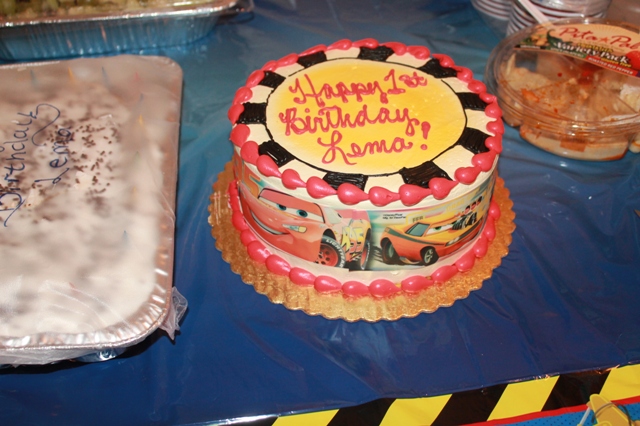
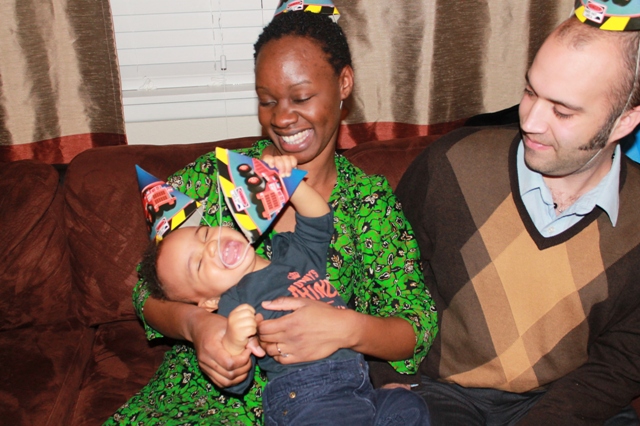
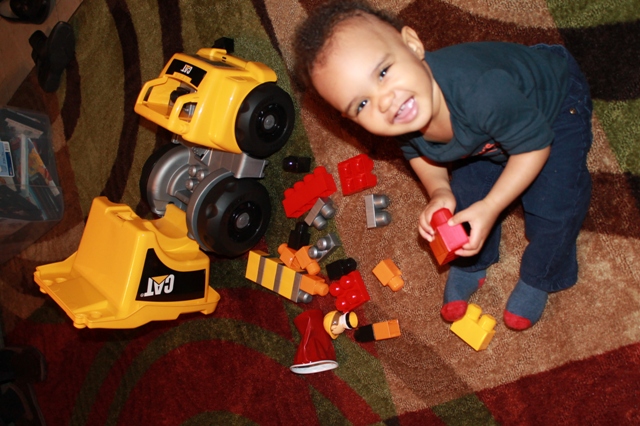
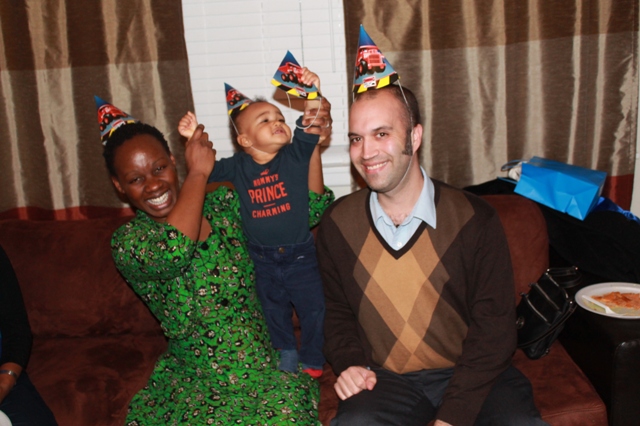
Motherhood Notes from a Kenyan Mom in the Diaspora: Lema’s First Birthday!

0

Most parents always look forward to their child’s first birthday. Especially first time moms! The first year of motherhood is filled with so many events, emotions, ups and downs, it is such a great achievement to finally hit the one year mark. I think a child’s first birthday is usually more of a celebration for the parents (especially the mother) more than it is the child. Okay atleast for me and all the mothers I know of ;)

Our regular guest contributor –Nabubwaya Chambers –a Kenyan mom raising her family in Texas, USA recently hit this milestone. She tells us how the day went.

“November 16, 2014 was a day that Baba Lema and I had been greatly anticipating to arrive for a very long time.  I looked at my calendar on a daily basis and anxiously counted down the days. It was the day our dear Lema turned 1 year old!

It was also the day we realized the itty bitty baby we once had is no longer small. He is growing in leaps and bounds. His language development is expanding at an incredible rate. He has been consistently saying the words ‘bedroom, bathroom, daddy, mama, mother, bottle, ball, kitchen’ on a daily basis. He is as ambitious and strong-willed as ever, and has an unceasing thirst for adventure.

On that day, Lema was the first one to wake up in our household, which is usually the norm anyway. After sounding his vocal alarm, I quickly jumped out of bed, reached for my camera then woke Baba Lema up. I think he was partially sleeping because as soon as I said “wake up, Sweetie. It is Lema’s birthday! We should go sing to him and shower him with hugs and kisses”, he started singing the happy birthday song. I looked at him in amazement because he carried on singing without even realizing he was still semi-sleeping. :) “Happy birthday to you x2, happy birthday dear Lema, happy birthday to you,” we sung out loud and proud.

We were so excited to hug and kiss our not so little anymore champ. He looked at us with a surprised look then flashed his beautiful smile while rubbing his eyes. Lema let out a gurgle which eventually erupted into full blown laughter as he pronounced his first word of the day “bedroom”. We all laughed as if we were sharing a secret joke among us. This baby surely does light up our lives.

After feeding him breakfast and getting him ready for a cold morning drive to the store for some shopping, we set about our business. It snowed and we hang out outdoors for Lema to see the snow and take photos of him enjoying the sight. The look on his face was priceless as he soaked in every moment of his special day. He was happy, I guess happy to be celebrating his special day filled with a lot of attention. Lema loved every bit of it.

We came back home and his party started a few hours later. A few great Kenyan friends and an American couple helped us celebrate Lema. We took plenty of photos, ate, played with Lema, and ate some more. You bet Lema enjoyed a few bites of his cake while seated in his high chair. At first he was apprehensive and didn’t seem eager to try it out. After watching us gladly consuming our pieces of cake, he wanted to try for himself.

It was a beautiful, cold fall day that ended on a high note. Lema went to bed with a big smile on his face. He was exhausted from a fun weekend. We had attended a baby shower for a Kenyan couple expecting their first baby the day before Lema’s birthday, so he was ready to call it a weekend.  Cheers to many more years of growth and learning experiences with Lema.”

Happy birthday Lema and congrats Nabubwaya for hacking one year of motherhood.:)

Why Did Mrs X Die?

4

Can you imagine we lose more than 6,000 pregnant women each year as a result of complications during pregnancy and childbirth?

50 years after independence, and we still lose 6,000 pregnant women, every year? Not nice. At all.

As a journalist, I often write about maternal health. I talk to women who have lost sisters. Women who have lost daughters. Husbands who have lost wives. Women who have lost dear friends. In most of the cases, the deaths were preventable. The sad experiences of these people move me, I will not lie. Sometimes tears well up in my eyes as I interview them. I am only human after all.

I’m sure that you know of a woman who has died due to pregnancy and childbirth-related complications. It could be your sister, your aunt, your cousin, your former classmate, your childhood friend, your neighbor, your shopkeeper, your tailor, your child’s teacher. Perhaps even the high school prefect –the one you had a longstanding grudge with.

But yet, the government is there. There is free maternity healthcare. There are thousands of NGOs and private health centers around the country. So why are women still dying?

The answer to this question can best be told through the life of Mrs X. She died at 8 months pregnant after bleeding to death. Mrs. X’s placenta had been too low down in her uterus, something that had not been identified in good time. She need not have died. Her death was preventable.

See her story in the video below is the story of Mrs. X. It is about 14 minutes long. Watch it. It will help you understand why we are losing about 6,000 Kenyan women every year.

Mrs. X’s story is one of many Kenyan women. Too many cases of preventable deaths.

As a motherhood blogger and health journalist, I will do all that I can to raise awareness on maternal health and what we need to do to end these deaths. I will continue to educate us on danger signs in pregnancy, as well as how to ensure we have healthy pregnancies that will lead to healthy mothers and healthy babies.

It is the desire of every pregnant woman to hold her healthy newborn in her hands, and see that child grow into a healthy adult. I hope you too can do something in your own way.

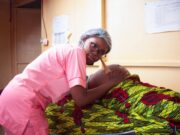
Top Image: A pregnant woman receiving antenatal care from a midwife at a heath center in Mwingi District.

Hyperemesis Gravidarum in Kenya: Vicky Gachuche’s Experience with Extreme Nausea and Vomiting in her Pregnancies

6

Victoria Gachuche, 35, is a mother of two boys. Her first born is aged 2 years while her youngest son is six months old. While she is happy to be a mom, she admits that the journey to motherhood has not been easy, largely because she was plagued by a medical condition in her two pregnancies that left her sick and in bed. She suffered from a condition called hyperemesis gravidarum, and for many women who suffer from this condition, they say it totally takes away the joy and happiness of a pregnancy.

Vicky tells us how she coped with hyperemesis gravidarum (HG) in her two pregnancies.

**On Christmas Day of 2011, I suspected I had a bad case of food poisoning and went to hospital, where I was admitted. But Shock on me, it was nothing close to food poisoning. I was shocked to find out I was pregnant!

During the pregnancy, I was hardly able to cope because I had serious smell sensitivity and would experience a lot of dizziness. I would vomit about 15 times a day and I hardly got out of bed. I was too weak and sick. The doctors told me that my HCG and oestrogen levels were so high they thought I was either expecting twins or I was having an ectopic pregnancy. All I remember of my first pregnancy is that they were very sad times. It was a difficult pregnancy I must say.

When I got pregnant for the second time, I was super worried because I knew I would go through the same thing again, perhaps it would even be worse. And indeed, worse it was! I lost about 5 kgs in 2 weeks and I ended up in the ER many times.

This time though I tried quite a few things to help alleviate the nausea and vomiting in the first trimester and bit of the second trimester.

The first thing I did was to ensure that I was always well hydrated –either by IV or orally. This was because I had come to realize that dehydration makes the nausea worse, so I had to keep myself permanently hydrated.

Because I was always too weak to stand, I had to make do with baths where I would soak myself in the bath tub. Thankfully, I discovered that soaking in the bath tub somehow took away the nausea.

I also always had to have a lemon with me incase I smelt something that could trigger the nausea as I was very sensitive to smells and would easily throw up. I found out that lemon helped me contain the nauseous feelings.

As the pregnancy progressed and I was finally able to eat, I completely avoided carbohydrates and only ate protein. I know it sounds crazy, especially for a pregnant woman but it somehow helped.

At some point though, things got too severe and I had to be medicated. I was put on ondansetron (a drug usually prescribed for cancer patients) & B6 with an antihistamine and prednidoxin. This I was given about 10 weeks into the pregnancy and though none of them took away the nausea, atleast the vomiting stopped. These got me through to about 16 weeks, where I was then able to slowly wean off the drugs because the nausea had subsided.

Having the extreme nausea was probably the most depressing time of my life. I felt like a wimp for not being able to cope with “morning sickness” like other pregnant women. I found it to be a very isolating time because most people don’t seem to understand this condition. Aren’t pregnant women supposed to be happy and glowing afterall?

I was however lucky to have a very good support system in the form of my husband who helped me through both pregnancies. He was especially very key during the second pregnancy as our first child was still very young and he took up the role of both mother and father.

Today, I share my experience so that I can try to increase people’s understanding on the condition of hyperemesis gravidarum (HG). This condition not only affects the pregnant woman, but if affects her entire family, and so it is good for them to know how they can help her. They can help by taking off some responsibilities around the house off her, such as cooking, cleaning, babysitting and taking care of the older children.

Pregnant women with HG do not pretend to be sick or exaggerating their feelings, or looking for sympathy. HG can be very depressing and it is good if the woman has a solid support system around her.**

Mummy Tales is a platform dedicated to empowering its readers on different aspects of womanhood and motherhood. Read more motherhood experiences of Kenyan moms here. Connect with Mummy Tales on: FACEBOOK l YOU TUBEINSTAGRAM l TWITTER

Silvia Njoki: Kenyan Fashion Stylist, Designer, Writer and Mom

3

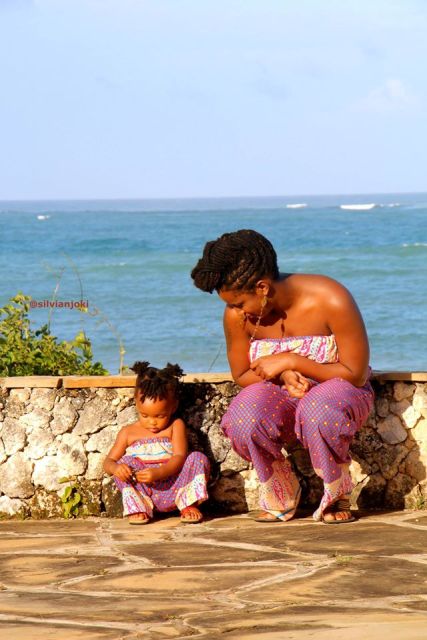
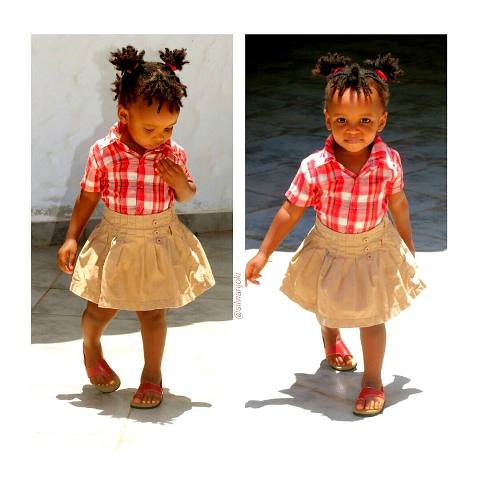
One of the blogs I follow is that of a young fashionista mom and Kenyan fashion stylist –26 year old Silvia Njoki, she of ‘Style by Silvia’.

In September last year, I featured her here. Her daughter Nielsine was only six months old then. Today, she’s a grown up little girl, slightly over a year and a half old.

I recently caught up with Silvia –a fashion stylist, designer and writer and bring you snippets of my chat with her.

MT: Hi Silvia. What have you been up to since you were last here?

SN: I have continued my employment with the Standard newspaper as a fashion and entertainment writer, and also have remained active as a fashion stylist for individual celebrities and TV shows.

Another new development is that my blog, “Style by Silvia” has become one of my major activities. Blogging gives me more and more satisfaction. I am happy that my followers like what I am sharing, which I can tell from their positive feedback and the rapidly increasing page views.

The birth of my daughter Nielsine in March last year was of course a major mile stone, and today I just couldn’t imagine my life without her. We own a beach house in Kilifi, it is such a beautiful and serene place where I feel my daughter should grow up, so I try to spend most of my time there with her when I don’t have to work in Nairobi.

MT: You recently won an award. Tell us more about that.

SN: The success and overall appreciation of my blog was reflected in the award for “Most Promising New Blogger” which I just won last month is a competition organized by SOMA – Social Media Awards. And I cannot thank God and my fans enough! Winning that award, thanks to a large amount of individual votes, has given me a greater spirit to make my blog even better and more attractive to my followers.

MT: Do you make all of your daughter’s outfits? Were you a little fashionista yourself while growing up?

SN: When I grew up, I was far from being a fashionista myself; My mom dressed me up in very beautiful but fewer clothes as compared to my daughter and I dint really have much say in what I wore.

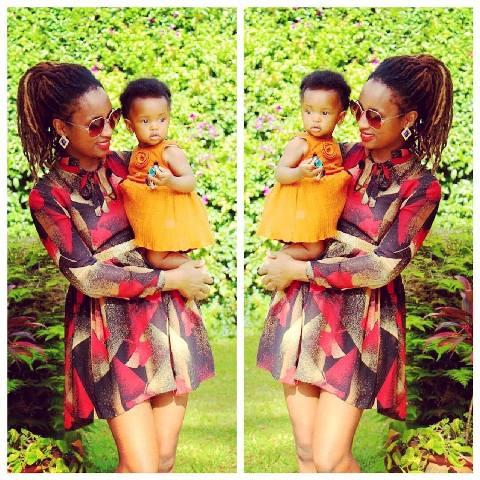
However, I have always loved clothes and I remember looking forward to Christmas, because I was certain to get a new dress. And now I just love to dress Nielsine up in pretty outfits, sometimes I shop too much for her! Occasionally I make an outfit for her, especially when it is meant to match one of mine in true mini-me style as occasionally featured on my blog. Or when I am inspired to give her a certain look.

MT: With your busy schedule, how do you make time for your daughter? Do you sometimes carry her along with you to work?

SN: My daughter Nielsine is now 19 months old and I spend quality time with her whenever possible, as I manage to balance motherhood with my professional responsibilities and tasks.

I feel very blessed in the sense that I can do most of my work from home, which means that I am spending a major part of my time with her in our coastal home.

My work in Nairobi – mainly photo and TV shoots as well as celebrity styling –  is of a nature, which makes it complicated to bring her with me on the job, and so far I have not done that.  I don’t think she would enjoy it either at this point.  But in a couple of years, I am sure she would love to watch mama do her styling. She is already a little fashionista in her own right.

MT: What are your favourite moments with Nielsine?

SN: I love showing her things in the nature including wild animals, flowers and insects. I also love to dance and sing with her, which she also loves herself.  She is quite an accomplished dancer already! I do enjoy trying out different outfits on her, and she cooperates with a lot of patience and she loves to watch herself in her mirror in bright and colorful dresses. However my favorite moments are when she is laughing out loud, for instance when we are having a pillow fight or when I tell her a joke or tickle her. I love finding new ways to make her smile.

When I look at my daughter, I see and feel a great level of responsibility; She has the most wonderful big bright eyes. When I look at her I see a beautiful young girl who is destined for greatness, and it is up to me to mould her into a queen, she is already a princess that I thank God for every day.

MT: As you raise your daughter, do you think you have become ‘your mother’?

SN: I have not become my mother. I have picked up some things from her, like being firm on my words, and keeping her in touch with religion and the church. But in most respects I am doing things quite differently with a lot of love and encouragement. I am determined to bring her up as a happy and confident person with lots of basic trust and as much freedom as she can handle, without the spanking I received while growing up.

MT: What is your fitness / health / beauty regime? That keeps you looking lovely always?

SN: I swim and do a lot of home exercise workouts when I can, my favorite is Shaun T’s – Insanity, I drink a lot of water but also take a few mugs of green tea every day. I have not eaten red meat for years. I never wash my face with anything but pure cold water. When I am not going out, I don’t apply makeup to give my pores a rest, and I always wear sun screen.

MT: Your future plans?

SN: I hope to give my daughter a little brother or sister, when she is old enough to appreciate it, and I am looking forward to get married and travel more and more with her and my family and for us to discover the world together.

In my professional life I am planning to give increasing attention to my blog and maybe eventually give up any regular employment.

MT: Your vision for your blog?

SN: My blog has entered a phase of rapid and consistent growth and I wish to keep up the momentum for the benefit of my many followers. But I also plan to take the business aspect of it more seriously and possibly develop it into a major income-generating activity.

MT: Who is Silvia, in your own words?

SN: I am kind and easy to talk to , I believe in God but I am very liberal in the way I live and bring up my child, I am down to earth and treasure family and friends.

MT: Thanks Silvia for your time and best wishes in your career growth and motherhood journey. Kisses to your lovely daughter.

To see more of Sylvia’s Style, check out her blog Style by Silvia

To see more of her outfits, check out her Facebook page: Style by Silvia

You can follow her conversations on Twitter here.

These Constant Clashes in Turkana, Who Will Save the Children?

0

Having been in Turkana two weeks ago, I am really saddened by the recent headlines in the media regarding the county.

When I was there on 17 October during the Race for Survival event organized by Save the Children (which was a global event to highlight the plight of poor children across the world with celebrations in Kenya happening in Turkana county), the deputy Governor Hon. Peter Ekai informed us that there had been an attack in one of Turkana’s villages. He blamed the attack on the Pokot community. In the banditry attack, some school children were injured. The irony of it all during such an event.

But the banditry attacks did not stop that day for barely three days later, a headmaster accompanied by police officers transporting KCSE examination papers were attacked by bandits. The police vehicle and the examination papers completely burnt.

Last Saturday, bandits attacked a police vehicle in Kapedo and killed five police officers.

The Turkana and the Pokot –who are both predominantly pastoralist communities have always had a long-standing rivalry fuelled by the fight for land, water and grazing pastures. Cattle raids are a frequent occurrence between the two and fatalities are common in these raids.

This week, Turkana, Pokot and the Ilchamus community in Baringo have dominated the news because of their constant clashing over these scarce resources.

With the high level of insecurity in these areas, some children have to write their KCSE with armed policemen watching over them.

KCPE is set to start next week. I bet it will be the same for these kids, having to sit their papers under heavy security guard. This is just sad. I can imagine how troubled those children are and I wonder if they will be really able to concentrate on their exams because of the tension. Even right now, as they prepare for the exams, how well are they preparing? Or are they preoccupied with their own safety, leaving little time to think about an exam? How do you successfully study under such circumstances?

Sadly, there is a suspected political bearing to all this. In an NTV news item last night, the reporter indicated the bad blood between two Baringo political leaders –the Baringo County Assembly Speaker Kassait Kamket (who has since been arrested for incitement charges) and Tiaty MP Asman Kamama could have something to do with the clashes. Both men battled it out for the Tiaty parliamentary seat in the last elections where Kamama won. Insiders say the win between the two for the Pokot vote depends on their support for cattle rustling and conflicts. I repeat. Their win depends on their support for cattle rustling and conflicts. Imagine that. :( Tribal politics will be the end of us Kenyans. It is so sad. Who will deliver us from this monster? And the way there have been so many peace campaigns in the last six years. Or have they just been cosmetic? Have these peace talks been happening in those fancy hotels with those nice nice bitings during tea break and that sumptuous buffet over lunch hour, and then that’s it? Are these messages getting down to the people in mashinani?

Aren’t we as Kenyans getting the message, or is it that we just don’t want to get it?

You tell me.

My hearts go out to the people of Turkana and her neighbours. The women and children especially.

Home Births in Kenya: Carrie Ndoka, a Mother of Three’s Experiences

5

Would you consider a home birth? As in choosing to give birth at home instead of in a hospital? And not that you do not have the money to deliver in a hospital, actually you can easily pay for the bill but you just want to deliver in the comfort of your own home?

Well, last week on Friday, I met one mom – Carrie Ndoka, a mother of three boys who has delivered her two children at home with the assistance of a midwife. I had so many questions for Carrie because I have never before met a woman who made the decision to deliver at home –not by circumstance, but by choice. I must have asked her about a million questions, but she remained calm through it all as she explained her reasons why. She stands by her choices despite the strong backlash she has received and continues to receive from many quarters.

Interesting.

Well, after my interview with her I had so much to write but I had to summarize it into this article. You can also read it below.
“Despite the government’s call for women to deliver in health facilities to reduce the risks associated with childbirth, a high number of Kenyan women still continue to deliver at home.

The latest Kenya Demographic and Health Survey (KDHS) 2008/9 indicates that 56 per cent of births in Kenya take place at home, with women in rural areas, those with low levels of education and low income forming the majority.

It is, therefore, interesting to learn that there are well-educated, urban women who can easily afford the luxuries of a birth in the remodelled maternity wings of private hospitals, who are choosing to give birth at home.

In private hospitals, these women have access to the latest technological equipment, with consultant gynaecologists, anaesthetists and paediatricians at hand to receive their babies.

But while they can effortlessly pay for the cosy amenities in these hospitals, they are instead choosing to have their babies at home.

Why is this so?

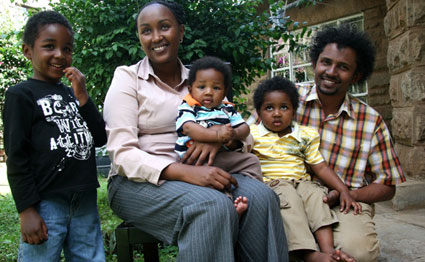
Thirty six-year-old Carrie Ndoka is a communications consultant with a foreign-based donor organisation in Nairobi. This mother of three delivered two of her children at home, the first child being delivered in hospital by “default”.

“My husband and I were all set to deliver our first son here in our house, all by ourselves. After regularly attending all my antenatal clinics, we also attended private birth classes, which gave us the confidence that we could birth our own baby at home,” she says.

However, when labour continued for too long, the couple decided to go to hospital, where she delivered their son shortly thereafter. Carrie’s reason for attempting a home birth for her first delivery was simple:

“Pregnancy and birth are not diseases that need medical or hospital intervention, unless when absolutely necessary,” she says.

Carrie, an International Business Administration graduate from USIU, and who is currently studying for a degree in development studies, says she prefers home births because of the peace and comfort her house offers her, something she believes she would not get in a hospital.

“Hospitals have this aura that makes me  uncomfortable and tense. But at home, I am in familiar territory, with no restrictions.

I can cook, walk freely and hang out with my family as labour progresses, perhaps even watch a movie with them.

I also like home births because I don’t have to listen to the screams from the stranger in the next bed, allowing me to concentrate on my own labour without distraction,” she says.

Greatest discomfort

One of Carrie’s greatest discomforts about a hospital birth is that the woman is unlikely to be in control of the process, since it will be dictated by the medics around her.

“A woman in labour should be able to be in tune with her body and listen to it guide her. As long as she has full confidence in her body’s ability to birth naturally, she will not need any drugs or surgical procedures, unless absolutely necessary,” she says.

This is the strong conviction she had when she went into labour with her first son.

But things did not go as planned, and aware of the potential risks, she decided to go to hospital.

But according to Carrie, her fears about a hospital birth were only reaffirmed after her hospital birth.

“When the midwives examined me, they said I was 9cm dilated and told me to relax, that my baby would be out in no time. However, all this changed when the doctor arrived soon after. He mentioned he needed to travel out of town immediately, and induced me.

This hastened my contractions, and a few minutes later, my son Taj was born,” she remembers.

Being a first time mother, Carrie says she felt intimidated by the doctor.

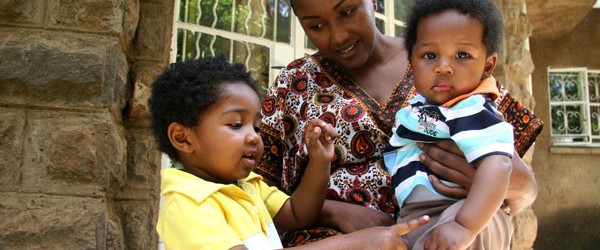
Carrie Ndoka with her son Uba during the interview on October 24, 2014.

“My labour was progressing well under the guidance of the midwives, but when he walked in, everything changed.

The midwives had no voice and had to obediently follow the doctor’s instructions. I too did not question him,” she says, adding that she does not believe the induction was necessary.

Her unpleasant hospital experience did not end there.

“After every few minutes, someone kept coming to my room to check on me. I had no privacy. While I appreciated their care and concern, I felt that the checks were too many, some unnecessary.

My worst experience came  early one morning when a strange man walked into my room, came straight up to me, undid my gown and shamelessly shoved his hands into my bosom without saying a word.

Furious, I asked him who he was. He replied that he was a doctor, and that he was checking if my breasts were producing milk.

That was it. I asked for an immediate discharge from the hospital.”

And with that, Carrie reaffirmed her decisionnever to deliver in a hospital again, at least not if she could avoid it.

When she got pregnant again three years later, she decided to engage an experienced midwife for her home birth.

“As usual, I attended all my regular antenatal clinics at a private hospital. I had no complications whatsoever, and at 36 weeks, my gynaecologist gave me the go-ahead to deliver at home with the assistance of a midwife, if that was what I wanted.

This was after he had verified the qualifications of the midwife,” she says.

Carrie chose Lucy Muchiri to help her. Together, they drew up a birth plan, which included regular monitoring and checks, and what to do in case of an emergency during labour and birth. Interestingly, the determined Carrie even chose to have a water birth!

And when her labour began, she went through the first stages with her husband.

He helped her with the breathing, massaged her back, as well as helped her walk around. However, she was regularly on the phone with the midwife, and as the labour progressed into its last stages, Lucy joined her at 2am.

Three hours later, Carrie was holding her second son, Rio, 3.1kgs, having delivered him in a mobile birth pool, in her  bedroom.

Her husband, Maina Maseeti, cut Rio’s umblical cord.

Carrie, who delivered at 42 weeks, has no doubt that had she gone to hospital, she would have been induced, perhaps even had a caesarean section recommended because she was way past her expected due date.

Her third child, Uba, who weighed 3.6kgs, was also delivered at home.

Don’t the risks of a home birth bother her?

“There is no guaranteed outcome in any birth, whether at home or in hospital. However, I believe in having a natural birth in a relaxed, comfortable environment, and in this case, my own home. I also prefer home births because my pregnancies have always been smooth and low-risk. If I had experienced even the slightest complication during pregnancy, I would have had a hospital delivery. Or if I had any concern during labour just like I did with my first birth, I would have gone to hospital.”

Besides, Carrie adds that the midwife always comes fully equipped with a birth kit containing all the requirements for an emergency, either on the part of the mother or the child before they get to a hospital.

“I live very close to a number of 24-hour private hospitals, so it is possible to be in one of them in just under five minutes, since I always have a vehicle on standby,” she says.

So what do her friends think of her decision to give birth at home?

“Most of them think I’m crazy,” she laughs.

“I have even had friends offer to contribute towards my medical bill, assuming that I am broke; I have received plenty of criticism, but it does not faze me,” she says.

Carrie decries the naivety of many pregnant women who deliver in hospitals, saying that some doctors are deceitful when it comes to maternity services.

“Many women place too much trust in their doctors, but unfortunately, most of this trust is misplaced.

If the doctor says the pelvis is small, the baby is too big, the baby is not positioned well, the baby’s heartbeat is irregular, or labour is progressing too slowly and recommends an induction or emergency caesarean section, we immediately accept it as true because we trust the doctor, and also because we are afraid to question his authority lest he get offended,” she says.

Carrie believes that inductions and caesarean sections are unnecessary in many cases.

“Some doctors are driven by selfish interests, for instance when they need to rush elsewhere, and feel that the woman’s labour will delay them, so they scare the mother into believing that her life or that of her baby is in danger unless she is induced or goes to theatre.

Some are driven by financial gain, and will recommend a caeseran section even when it is not necessary,” she says.

I also like home births because I don’t have to listen to the screams from the stranger in the next bed, allowing me to concentrate on my own labour without distraction,” she says.

The Midwife

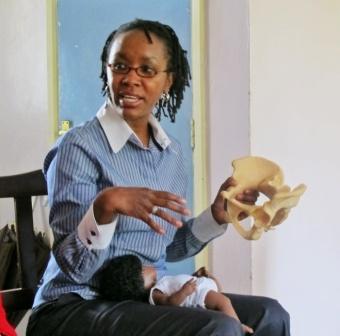
Lucy Muchiri is a nurse with 17 years’ experience – for 15 of these, she has been a midwife. She says that to become an independent midwife who conducts home births, you have to be licensed by the Nursing Council of Kenya.

She began conducting home births four years ago.

“In the first year, I oversaw only four births. In the second year, there were six, and in the third year, I had a home birth every month. This year I have had at least two home births every month,” she says.

The women who choose to have home births, according to Lucy, are mainly working class women in the middle-class bracket, with the rest being in the upper class. They are all well-educated women, most of them married, she says.

Initially, Lucy’s clients were second-time mothers who had had an unpleasant hospital birth experience with their first child, and were looking for a different option.

“Most said they were subjected to unnecessary medical procedures, such as inductions, episiotomies and caesarean sections.

But nowadays, I’m seeing more first-time mothers.

These are women who want to experience the process of a natural birth, and fear they might not experience this in a hospital. Most are referrals from other mothers who have had home births,” she says.
What about the risks associated with delivery?

“My clients must get clearance from their doctors at 36 weeks, allowing them to have a home birth.

These are women who have had previously smooth pregnancies. In case of an emergency during labour, such as foetal distress, sudden high blood pressure, excessive bleeding or a retained placenta, I have a fully-equipped emergency birth kit that can help with urgent medical care before getting the patient to hospital.

I also work with a reliable ambulance provider who is always on standby.”

Considering a homebirth?

Lucy Muchiri says that home births are not for every woman, for instance those who have:

– Pregnancy complications such as high blood pressure, high blood sugar, chronic illnesses such as diabetes, cancer or kidney problems.

– Premature labour

– A baby who has been detected to have malformation

– A low lying placenta

– Fibroids

– A segmented uterus.

*Article Courtesy: Daily Nation. Pictures by Jennnifer Muiruri.

Advertisement

POPULAR POSTS

error: Not Allowed