Home Blog Page 47

Here’s What’s New about Pampers Baby-Dry Diapers

2

You may have come across information about the new improved Pampers baby-dry diapers, and probably asked yourself what exactly is new or improved about this diaper.

Well, here is all the information you need to know.

The New Fun Designs

If you are like me and many other moms I know, then you most likely love those little baby things that have cute shapes, animals, cartoons, colors and designs on them. From receiving blankets, to bedsheets, to baby shawls, to blankets, diaper bags and the sweet-smelling baby shampoos, bath gels and lotions.

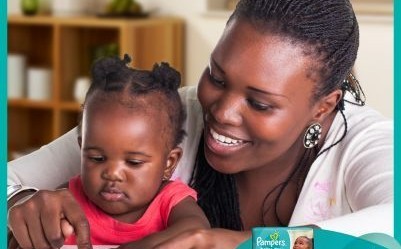
So now the new and improved Pampers diapers come with fun designs that will certainly be a favorite for not only you, but baby as well! What’s more, the fun designs are a good way to teach your baby about different animals (as you imitate their sounds), shapes and colors. Sounds like fun for you both!

New and Improved Stretchy Sides

By the way, did you know that babies tend to move about twice as much as an adult during their sleep? Some experts say that babies move up to 10 times more than their mums when sleeping! They also say that this movement is normal during the baby’s healthy growth and development. I’m sure you may have experienced this on the occasions you decided to co-sleep with your little one, where they seem to do all manner of rotations and gymnastics on the bed.  Something I can totally relate to.
With this in mind, the improved Pampers baby-dry diaper has these stretchy sides that gives baby best comfort as he moves around. The stretchy sides (which can stretch up to 10 cm) adapt to baby’s movements, keeping him comfortable and snug all night long.

Magic Gel: Protection to Last Overnight

Every mother with a little baby will tell you that one of their greatest joys is waking up to a happy, well-rested baby. And they will also tell you that one of the best ways to achieving this is investing in a diaper that will keep baby dry all night long.

Now, the improved Pampers baby-dry contains a magic gel that instantly locks away the wetness, keeping baby’s skin dry and healthy and helping him get a good night’s sleep. In addition, the diaper comes with unique dryness layers that quickly absorb the wetness so that the moisture doesn‘t affect baby‘s skin.

The absorbency features in the new and improved Pampers baby-dry helps baby have up to 12 hours of dryness, giving him the uninterrupted sleep he needs. And a well-rested baby means a happy baby in the morning and a happy mommy as well.

Soft Outer Cover for Superior Softness and Comfort

Isn’t there something so irresistible about holding a baby? Babies have this smooth skin (that smells so nice) that makes you just want to hold them close as you cherish those moments forever. So shouldn’t everything that touches your baby be just as soft and gentle as he is?

Well, the new Pampers baby-dry comes with a soft outer cover -a ‘pillowy’ soft backsheet that comforts your baby by giving him with a cozy feeling against his delicate skin.

Baby Lotion for Superior Skin Protection

The new Pampers baby-dry’s top dryness layer contains a small amount of lotion that forms a water-repellent layer on the skin surface. This helps protect baby’s skin against excessive moisture and wetness. The lotion is safe, and clinically tested to be effective.

So those are the new features of the improved Pampers baby-dry diapers. The diapers are available in different sizes; 1, 2, 3, 4 and 5 so you can choose the size that best fits your baby (be sure to check against your baby’s weight too). The diapers are available in supermarkets and different wholesale and retail stores -including the neighborhood kiosks who mainly sell them apiece.

Try out the new improved Pampers baby-dry today and feel free to return and share your feedback here.

By the way how do you fancy winning a six-month supply of Pampers baby-dry diapers? Head over to the Pampers Facebook page and see how you can do so here.

Have a lovely day.

Hon. Sarah Korere on Breastfeeding Her Baby in Parliament

0

Let me touch on a little bit of politics today. Siasa.

So how are issues of females and their reproductive health treated in Parliament? For the longest time ever, I used to hear that female MPs were not allowed to get pregnant during their term. I don’t know how true that was, but the first MP I ever heard of who carried a pregnancy while serving her term was nominated MP Hon. Amina Abdalla a couple of years ago.

Since then, I know there have been a number of MPs who have successfully served their terms in between a pregnancy, among them Hon. Elizabeth Ongoro, who made history for being the first minister to give birth while in office.

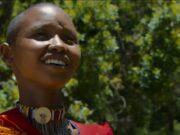
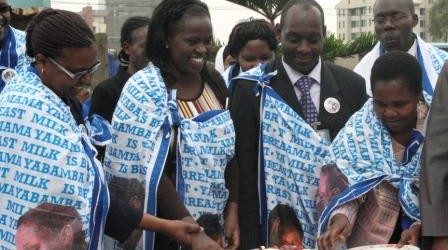
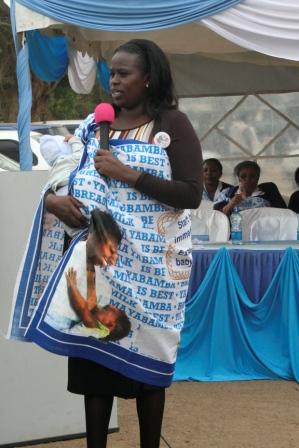
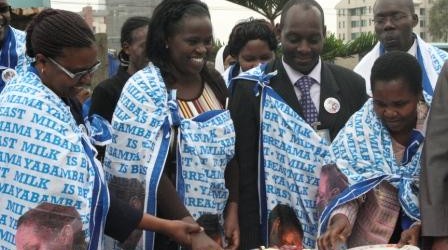
Aside from pregnancy, there is the next issue of breastfeeding. The first time I heard of a parliamentarian who would carry her baby with her to work (Bunge) was in August 2013, during the World Breastfeeding Week celebrations at the Kenyatta National Hospital (KNH) when I listened to nominated MP Sarah Paulata Korere share her inspiring story.

Hon. Korere, speaking at the Breastfeeding Week celebrations at KNH.


Hon. Korere spoke of how when being sworn in as a Member of Parliament in March 2013, her newborn daughter was just three weeks old. But she had a job to do and it became extremely difficult for her to balance the rigors of a hectic Bunge schedule, meeting her constituents and taking care of her baby. At some point, the stress was too much and she wondered what to do with her baby because she just couldn’t keep up with ‘breastfeeding on demand’. So she opted for formula milk. But just as she was about to feed her baby formula, she on second thought consulted a lactation manager, who took her through the A – Z of expressing and storing breast milk.

Hon. Korere actually amused we the audience when she confessed to not knowing that it was possible to express and store breast milk. Understandably so, because even many of us -before we became mothers, did not know that either.

So equipped with this new information, Hon. Korere quickly dropped the idea of formula milk, and went on to successfully exclusively breastfeed her daughter for the first six months. This she managed to do by carrying her baby to work (Parliament) and taking breaks in between parliamentary proceedings to go nurse baby. Cool!

So as I was perusing the press today, I came across an article in The Standard, and was delighted to read about her again. She really does have a story to tell, her getting to where she is now has not been a smooth road. In the article, she not only talks about her decision to breastfeed in parliament, but also about how she underwent FGM, escaped an early marriage and was at one point her father’s least favourite child!

Here is part of that interview.

Why did you break the norm and decide to breastfeed your baby in Parliament?

My daughter has to get what she is entitled to, which is six months of exclusive breastfeeding. A child should suckle, and there was no way I was going to leave my daughter at home. I would be pleasing some people, but hurting her.

Hon. Sarah Korere. Photo: Standard.

What was the reaction from fellow legislators?

Surprisingly, I received backlash from some female legislators who said walking around with young children is outdated. However most female parliamentarians really encouraged me, but many male colleagues didn‘t know what to say. Some told me they admired what I do to ensure my daughter is healthy, while others told me it was best that I leave my daughter at home and attend strictly to Parliament business.

What was your childhood like?

I was born in Laikipia to a wealthy Maasai elder, who had six wives. My father didn‘t believe in educating girls, and gave each of his six wives 400 heads of cattle and 200 sheep to cater for their children. I was taken to school by Catholic missionaries.

From six years, I stayed in a boarding school since I could not walk 20 kilometers to school daily. My primary school years had a definite impact on how I view the world today. Every year, more girls would drop out of school to get married, yet I stayed on, a fact that didn‘t impress the boys who would beat me up. The first time I cried, but the second time, I turned on them and beat the physically, and when exams came, I also beat them. You can read the full article here.

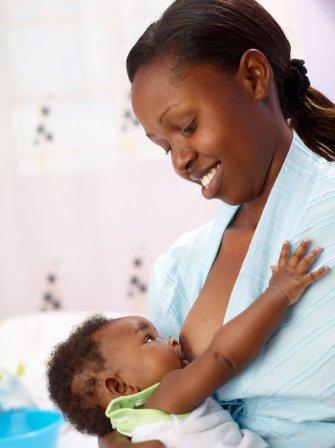
Photo: Let's Talk Breastfeeding, Kenya
Photo: Let’s Talk Breastfeeding, Kenya

 I admire Hon. Korere for placing her baby’s interests first, just like most mothers do in their own different ways. I hope every new mom will be motivated to exclusively breastfeed her baby too. It is possible, I always say. I also hope she can use her influence and those of other like-minded Parliamentarians to push for more favorable policies for lactating mothers in the workplace. And also advocate for longer maternity leave. Kenyan moms want at least six months. Over to you Mhesh!

Related Article: Maternity Leave in Kenya: 90 Working Days or 90 Calender Days?

You may also read more informative breastfeeding stories of Kenyan moms here.

The Baby Room of a Kenyan Fashion Blogger’s Daughter (Silvia Njoki)

2

Silvia Njoki of Style by Silvia is one of Kenya’s leading fashion bloggers. Silvia is also mom to her lovely two year-old daughter Nielsine.

Read: Silvia Njoki: Kenyan Fashion Stylist, Designer, Writer and Mom

Silvia studied fashion styling at Central St. Martins in London, and Nuova Accademia di Belle Arti Milano in Milan. Silvia often tailors some of her daughter’s outfits, and which she shares photos of on her blog.

Silvia_Njoki

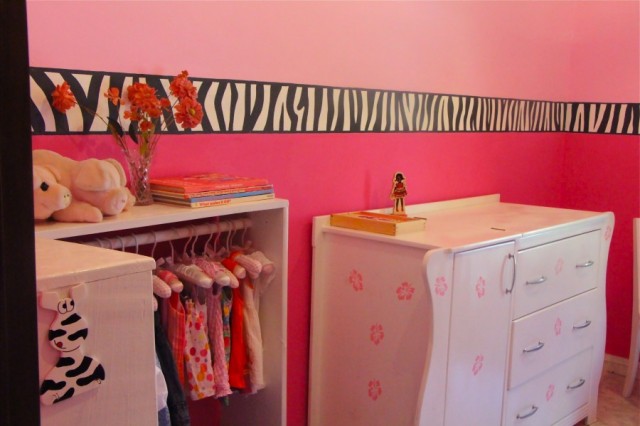
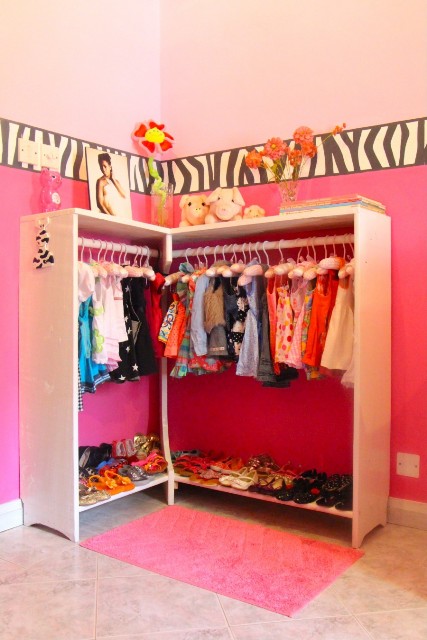
One of the most memorable posts I have come across on Silvia’s blog is that of how her daughter’s room looks like. The room is pink-zebra themed, and with some cute accessories.

Related: Silvia Njoki: Kenyan Fashion Designer Tailoring Outfits for Her and Her Little Daugther

Here’s some photos of Silvia’s daughter’s room.

You can cross over to her blog and in this post titled ‘My Daughter’s Baby Room’, read about her thought process into putting together her baby girl’s room. There are also more photos of the room there.

So how about you? How does your baby’s room look like? Did you take time to put it together in a certain theme, or is it just a plain? Share photos too!

The Couple Whose Twin Sons ‘Died’ at Pumwani Hospital Last Month: DNA Results are Out

1

Do you remember the story of the young mother who delivered twin boys at Pumwani Maternity Hospital early last month, only to be told that they were still births? Well, there is an interesting new development about this case!

Just to jog your memory a little bit, 24 year-old Jacinta Kimathi had delivered her twin sons, but had been told they were both dead. She remembers delivering her first boy and being informed that he had breathing problems. He was alive atleast, she comforted herself. Shortly thereafter, she delivered the second boy -and she clearly heard him letting out a cry. Thank God he was alive as well, she comforted herself again.

But Jacinta was to have the shock of her life when, after taking a nap, woke up to be told that both her boys were dead. That they had been born dead. That she had only imagined being told that her first son had breathing problems, and that the cry she had heard was only a figment of her imagination.

The hospital administration went on to say that Jacinta’s twins had actually died in the womb. That their skins were even peeling off, and it was possible that they had died more than 12 hours before their delivery. That the apparent cry she heard from one of her sons was actually the cry of another newborn in the labor ward.

I was greatly saddened by this story. Pained my heart to the core.

Last I read about this story, the dad of the twin boys Mr. Dedan Kimathi was in a dilemma over whether to bury his deceased twin boys or to run DNA tests because just like his wife, he did not believe his babies were born dead. The couple was actually suspecting that the bodies of the babies were not theirs.

But even with the option of running DNA tests on the boys to ascertain if the newborns were really theirs, the couple did not have the money for this. Even worse, they did not have money to bury the babies’ bodies. And so with no ‘othewise’, they were willing to have the hospital dispose the bodies.

That was until, thankfully, the Ministry of Health intervened and offered to run the DNA tests for free. I can only imagine the relief this was for Mr. Kimathi and his wife.

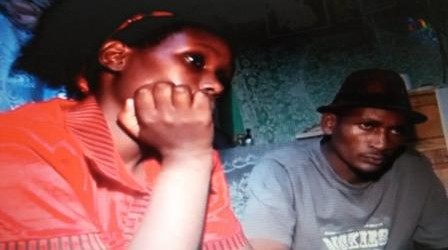
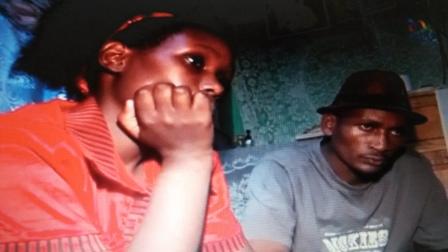
And yesterday, the couple got another shock of their lives. The results of the DNA tests show that:

1) Neither babies are biologically theirs

2) The two deceased boys were NOT twins

3) The two deceased boys were NOT from the same mother

:(

So where are Jacinta and Dedan Kimathi’s twin sons? What happened to them? Pumwani Maternity Hospital really has a lot of explaining to do. It doesn’t help much when there has always been all these stereotypes about the hospital that I’ve always heard over the years -about babies being stolen or switched at birth -but which I really could never verify.

Until now. This is wrong on so many levels. So could some of those stories I have always heard about be true? Stories that were never captured in the media? Stories of voiceless parents silenced by poverty, lack of knowledge, threats and intimidation?

Here is that story, as told by Irene Choge of NTV.

https://youtu.be/5jJAsI2d0Oc

But over and above that, I sympathize with the Kimathi couple. I can only imagine their agony, wondering where their little boys are. Little boys who have had to live their first month and a half (and counting) without the love and care of their parents, boys who have not even had the chance to suckle their mother’s milk.

Who will help this couple find their lost sons?

I also wonder about the parents of the dead boys, seeing as they belong to two different mothers. What were these mothers told happened to their babies? Why were they denied the option to bury their sons or at the very least, consent to having the hospital dispose their bodies? Do they know that their dead sons were presented to another mother?

What happens now to Pumwani Maternity Hospital? What action will be taken in light of this new information?

Motherhood Notes from A Kenyan Mom in the Diaspora: Elmo is Alive in our Household

0

This week, Lema is onto something new. His mother Nabubwaya Chambers tells us more about this new development.

Lema has been maximizing every second of his time with the Elmo toy car that he received as a present from his paternal grandparents last year. I tell you, no day is complete without the melodious tunes that Elmo (from Sesame street) so richly belts out.

Lema’s toy car has two buttons which when pressed, see Elmo recite something fun and melodious. You should see the look on Lema’s face when I ask him to play with his Elmo car. He quickly drops whatever it is that was currently keeping him busy then toddles his way to his Elmo car. Button 1, button 2, button 1, button 2, and so on and so forth. He presses them religiously, chuckles, and dances along to the tunes. :) I am happy because simple things make my boy smile. He doesn’t need a grand play party or contraption to keep him entertained. In fact, media entertainment doesn’t really hold his interest. He prefers to play with people, play on the floor with his toys, tear the bookshelf apart, and walk back and forth while holding a toy or two in his hands until he breaks into a pool of sweat.

Lema loves warm cuddles when he needs a break. He has become so observant that I have had to up my vigilance game. I need to be a security firm as whole because our boy is threatening to catch up with some of my skills. Baby proofing our home has helped us a great deal. Power to whoever invented it.

Baba Lema and I look at him and think of how fast time has passed. It is like we just brought him from the hospital. Well, now that I think of all those sleepless nights, I take that back. It is like he just started eating solid foods the other day. He is blossoming into an energetic boy that makes us proud and happy to be his parents.

Now back to our Elmo car. I don’t think I want Lema to tire of playing with his car. It helps me get my chores done in break-neck speed because Lema has something to distract him while I am at my motherly duties around the house :) . For that I am very grateful.

Long live Elmo car and all the sesame street characters.

Errrr, just a minute Nabubwaya let me ask -in your last blog post, Lema was obsessed with balloons. Do you mean to tell me he’s still into them?? -Mummy Tales.

Is There Any Harm in Pregnant Women Eating Stones and Other Non-Food Items?

3

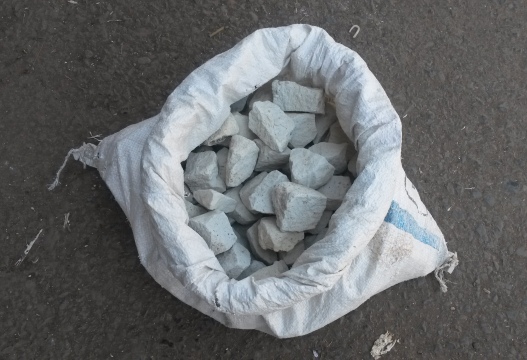
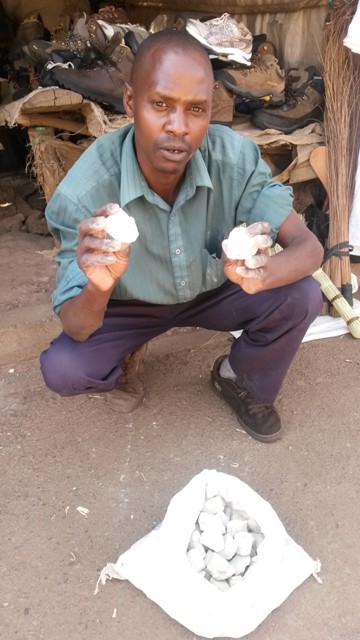
This habit of pregnant women eating stones – I’m sure you may have heard about it, seen a pregnant woman buy or eat them, or maybe you’ve eaten them yourself. And by the way I’m not referring to the normal stones that you find on the roadside as you walk. I’m talking about some special kind of soft stones, commonly known as ‘odowa’. They are mainly sold in market places though lately I’ve also been seeing them on supermarket shelves.

But are these odowa healthy to eat?

The reason these stones have come to mind is because last weekend while I was in Toi market getting my boys some stuff, I spotted an odowa vendor and out of curiosity decided to ask him a few questions about the stones because I had seen a couple of women buy the stones from him. His name is Stephen Kitheka and he was kind enough to allow me to sit with him and conduct an interview.

Kitheka told me that he’s been selling the stones at that particular spot for the last 10 years. Business has been good, he said. Kitheka gets his stock from Gikomba market.

Kitheka sells the stones in individual pieces, each for five shillings. In a day, he sells between 60 – 100 stones. On a really bad day, he sells 50 stones. Pregnant women form a regular base of clientele for Kitheka’s stones. I asked him if he knows the benefit of the stones to those who eat them.

“I hear the women say the stones contain calcium which makes their bones strong. Some tell me the stones ‘add blood’ to their bodies. But I’m not sure how true this is because I don’t have that kind of medical information. I just sell the stones because the women would be very disappointed if they found them missing. They really like them,” he told me, pride in his voice.

Kitheka wraps the stones in old newspapers when he makes a sale to a client. He says the stones are ready to be eaten and don’t need to be washed because, having been extracted directly from the ground, they are ‘clean’ as they have not been tampered with.

In all the 10 years that Kitheka has sold odowa, he has never heard a client complain of illness caused by the stones.

“If women had complained then I would not still be in business. The fact that I have regular customer base means the stones are good for the women,” he told me, pride in his voice.

After chatting Kitheka, I decided to ask a doctor about odowa, with special regard to pregnant women. I talked to Dr. Stephen Mutiso, a consultant obstetrician / gynaecologist at Kenyatta National Hospital. He told me of the dangers associated with this habit, more so in pregnant women.

Continue Reading Next Page

Motherhood Notes from a Kenyan Mom in the Diaspora: The Obsession with Balloons

0

Kenyan-born mom Nabubwaya Chambers lives in Lubbock, Texas USA, where she is raising her family. She shares with us some notes on her motherhood journey as she raises her son Lema who is now 1 year 2 months old. Lema seems to have discovered a new toy!

“Lema’s first interaction with a balloon was last year on his birthday. We gave him several balloons of different colors to play with as we entertained our guests. Little did we know that this initial interaction would be a life-long friendship between our son and balloons!

Red, green, yellow, orange, blue, gray, black, you name it. All colors of balloons fascinate him!

Lema is usually very quick to remind us of his fascination when we are out in public, especially when he spots the helium balloons in stores. He points at them and won’t quit talking about them until we acknowledge his love for balloons. We thought he would outgrow them by the end of the year but we are very wrong. Meal times are not complete until the word balloon has been uttered.

If you were to come to our home this day, you will find a special corner reserved for Lema’s balloons. He loves to play with them, punch them, kick them, carry them around, spread them all over the floor and even just stare at them in fascination while chuckling.

Has anyone ever had a child who is so obsessed with balloons like this one? We have tried hiding them but he finds them. He seeks for them if he does not spot them nesting in their special corner. I am pretty sure I have seen him trying to use some as a teething toy. Efforts of presenting Lema with a variety of teething toys are usually thwarted once he spots a balloon. So I shall continue to discover new hiding places. And I bet he shall continue solving the mystery of the hidden balloons.

We wonder when this stage will pass. What will become of the balloons after our Lema moves on to a new interest? Will we keep them or toss them? Well, we shall cross that bridge when we get there. I am happy as long as my boy remains happy, even if it means jumping over balloons and other toys spread all over the floor.

I guess we don’t always need to buy pricey toys to please our children.  A simple balloon will do just fine.:) You can read more of Nabubwaya’s experiences here.

Wanjiru Kihusa: I Have Had Two Miscarriages, but I Have Hope I’ll be a Mother Someday

2

Two weeks ago, I came across this blog post by Wanjiru Kihusa where she was talking about her miscarriage experiences, and something in it particularly caught my eye.

This is what caught my eye:

Why is the media quiet about it (miscarriages)? Other than a few shared stories, I have not come across a well done informative broadcast or newspaper piece. Every time I watch those IFAS campaigns on TV, or even malaria campaigns I wonder why there isn’t one about miscarriages. I mean, with such high statistics you’d think someone would talk about it. Any media personality reading this?

I was reading. Here is Wanjiru’s story.
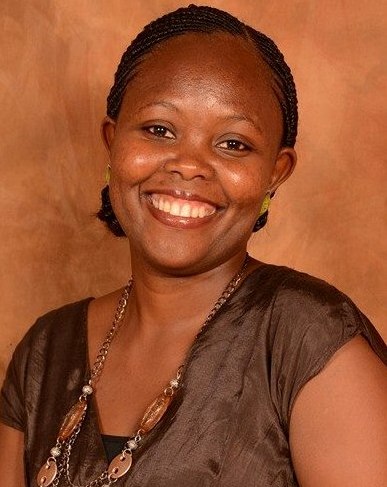
In June 2012 at the age of 25 years,  Wanjiru got married to a young man she had met in campus during the Christian Union (CU) meetings and fell in love with — Andrew Kihusa.

Five months later, she graduated from the Jomo Kenyatta University of Agriculture and Technology (JKUAT) with a first class honours BSc degree in Information Technology (IT).

Immediately after her graduation, she secured a job as a customer service manager with an IT firm in Nairobi. Things were working out well for her — she had secured a good education, was married and had a good managerial job. So what was next? Children.

On their first year wedding anniversary, the couple decided to start trying for a child. And it did not take long for soon after, Wanjiru discovered she was pregnant.

“I was ecstatic. I could not wait to become a mother,” she remembers.

But her excitement was soon cut short when in her seventh week of pregnancy, she began bleeding.

“I quickly rushed to the gynaecologist who informed me that I was having a threatened miscarriage. I was put on medication for the next five weeks. After completing the dose, my pregnancy was declared safe. I was so relieved as I could finally start enjoying my pregnancy as from the day I started bleeding I was filled with too much worry and fear to even relax. But with the risk now behind me, I enjoyed watch my baby bump grow. The reality of becoming a mother was now closer than ever and my excitement grew with every waking day,” a beaming Wanjiru recalls.

However, at 16 weeks pregnant, Wanjiru began feeling sick. She had fevers, chills and sporadic headaches.

“I consulted a doctor and underwent all manner of tests, but while the diagnosis was a bacterial infection which saw me take antibiotics, the fevers and headaches persisted.”

Wanjiru consulted different doctors a few other times, but the diagnosis and the drugs were always the same. Unfortunately, the drugs did not seem to offer her any relief.
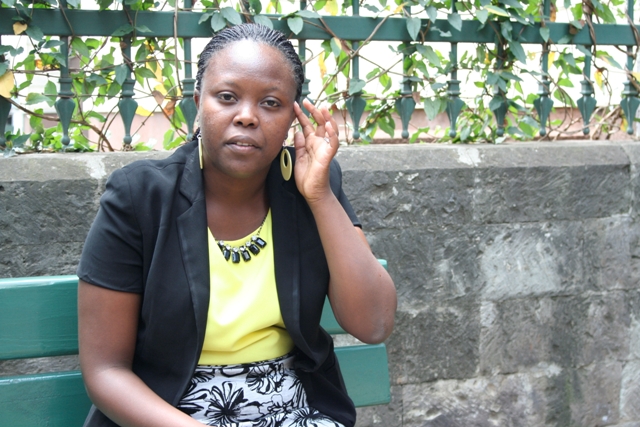
The sick feelings however did nothing to contain Wanjiru’s excitement and she began shopping for her baby at 18 weeks.

At 19 weeks, the couple went for an ultrasound which showed that Wanjiru was carrying a baby girl.

“It was a surreal moment as we saw her little fingers and her facial features. We called her Leila,” she remembers.

Back in the office, balancing the demands of her job — which would see her work till late in the evening and her delicate pregnancy — would prove to be too much to handle.

After a discussion with her husband, the couple decided that she take a break from her career to focus on the pregnancy and return to work after the birth of their child.

But one day, at 20 weeks pregnant, Wanjiru began experiencing abdominal pains.

“It was 3am and the cramping was so intense that I had to be rushed to the emergency room. Despite a number of injections to relieve the pain, the discomfort persisted. The doctor who attended to me decided to do a blood culture test -something that all the other doctors I had seen before had never done.”

By 11am, the abdominal pains were so bad that Wanjiru thought she would die. But she had not seen the worst for at exactly noon, her waters broke. It turns out that she had been in labour all along.

“I delivered my baby right there in my hospital bed. There was no time to even go to the labor ward. Everything happened so fast and I was confused. I thought it was a movie. Sadly, Leila was stillborn. My husband and I had a look at her. She was a beautiful angel.”
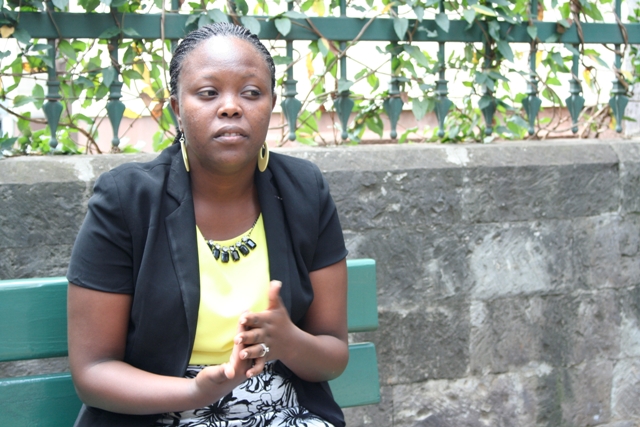
After delivering her baby, the results of the blood culture revealed that Wanjiru was suffering from an infection called listeriosis — usually caused by eating food contaminated with a bacterium called listeria monocytogenes. Listeriosis, a dangerous infection particularly hits pregnant women hard, leading to miscarriages, meningitis, premature birth or other serious life-threatening conditions when not treated promptly.

“The infection had affected the placenta and the amniotic fluid. Post-mortem results on baby Leila showed that the infection had severely affected her lungs and liver. My baby girl stood no chance of survival,” recalls a sad Wanjiru.

Wanjiru recalls the days following the miscarriage.

“The most difficult thing for me to do was take a bath because I now had a flat stomach. I used to enjoy rubbing my tummy and playing with Leila, but now my baby bump was gone and worse, I had no baby to show for it. I also had to take medication to stop my breasts from producing milk. Each time I took that tablet, my heart broke into pieces as tears flowed freely.”

Three days later, Wanjiru was discharged from hospital.

“My husband took me out of town for two weeks. We took that time off to talk about what had happened, mourn Leila and cry together,” she remembers.

But soon, she had to return to Nairobi. She was already serving her quit notice at work and agonised over whether to continue working or not.

“The main reason I was taking a career break was so that I could focus on my pregnancy. But I was not pregnant anymore and worse, I had no baby. I decided not to return to work. I was still dazed from all that had happened. I wanted to give myself time.”

While at home, Wanjiru began searching for local support groups for women who had suffered miscarriages.

“I only found an online Facebook group where women shared their experiences. But I personally felt the desire to connect with such women on a physical level. I did not find such a group.”

Wanjiru then decided to start blogging about her miscarriage. The feedback she received was startling.

“I was shocked by the number of mails I received on a daily basis. Women who had suffered multiple miscarriages in a row. Some had success stories but most did not. Women who were ridiculed for their barrenness. There were plenty of women who had gone through worse experiences than I had. Some were undergoing depression. But the common thing among them all is that they never spoke openly about it. Most of them suffered in silence. I realised that the issue of miscarriage was a serious one. It opened my eyes to something I never knew affected so many women. I told myself I would do something about it.”

As she pondered about what to do, Wanjiru and her husband decided to try for a second child in March 2014, the month that Leila was supposed to have been born.

Once again, they were lucky to conceive with ease.

But sadly, Wanjiru began bleeding at six weeks pregnant. By the time she got to the gynaecologist, she had already lost the baby.

“I was crushed. I cried until I could cry no more. Was this my fate? Would I ever be a mother?” she cried.

This time round though, a series of tests revealed that Wanjiru suffered from a progesterone deficiency. Progesterone is one of the hormones that the body depends on to help maintain a pregnancy.

“This was a bitter-sweet relief because there is still hope for us to get a child. All I need to do is to ensure that I take progesterone supplements as soon as I discover I am pregnant. I believe I will be a mother someday. We have however decided to give ourselves sometime before we try again.”

In the meantime, Wanjiru is talking openly about the hushed topic of miscarriages. She hopes to start a support group that will create a physical space for those affected by miscarriages where they can meet, comfort and learn from each other.

“Typically, women who cannot bear children are frowned upon by society. Many are stigmatised, ridiculed and ostracised. Society always blames them, posing questions such as ‘how many abortions did she have before she got married? How many STDs eventually destroyed her uterus?’ and other such questions,” she says.
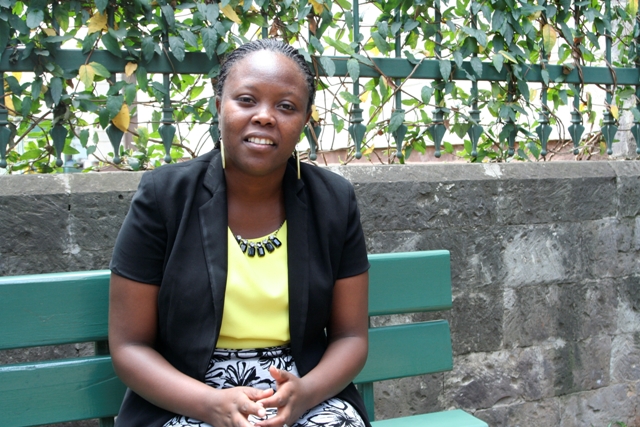
Some communities, according to Wanjiru, also link miscarriages and infertility to witchcraft.

“They say that the woman was bewitched or that she comes from a cursed family. They then go ahead to encourage their son to marry another woman and chase away the ‘cursed’ woman. Some religious leaders even believe such women are possessed by evil spirits.”

According to Wanjiru, many women suffer in silence, and she believes it is time they began speaking out.

“I have found out that there is a lot of misinformation surrounding miscarriages. It carries with it a lot of stigma and shame, yet most miscarriages are as a result of underlying medical conditions. The women are not to blame, yet they continue to suffer alone. I want to change this. I want to demystify the myths surrounding miscarriages and infertility. I want to create a support network for such women so that they can know they are not alone,” she says.

UPDATE: Wanjiru is today a mom. Read her post about that here

Wanjiru can be reached on wanjiru@wanjirukihusa.com

You can also follow her blog at wanjirukihusa.com

If just like Wanjiru you have a story that you would like me to share, email me at maryanne@mummytales.com or inbox me on the Mummy Tales Facebook page.

God bless.

Gakii Muriithi: “My Daughter’s Sudden Death Shattered Me, But God Blessed Me Again -Twice”

6

Sometimes, miracles beyond our comprehension do happen, and one such testimony is that of Gakii Muriithi. Sadly, Gakii lost her infant daughter in 2012, when she was just a month old. But even as she mourned the sudden loss of her daughter, she held on to a ‘strange’ hope that she would go on to have not one baby, but twins. Did she eventually get what she prayed for? Today, I bring you Gakii’s story. 

When Gakii Murithi became a mother for the first time in July 2012, she would spend her days cuddling and nursing her beautiful princess Tashley. It had been a smooth pregnancy for her, and the same happened during Tashely’s delivery where she experienced no complications at all.

But when Tashley was just a month old, she one day suddenly started crying non-stop and refused to breastfeed, something that deeply worried Gakii.

“Tashley was very cranky and I wondered what could be wrong with her. When she vomited the following day, I quickly rushed her to hospital. By the time we got there, Tashley was convulsing and after initial examination by the doctors, they said she needed to be admitted in a larger hospital since they didn’t have the capacity to handle my baby’s illness. They immediately organized an ambulance transfer,” Gakii remembers.

Even before she could comprehend what was happening, Tashely was in the ICU. Gakii found it hard to follow the events that were unfolding. Things were moving too fast for her.

“I was totally confused. Tashley was born healthy and was a cheerful baby. She had never had any problems. But now she was in the ICU with countless tubes all over her. It was hard to recognize my daughter. I was in a daze.”

After stabilizing Tashley, the doctors advised Gakii and her husband to return home for a bath, a change of clothes and some little rest then return to the hospital later.

“About thirty minutes after my husband and I had left, we received a phone call from the hospital asking us to return immediately. Fear gripped us.

I remember as I walked into the room where I had left Tashley, I felt something drop in my stomach. My heart started racing fast as I sensed something was wrong, especially when I saw a nurse in tears. My fear became real when I noticed that the machines that I had left beeping were now all silent. I started feeling real sick.”

The doctors then broke the sad news to them. Tashley had succumbed to severe neonatal sepsis.

“My body started shaking involuntarily as I started screaming. We were on the hospital’s second floor and after hearing that my dear daughter was dead, I quickly dashed to the balcony. When I was just about to throw myself down, I felt my husband and nurses hold me with a strong grip as they restrained me. I didn’t see the need to continue living. What for? I wanted to follow my daughter to heaven. What was it that I was being left to do here on earth?” says Gakii, narrating the thoughts that raced through her mind at that time.

Her husband, the nurses and the doctor somehow managed to calm her down. She then requested to be given her daughter’s body.

“I took Tashley in my arms and tried to squeeze her mouth open so that she could breastfeed. But she did not suckle. I tried to sing her songs, soothe and rock her so that she could chuckle and throw her hands in the air like she used to. But she produced no sound. I kissed her, hoping that my kisses would resurrect her. But she did not budge. My baby was gone,” she cries.

Gakii held her daughter close in her arms –talking to her, kissing her, rocking her soothing her and trying to get her to breastfeed. When the nurses tried to take her daughter away, Gakii refused. She did even allow her husband to take Tashley away from her.

“Thank God the doctor –who seemed to understand what I was going through asked all of them to leave me alone, to let me mourn in the way that I felt I wanted to. At that time, I did not trust anyone with my daughter, not even my husband. I felt as though I was the only one capable of breathing life into my baby girl once again. Tashley was vulnerable and I was the only one who was able to protect her. But eventually, after holding her, kissing her and rocking her for nine straight hours, they had to take Tashley away, despite the strong resistance I put up. I have never experienced such pain and sadness in my life,”Gakii sadly remembers.

During Tashley’s burial three days later, Gakii remembers this pastor who spoke of a woman who had lost a baby but trusted God for twins and it indeed came to be. As she listened to the pastor’s words, Gakii believed the message was purely meant for her and from that day on, her faith would lead her to believe that she would have twins.

“I started telling people that I would soon be pregnant again and this time round, I would carry twins. Everyone thought I was crazy and told me not to say it out loud, in case it did not come to be. They told me not to get my hopes up, that I would be shattered and depressed in case it didn’t happen. But I would tell them that they had little faith. I told them God would give me twins. I knew it. I felt it in my heart. I believed it and I proclaimed it every day and night,” she remembers.

Well, six months later, Gakii conceived again. And at 11 weeks, she went for her first antenatal visit. And the doctor did not disappoint her. She was indeed carrying twins, just as she had prayed for!

When she later did an ultrasound, she was delighted to learn that she was carrying a boy and a girl. What a joy! God had really favored her.

Her pregnancy, just like her first with Tashely went on smooth with no issues at all. But at 28 weeks, her blood pressure shot up, sending her into serious panic mode.

“I cried, asking God why he wanted to take away my babies after the miracle he had given me. I refused to lose another baby. I proclaimed life into my babies and prayed like I have never done before.”

Gakii was put on high blood pressure medication for the remainder of the pregnancy. At 37 weeks, she underwent a scheduled caesarean section where she gave birth to her two fraternal twin sons Loran and Lenny who were born at 2 kg and 2.4 kg respectively. Coincidentally, there were born in July 2013, exactly a year after their sister’s sudden death.

 But wait. Hadn’t the ultrasound shown that she was carrying both a boy and a girl?

“I got the surprise of my life when I was presented with two boys,” she laughs. I guess ultrasounds are not to be trusted 100 per cent,” she quips.

Since she had not bought any baby girl clothes as she planned on dressing her new twin in the ones she had  bought for Tashley, Gakii says that with the sudden surprise, she just decided to dress her boys in some of Tashley’s clothes.

“Having two boys really caught me off guard but it was such a pleasant surprise,” she says.

Does she plan to have other kids?

“Yes, when Loran and Lenny are about six years old. I want to enjoy all the time with them. My encouragement to all women is to tell God exactly what you want. I told him I wanted twins, and that’s exactly what I got.”

NB: I originally published bits of this interview in the Nation.

Motherhood Notes from a Kenyan Mom in the Diaspora: Our Christmas Holiday and the New Year

0

Nabubwaya Chambers was born and bred in Kenya, but is today raising her family in Texas, USA where she has been living for the last three years. She shares with us her motherhood experiences with her 14-month old son Lema.

“Our holidays were very relaxing and we got to spend some quality time as a family. Having a break from graduate school helped me play catch up too. I managed to do some baking, cleaning, organized our home, stayed in touch with friends, and watched some good movies.

We took our son Lema to Santa Land just before Christmas. We visited several places that had lots of Disney characters and Christmas scenes -filled with all things Santa. While Lema slept most of the time, Baba Lema, myself and our good friend Chep enjoyed the visit.

I also happened to watch the Kenyan New Year’s Eve concert online during the day, and when Baba Lema got home from work, we watched the ball drop in New York. We enjoyed a good dinner, dessert, and some hot chocolate as we relaxed over dinner. Nothing spells Christmas and New Year to us like a good cup of hot chocolate on a cold winter’s night. Lema managed to stay awake with us until almost 11pm before his eyes involuntarily shut down.

Back to School

I am currently preparing for the Spring semester which will be commencing in a few days. It is always exciting to anticipate new challenges for me, especially this kind of a challenge. I managed the Fall semester very well, thanks to a lot of sacrifice and a loving family that helped me through it. Lema was fantastic with showering me with smiles. Baba Lema, on the other hand, did a great job at helping me with positive criticism as he read lots of my papers. It helped me see a different point of view from my own.

Why Bother Hiding Stuff?

Lema is officially toddling and getting into everything, and by that I mean everything including all the things I think I have hidden so well. We converted his crib into a toddler bed and he wakes up every morning around 7am then walks to the door and starts calling out for mama as he bangs the door.

Also, he usually gets down on all fours and adjusts his view to uncover the hidden treasures that I think I have kept so well hidden. He then proceeds to discover what they are, pick out several books from the bookshelf, flip through some pages, and then decide it is better to drive them like his toy car instead of reading further. It is always a sight to behold but I somehow end up being the party pooper. I take the books and put them back on the shelf. The long game starts all over again. Ahhh, the joys of repetitive activities!

Resolutions for This Year

We have some resolutions as a family and hope to see them through by the end of the year. As I look at the long list resting on the desk, I am reminded that everything is possible.  I will keep y’all posted on how far these resolutions go towards completion. I am looking into getting involved in the community more, especially volunteer work. There are several options on my mind so I will marinate on them and hopefully pick one soon. I did a lot of voluntary work in Kenya and I miss that so much.

Here is to wishing everyone a happy new year filled with opportunities to be a blessing to someone.

*You can read more of Nabubwaya’s posts here.

Advertisement

POPULAR POSTS

error: Not Allowed