Breastfeeding is the easiest, healthiest, cheapest, safest, most fascinating and delightful way to give your baby food. We all agree with that, right? But unfortunately, breastfeeding does not come easy for most moms. While it may seem like the most natural act that a new mother should have no problem with, when you start breastfeeding is when you know that it can be quite –eeerrrrrrr natural not! Starting with latching. How exactly is one supposed to navigate this latching issue that seems to pain (literally) many new moms?
Well, I talked to Susan Muriithi of Toto Touch. Susan is a registered nurse and a breastfeeding counselor or lactation expert. And she shares some insights on latching.
Signs of a Good Latch
The latch feels comfortable to you and it does not hurt or pinch. How it feels is more important than how it looks.
Your baby’s chest is against your body and baby does not have to turn his head while breastfeeding.
When your baby is positioned well, his mouth will be filled with breast. The tongue is cupped under the breast, although you might not see it.
You see little or no areola (depending on the size of your areola and the size of your baby’s mouth). If areola is showing, you will see more above your baby’s lip and less below.
You hear or see your baby swallow. Some babies swallow so quietly, a pause in their breathing may be the only sign of swallowing.
You see the baby’s ears “wiggle” slightly.
Your baby’s lips turn out like fish lips, not in you may not even be able to see the bottom lip.
Your baby’s chin touches your breast.
All the best with breastfeeding. I did exclusive breastfeeding my two sons, so I well know what the breastfeeding journey is like.
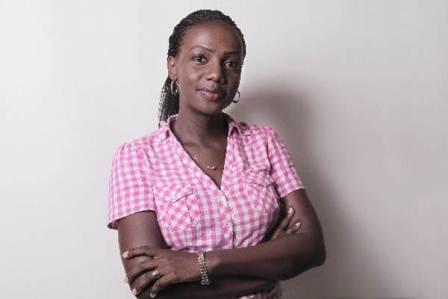
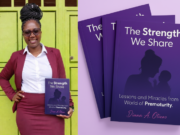
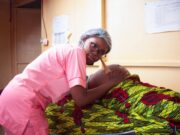
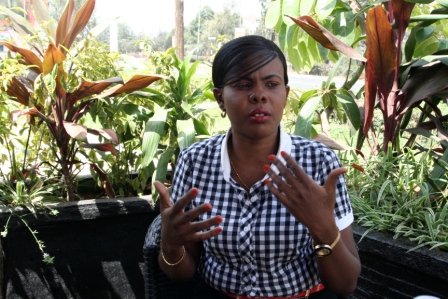
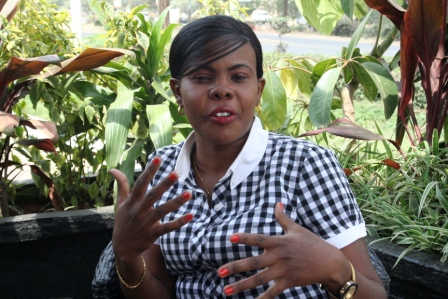
Incase you have any problems with breastfeeding or you have any questions, then you can get in touch with Susan (pictured left) on 0723 553 188 or susan@tototouch.co.ke
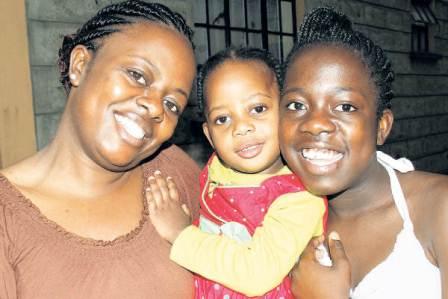
I met 35 year-old Lucy Ongaya and her two beautiful daughters Ruth and Chelsea two weeks ago. While her pregnancy with Ruth, now 13 years old had been relatively smooth, she had a life-changing experience with her second pregnancy.
This is her *story:
Lucy recalls her first pregnancy with her 13-year-old daughter, Ruth.
“It was a smooth pregnancy right from the beginning. I was 21, straight from college, and quite naive about matters of pregnancy.”
With little knowledge on the importance of antenatal care, Lucy began her clinic visits when she was four months pregnant, which is considered late.
It is recommended that women seek antenatal care as soon as they find out they are pregnant so that they can, among other requirements, begin taking iron and folic acid supplements critical in the first three months of gestation.
Thankfully, Lucy’s pregnancy proceeded without a hitch.
“I ate anything and everything I wished with little regard for my nutritional needs. On my exact due date, I walked into the hospital and a few hours later, I had my bouncing baby girl. With no complications for both mother and baby, we were discharged two days later,” she recalls.
When Lucy fell pregnant with her second child in 2010, she naturally assumed that the pregnancy would be just as seamless as the first one. Married and with a well-paying job that provided a good medical cover, Lucy had little to worry about.
“Because I was older and wiser now, I began my antenatal visits as soon as I found out that I was expecting. Aside from the guidance of my doctor, I had access to the internet, where I kept myself well-informed about the progress of my pregnancy,” she says.
It was a relatively smooth pregnancy, just like her first one.
However, when she was 30 weeks pregnant, Lucy noticed that a liquid she thought was urine was trickling down her legs. Worried, she informed her husband, a medical doctor, who immediately rushed her to hospital.
Waters breaking…
Her doctor informed her that her waters were breaking, meaning that the amniotic sac, which contains the fluid that protects the baby in the womb, had began tearing. This usually happens when the baby is full term and the mother goes into labour.
“After observation, the doctor told me that the leaking was not much and that with complete bed rest and close monitoring, I could still carry the pregnancy to term. After staying in hospital for four days, she was ready to discharge me but just before she did so, she decided to check the baby one last time.”
Lucy says that she sensed trouble when the doctor questioned her about the baby’s movements.
“As she tried to find my baby’s heartbeat, I became anxious when it took longer than usual. My fears were confirmed a few minutes later when the doctor told me that she had to deliver my baby immediately.”
The doctor informed Lucy that the foetal heartbeat was faint, indicating that the baby was tired.
“I had not felt the baby kick since the previous day, so I knew that something was amiss. Delivering the baby via emergency Caesarean section was the only way to save it, the doctor said.”
The unexpected news shocked Lucy as she was not ready to welcome her child at that time.
“I pleaded with the doctor to delay the surgery for a few minutes to allow my husband to make his way to the hospital, but the doctor declined, saying it could not wait for even a minute. A short while later, I was wheeled into theatre, still reeling from the shock of it all,” she recalls.
When she came to several hours later, Lucy went to see her baby, delivered with a birth weight of 1,900 grammes. She was not prepared for what she found in the newborn special unit.
“I saw a tiny little thing that I was told was my baby. She was extremely thin, hairy, and was breathing rapidly. She had tubes all over her body. As I looked down at her, I wondered if it really was my child and what on earth I had given birth to,” she recalls.
Lucy was neither allowed to touch her baby or breastfeed her.
“I was numb from a variety of feelings: shock, disappointment, pity, love, anger, pain, worry… that was not the ending I had envisioned of my pregnancy. It was not the pregnancy outcome I had expected,” she says.
Emotional trauma
Lucy refused to visit her baby. “It was too devastating to look at her. I could not stand the sight of seeing her that way. For two days, I stayed in my hospital bed and completely refused to see her despite the encouragement of a team of nurses and doctors.”
During those two days, Lucy would stare at jovial mothers happily holding and nursing their healthy babies and would weep for hours on end.
“One time, I went to the nurses’ station and complained about one particular new mother who would receive many visitors. I felt bad because she was happy, yet there I was, with an extremely sick baby I spent every minute agonising over whether she would survive. I asked the nurses to stop this mother from receiving any more visitors. Now that I look back, I realise that I did that out of frustration,” she says.
Due to her prematurity, most of her daughter’s organs were not fully developed. She could not feed on breast milk as she could not digest anything but glucose. She had jaundice and was found to have holes in the heart. She also developed a severe blood infection, which saw her undergo six blood transfusions during her six-week stay in hospital. Several times her veins blocked and caused the blood and medication to flow into her tissues, causing her lifetime scars.
Lucy recalls the day she was discharged without her baby.
“I felt so sad and empty. I had done everything right to ensure that I had a healthy pregnancy, yet I was leaving my baby in an incubator, very ill. It was a very painful experience,” she says.
Each day, Lucy would report to the hospital at 6am and leave at 10pm. At home, she would endure sleepless nights.
“I would hear voices in my head mocking me about leaving my baby in hospital. Why was I sleeping in my bed, yet my daughter was alone, her only companion tubes and machines? What kind of mother was I to leave my sick daughter? What if she woke up and cried for me? Would anyone hear her? Would anyone comfort her? These are some of the thoughts that bombarded my mind all night long,” she says.
Lucy would stay awake, counting the minutes to dawn.
“I approached my daughter’s bed each morning stealthily, scared that I would not find her. This is because there are days when I would leave the hospital at night and when I returned in the morning, I would find one of the babies missing, a baby whom I knew was not yet ready to be discharged. My heart would be filled with panic, fearing the worst for my baby,” she remembers.
Lucy shut people out of her life, only relating with her immediate family.
“I knew people were concerned about me and wanted to console me, but I shut them out because I wanted to deal with issues on my own and not have too many people around me,” she says.
Lucy was finally able to hold her baby for the first time after a month.
“I cannot explain the feeling that overcame me when I held her in my arms and pulled out my breast for her to suckle. I cried like I had never cried before. The moment was surreal,” she explains.
Two weeks later, her daughter, Chelsea, was strong enough to be discharged, ending her six-week stay in hospital. The once-sick girl whom her mother feared would not survive is today a healthy, happy three-year-old who has never suffered any major ailment.
Lucy spends time sharing her experience with pregnant women and mothers of premature babies.
“I want the women to know that the pregnancy may not turn out as they expect and that they should be prepared for any eventuality. I suffered lots of anguish because I kept asking myself what I had done wrong, yet I had taken good care of myself. For mothers with premature babies, I tell them not to blame themselves for sometimes pregnancy complications are beyond their control. They should not feel guilty about it.”
Support programme for moms with premature babies
Lucy says she wishes hospitals had a support programme for mothers of premature babies.
“The nurses and doctors focus on the baby and do not pay attention to the mother. Mothers feel lost and emotionally abandoned. Medics forget that the mother’s emotional wellbeing is just as important to help her nurture her newborn to good health. They should have counsellors on standby to help mothers cope with the strenuous emotions they go through as they care for their sick babies, worrying if they will die,” she says.
The mother also has to deal with issues such as ensuring that older children are well taken care of and that the home continues to run well. Lucy also has to deal with unexpected financial responsibilities.
“Most medical insurance does not cover pregnancy-related complications. I had a good cover, but they did not pay our hospital bill. Chelsea would incur expenses of about Sh20,000 a day. We had to take a loan to pay the hospital bill.”
The support of family and friends is important. All manner of support — emotional, physical, and even financial — can go a long way in helping the mother deal with the unexpectedness of a premature birth, Lucy says.”
*I originally published this article in The Daily Nation.
Mummy Talesis a blog dedicated to empowering its readers on different aspects of maternal and newborn health, as well as various issues surrounding motherhood and women. Read more motherhood experiences of Kenyan momshere.
Did you lose your identity once you became a mom? Do you find that people (including your husband) have since stopped calling you by your name and now call you Mama so and so? And if you are mother to more than one child, does your name keep changing to mama this and mama that? Let’s read about one mother of three daughters –Makena Barasa and her interesting name evolution.
“How many children do you have? If you have none, then your identity is still intact. If like me you have three kids, then you lost it long time ago. You see, I go by different names, depending on who I am interacting with.
I started out by the names my mum gave me. I was Makena for a cool 25 years. Then motherhood happened and one fine Tuesday morning my aunt came to see me in hospital…
“Hello Mama Michelle!” she excitedly exclaimed.
But I did not respond.
Never mind that a few hours before a pretty little princess had been placed in my arms. Before this awesome day, I had already known the gender of my unborn child and I had told all and sundry that my baby would be called Michelle (a name the dad had chosen while we were dating with no idea we would one day be parents to a real Michelle). So after my aunt’s expression, that is when it occurred to me that I was actually a mum and it was me she was calling! It was also the beginning of a sure diminishing of my pretty maiden identity. I instantly changed from Makena to Mama Michelle.
So for the next five years I was Mama Michelle, especially in the neighbourhood. I am yet to understand why we are identified by our children’s names but I am damn proud to be called so.
Then in came my second born Amanda (a name also chosen when my husband and I were dating) and when she became of age, could talk and play, her play mates quickly gave me a name: Mama Amanda. So to some in the neighborhood, I was Mama Amanda. And I was still Mama Michelle.
Then, their other sister Maya came in close enough after Amanda and she also got her own troop who call me Mama Maya.
Now figure this out: My three girls are out playing with their friends and their sweet little voices are screaming from every corner, Hi Mama Michelle, in other corner, Hi Mama Amanda and from another and Hi Mama Maya from the other corner!! You’d quickly think that those are three different mothers. But no. It is just me. One mother with three different identities. The same scencario is replicated in school and in church.
And then, to my husband, I quickly stopped being ‘Babe’ (unless when his children are not around) and I became ‘mum’. I don’t know why he thinks I can be his mother, because I will never be (she has her place), but I guess he is also as confused as I am when it comes to referring to each other. You see, long time ago he was my babe, honey and all those terms. Now he is mostly dad! It is hard to send my gal ati ‘go tell my babe a.b.c.’ It is always: ‘go tell dad this and this’. So, just as he participated in making me lose my identity, he lost his too.
Though the other day my daughter who was playing with my phone brought it and she said ‘Mum, your hubby is calling’. Then she proceeded, ‘please tell dad to bring us Oreo!’ I changed how I had saved him (He was babe) to hubby when my girls started asking who that baby who kept calling me every so often was! That is their curious nature!
Make no mistake, I love my brand identities… I cannot trade being Mama one over the other. I love being Mama to all three of them. They present different joys and challenges. They are my constant reminders that God chose me to be His co-creator. They constantly remind me to pray for that woman who longs to be called Mama. That He will fill her arms with these little bundles.
My curiosity though is about that mother of ten kids, like my grandma. I kept asking her how she remembered to serve all her children. She once told me something I hold so dearly till today. ‘A mother can never forget her children, even when they are in their tens. She will know them by their names.’ So ladies…enjoy motherhood and its ability to totally give you more than one identity, and at times, varied personalities!”
And what about you? What do people call you? Do you relate with Makena’s experiences?
When award-winning Kenyan fashion and lifestyle blogger Nancie Mwai was pregnant, I often liked checking into her blog to see what she was wearing. And she never disappointed. She usually looked stylish -tandem with her fashion unique fashion sense. Nancie was blessed with a daughter in April 2014. Here’s a peak of some of the outfits she rocked during her pregnancy.
So what do you think of Nancie’s pregnancy style? Which outfit of hers do you like most?
I recently met one amazing lady who shared her life’s journey with me. As I listened to her story, I was amazed at how honest someone can be about their past life. Lilian is an open book, not afraid to share details about her life that include prostitution, alcohol and drugs. This is her story.
*If you have a story you’d like to share, you can email me on maryanne@mummytales.com and I’ll be in touch.
When 37-year-old Lilian Madonye took her marriage vows 14 years ago, she looked forward to the exciting life that lay ahead of her. In her early twenties, she was marrying the man of her dreams, an athlete whom she had courted for two years. The wedding marked the beginning of her new life, a life that would be filled with untold happiness from both her husband and the beautiful babies they would raise together.
Lillian, a second born in a family of three, had been raised in a relatively comfortable upbringing in Eldoret town. Her father, a banker, and her nurse mother had provided them with a stable home and good education. Nurtured in a Christian environment, Lilian was a role model in her school, neighbourhood and church where she served as a worship leader. And her marriage did not disappoint.
The first year was full of love, warmth and laughter. However, in the second year, the couple became worried when they were unable to conceive. After trying for a baby for three years in vain, Lilian decided to seek professional help and saw a doctor who put her on fertility drugs and supplements. However, the desire for a baby became a dominant, crippling thought which consumed her whole being.
“Sex became a laborious task that was no longer enjoyable because of the pressure to conceive. Family, friends, neighbours and church members were already spreading rumours about my barrenness,” she remembers.
Meanwhile, Lilian kept hopping from one doctor to another seeking a miracle treatment, but none helped her conceive.
“The day I would receive my period each month would send me to a very dark place where I would spend the duration of the menses in tears. Helpless, I wondered what worth I was as a woman if I could not bear a child. What justification did I have to call myself a woman if I could not have a child?” she asked herself.
Frustrated and at her wits end, she one day asked her husband to take a fertility test if only to encourage him to be part of their quest for a baby.
“Even though I knew I was the one with the problem because I believed that infertility was a condition only for women, I asked him to get tested anyway.” But the results of the semen analysis test on her husband shocked her.
“My husband had a low sperm count, hence my difficulty in conceiving! The news took me aback because all along I thought I was the one with the problem!”
A low sperm count decreases the odds of a sperm fertilizing an egg which results in pregnancy. Lilian’s husband was put on fertility treatment aimed at boosting his sperm count.
At the same time, out of curiosity, Lilian decided to take a fertility test as well, and whose results showed that she was perfectly capable of conceiving and bearing a child.
“I stopped all the drugs I was taking. I wished we had both done the tests earlier as it would have saved me the countless medication I had pumped into my body for three years!”
For the next two years, the couple continued trying for a baby, but were unsuccessful. During this time, their marriage began undergoing turmoil.
“We would constantly engage in verbal confrontations about anything and everything. We were both frustrated and very desperate about wanting a baby. At some point, the fights became physical. Our marriage became filled with extreme tension and anger. We both became very unhappy in our union. There were infidelity issues and I was constantly rebuking women with whom my husband was having dalliances with. We stopped talking and even slept in separate rooms. I felt there was nothing left to hold on to and I eventually walked out of my marriage.”
Lilian then moved to Nairobi where she landed a job as a sales representative in a bank. Older, wiser and with her newfound freedom — her faith in God long gone, Lilian took to alcohol and drugs. A short while later, she got a transfer to Mombasa.
“As soon as I landed in the beautiful Coastal city, I met up with people who introduced me to a wide variety of hard drugs which were easily accessible unlike in Nairobi. Soon, I began engaging in prostitution to finance my new lifestyle as my salary could obviously not cater for my needs. I would have multiple affairs with married men who would take care of my different financial needs.
Despite being aware of the dangers, I would have unprotected sex with my partners. I didn’t care about HIV, venereal diseases or drug overdoses because I had nothing to live for. With no husband and no children, my life had no meaning,” she confesses.
Lilian says she was on a constant high because when sober, the reality of her empty life would hit her, something she did not want to face. One morning after a night out, she began feeling sick.
“I knew that AIDS had finally caught up with me,” she remembers. Lilian went to the hospital, but the doctor’s diagnosis shocked her. She recalls his words:
“Lilian, your HIV test is negative. But there is another test that has yielded positive results. Congratulations, you are pregnant!” She did not believe it.
“I was living a very evil life, engaging in all the abominable acts mentioned in the Bible, but yet God remembered me? I wondered why, yet when I was a good Christian, faithful in my marriage and with enviable morals, he ignored me. But now, when I was fully immersed in sin, he remembered me?”
Shocked to the bone, Lilian decided to sober up for the sake of her unborn baby. She packed all her belongings and moved back to Nairobi to start a new life.
She got back her old sales job at the bank, and began piecing her life together, which was not easy. “I was used to men taking care of all my bills, but now I had to support myself and my unborn baby. It became very difficult to make ends meet, but I did not despair. My baby motivated me and kept me going,” she says.
One day, in her seventh month of pregnancy, she noticed some blood stains. She rushed to hospital, and by the time she got there, her clothes were soaked in blood and she was writhing in pain.
An ultrasound done on the foetus revealed that Lilian’s baby was already dead. Lilian had faced high blood pressure issues during the pregnancy, which led to her having pre-eclampsia, a condition characterised by a high level of protein the urine and which can be fatal.
But she had to deliver the baby anyway, and after six agonising days, she gave birth. “It was a baby girl. Even though I wanted to see her and hold her in my arms, the doctors refused and only showed me her legs. They said that because she had been dead for long, she was already decomposed and in a bad state. I called her Zawadi, because she was my special gift,” she says, struggling to contain the tears welling up in her eyes.
As she walked out of the hospital on that day in May 2012, Lilian left with a new resolve. To completely turn her life around and find her purpose in life again.
“I don’t blame anyone for the path I took in life. I am responsible for all the decisions I made. I could have made better choices, but I did not. I have forgiven myself and I am embracing my new life.”
Today, Lilian supports women struggling with infertility. She encourages them to focus on other areas of their lives even as they try for a baby.
“The reality is that not all women struggling with infertility will have a happy ending where they will get pregnant and have babies. I encourage women not to be consumed by the search for a baby to the extent that other areas of their life suffers. They should also not peg their worth as women solely on the basis of motherhood. I talk to women during bridal showers and talk to newlyweds about marriage expectations. I always use my personal experiences because I know I contributed to the loss of my marriage and advice them not to make the mistakes I made. I am a strong believer in marriage and just because mine did not work, it does not mean that it will not work for another couple,” she concludes.”
NB: I originally published this article in The Star.
Mummy Talesis a platform dedicated to empowering its readers on different aspects of womanhood and motherhood. Read more motherhood experiences of Kenyan momshere. Connect with Mummy Tales on: FACEBOOK lYOU TUBE l INSTAGRAM l TWITTER
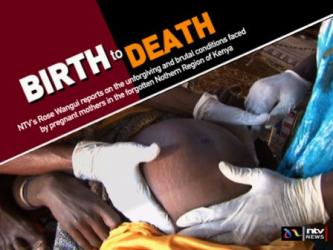
Did you catch the very informative piece by Rose Wangui of NTV titled ‘Birth to Death’ -part 1 last Sunday where she focused on the pregnancy and childbirth journey for women in Wajir?
Incase you missed it, here it is.
Kudos to Rose Wangui for highlighting this issue very well.
Part 2 of Rose Wangui’s Birth to Death was aired on 7 September 2014.
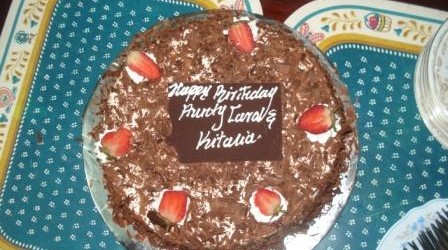
My mother-in-law has an interesting family tradition. Each month, she celebrates each of her children’s, their spouses, and her grandchildren’s birthdays in a special way. This she does by hosting family dinners. My mom-in-law is blessed with six children, three daughters-in-law, two sons-in-law, and eight grandchildren. Thankfully, there happens to be a birthday or two each month, meaning the entire family gathers at her house for a family dinner at least once every month.
These dinners are special times that we all look forward to because it is when we get to relax, be easy and enjoy the company of family. In the everyday hustle and bustle that city life is, it is absolutely refreshing to let your hair down and spend quality moments in the company of loved ones.
During these family dinners, we update each other on the goings on in our lives and our workplaces. We also get to relieve our individual childhood memories and have a good laugh about them. While I never got to meet my father-in-law because he passed on 18 years ago, I somehow feel like I know him already — courtesy of how his children collectively relieve their memories of him during the family dinners. All grown up with families of their own, his children have such fond memories of him and it’s always interesting to listen in. Indeed, his presence is always felt during each dinner.
The dinners are also times when my mum-in-law also shares with us tips on how to raise our children since we all have young families. At the end of the dinner, she routinely shares with us the scriptures and we end by holding hands and praying together as a family.
Last Friday, we had one of those dinners. And at the end of it, something my brother-in-law said struck me. He said that while mother has set her own family tradition, we too need to set our own individual family traditions.
As he said so, memories of my childhood flooded my mind. Whenever we closed school, my parents would promptly take us to the village to spend time with our grandparents. Aside from learning about village life and hearing stories of our forefathers, one of our favourite moments was sitting by the fireside and listening to our grandmother’s folklores — all of which had interesting moral lessons. Today, whenever we meet up with my siblings, we always relieve those interesting village moments.
So last Friday as I listened to my brother-in-law encourage us to create our own family traditions, I knew it was something I would take seriously. Currently, what we do in our home is pray together as a family each night before retiring to bed. I hope to create more family traditions as days go by.
The goodness of family traditions is that not only do they help members understand their lineage and their identity, but they also play a big role in strengthening a family’s bond because the value of face-face interaction can never be downplayed. In today’s hectic world, months or years can easily go by without family members seeing each other, and so intentionally creating a regular meeting schedule for family members can help resolve this.
Family traditions could be as simple or as complicated as you want them to be. They could be family dinners, watching a movie together as a family once a week, having Sunday lunch together, taking family vacations once a year, or travelling to a loved one’s gravesite once a year and thereafter sharing a meal together.
As years go by, and the children grow, then nature of family traditions may change a little according to the children’s ages. But the benefits of doing so are very rewarding, and your children and their children will always thank you for that. Remember it’s never too late; you can start your own family tradition today!
Haiya! Moms how much are you buying your tomatoes for?
For the last three or so weeks the prices of tomatoes have not been very nice. Around where I stay, a tomato that usually goes for 5 bob is now going for 15 bob! You will be lucky if you get any for 10 bob. When I asked one mama mboga the reasons for the high price, she told me it’s because of the rain.
“Nyanya hazipendi maji ama baridi, kwa hivyo zimeharibika zote huko mashambani kwa sababu ya hii baridi na mvua imekuwa ikinyesha,” she said.
Fair enough. I don’t know anything about farming so I will swallow whatever mama mboga tells me.
About a week later, I went to a different mama mboga, and the price was 10 bob per tomato. And the size of this 10 bob tomato is like that of a grape!. The ones that usually go for nne kumi are the ones that are now moja kumi. Anyway I asked her why they are so expensive and she told me:
“Ni kwa sababu kuna ugonjwa ya nyanya imetoka huko Ethipia ikaingilia hizi zetu. Sasa imetembea nchi yote ikaharibu nyanya zote. Hizi tumepata ni zile ambazo hazijafikiwa bado.”
Fair enough. I don’t know anything about farming so I will swallow whatever mama mboga tells me.
So yesterday I went to top up a little more nyanya’s and I found a different mama mboga. She was selling hers at 15 bob for one. Again, I asked about the steep prices.
“Unajua sasa hawa madaktari wanastrike tena, kwa hivyo bei ya kila kitu imekataa kushuka,” she told me.
Huh???
Ehhh, I know I know nothing about farming, but this one I will swallow with a big pinch of salt!
So anyways, who knows why the tomatoes are so expensive and when the prices are expected to come down yawa? I have always postponed going to marikiti for the last four years (though I go there every Saturday morning –only in my head) but the way things are going I may just need to stop procrastinating on that issue. A nyanya for 10 or 15 bob is not going down with me well, literally. It’s really paining me.
How much are you buying your nyanya’s for by the way?
Have you ever battled with the decision of whether to quit your job or stay on? What then stops you? Fear? Uncertainty? Lack of capital? Well, it’s a decision that Caroline Wawira Njiru struggled with too, before she finally decided to make that bold leap to quit her job as an air hostess and delve into the murky waters of self-employment.
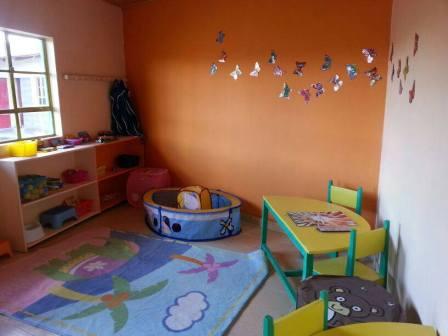
Today, 31 year-old Caroline is the proprietor of Valley Star Academy in Kitengela. The school offers quality elementary education to children aged between 2 – 6 years. So how did she do it? I had a chat with her about her entrepreneurial journey. Read on.
For six years while working as an air hostess, Caroline spent her days traversing different continents, meeting people and enjoying numerous shopping sprees. But as exciting as her job was, she knew she would not be in it for long.
Caroline always had a deep-seated passion for children, and grew up knowing that her destiny lay in doing something with them.
“Even though I didn’t quite know what it is I wanted to do with children, I knew that I would one day devote my life to working with them,” says the Daystar University graduate.
It was not until she got married in 2010 and soon after became a mother that she became certain of the direction she wanted to take.
“Having my daughter opened a new chapter in my life and I knew without doubt that I wanted to run a kindergarten. This would enable me work with children and ensure they received a solid educational foundation,” she says.
Children of Valley Star enjoying a dip.
Caroline immediately began working towards making her dream a reality. She took out her savings and with some top up from her husband – all of which amounted to about Sh4.6 million, she started construction work for the kindergarten.
Mewanwhile, she would continue with her work as an an air hostess and she would, on her days off, spend the entire day supervising construction of the kindergarten. She would also spend hours buried deep in research, learning more about Early Childhood Development (ECD) which would be necessary in her journey as a kindergarten entrepreneur.
She also began formulating an exit strategy from her full-time job as she knew she wanted to work at the kindergarten fulltime. But as she watched the construction near completion, the reality of resigning from her well-paying job for an uncertain future began to sink in.
I began getting scared and second guessing my decision. Here I was, earning a good salary, yet I was contemplating quitting for the murky waters of self-employment. I wondered if I was making the right move,” she remembers.
Caroline then sought the advice of friends, and many discouraged her from quitting.
“They told me not to leave my job, advising me to instead run the kindergarten on the side. Becoming an air hostess does not come easy, and they wondered why I wanted to quit a job that is coveted by many!”
After getting her second child in March 2012, Caroline made up her mind not to return to work after her maternity leave. But the more she thought about it, the more her friends’ advice made sense. Eventually, she shelved the quitting idea and resumed work. But the more she worked, the more she became certain that she did not belong there anymore.
So in October 2012, Caroline handed in her resignation letter.
“Many of my friends thought I was crazy. I had earlier survived a massive retrenchment at the airline, and some told me that my resignation was selfish, that I could have saved someone else from being axed, that I was mocking those who had lost their jobs,” she says.
Finally free to pursue her dream, Caroline would now spend her days at the construction, aiming to open the kindergartens’ doors in January 2013. But she had underestimated the intricacies involved in the final phase of the project, which led her to postpone opening the kindergarten to the next school term.
Her dream finally came to be when Valley Star Academy, Kitengela, opened its doors in May 2013. But it did not go as expected. Only one child was enrolled!
Not one to be discouraged easily, Caroline soldiered on.
“I had given my assurance to the child’s parents that I would give their son the best, even though he was the only child in the school. Because I did not have a school van, I would pick the child from his home, drop him in school, ensure that he was well taught, played, ate well, took him for swimming and other extracurricular activities, then dropped him back home. Even though they knew their son was the only child in the school, I thank God for his parents who believed in my dream. Interestingly, I didn’t know them personally – they simply came across a flier I had distributed around Kitengela, visited the school and entrusted me with their child. I will never forget that couple for as long as I live,” she says.
Two weeks later, the school enrolled another child, and a week later, another child. Today, the school has 45 children in different classes ranging from toddler class to pre-unit. The school has grown and will undertake it’s first Standard One enrollment in January 2016.
It is now three years since she quit her airline job, and Caroline has no regrets.
“It has been a good journey, one of immense sacrifice, but every bit worth it. Right now I am more focused on laying a good foundation for the school rather than making huge profits. Thankfully, the school now is able to pay the salaries of its teachers, a driver, a cleaner and a cook. We have even managed to purchase a school van,” she says.
But more than that, Caroline finally found the fulfillment she had been yearning for.
“I am now living my dream, which is working with children. When I look at the fulfillment I have today, I cannot compare it to how it was when I was employed. I am glad I decided to quit employment for entrepreneurship. Besides, I get to spend time with my husband and two children – things that I hardly did in my previous job as sometimes my I would be gone for weeks on end. I missed so many my friend’s weddings, their bridal showers and baby showers – but not anymore. I am now able to attend all my friends and family functions,” she says.
Nabubwaya Chambers was born and bred in Kenya, but she is today raising her family in Texas, USA where she has been living for the last three years. Nabubwaya shares her motherhood journey with us, as a mother riasing her family in the diaspora –with her Kenyan influences.
Her son Lema is eight months old. If you missed her last post, you can read it here where she talked of the pregnancy and her birth experience. Today, she tells us about weaning Lema.
Lema has never been on formula. It has been yet another adventure of pumping both at work and at home in order to keep up with the milk supply for our baby. Breastfeeding remains his favorite pastime activity. Lema is full of joy, energy, laughter, ambition, and curiosity. He is always trying to find out what he can do next while crawling, what he can play with while in his play pen, or what he can discover next while standing/walking with support of the couch. There is always something to tag on, or chase after for Lema. I am always a hawk around him in case he needs help from Mama. His adventure began as soon as he turned six months when he started crawling.
We introduced solids for the first time just a few days after he turned six months. I managed to do exclusive breastfeeding!
When Lema first tasted solids, he winced and then threw a very sharp and shocked look our way after he took his first bites of oatmeal and banana cereal. After we tried feeding him a few more scoops, he started warming up to the idea of nyonyo’s unrivaled competition. He has tried new meals since then and thankfully, isn’t allergic to any foods. I introduced a happy dance and song that I willingly perform after Lema successfully conquers his mountain of baby food. I bet I’m always singing out of tune even though my one baby audience gets a kick out of it. He coos and laughs, spreads his arms apart while kicking his feet in the air.
Eight months down the line, we remain grateful for this blessed assurance that we will be able to raise our baby Lema by the grace of God. We frequently look at his photos of the first days he discovered how to do something new. They elicit floodgates of beautiful memories for us. These moments tramp all the fatigue we are constantly battling: post work exhaustion, three hours only sleep days before an unforgiving night shift at work, and all the numerous things we have had to sacrifice don’t even come close to what we have found in raising a baby.
Following Lema’s birth, our outlook towards life has somewhat been positively transformed. We have learned to work well as a team. Surely nothing can replace the love parents have for their own flesh and blood. I used to wonder how it feels to have a baby and would ask mama’s how they manage to raise children with so much joy. Now I know how it feels and I am glad it feels that way.
The smiles, chuckles, touch, charming look, glance in my direction when my son hears my voice, all bring so much happiness. When he looks at me and says “Mama”, I instantly melt away. It’s no wonder that many parents will climb their own Mt. Everest to do anything for their child that makes them a better person. I know I am willing to put on those gimonstrous boots and back pack to surmount my own Mt. Everest, so that my baby will grow up loved and well nurtured.



























 Incase you have any problems with breastfeeding or you have any questions, then you can get in touch with Susan (pictured left) on 0723 553 188 or susan@tototouch.co.ke




















 The ones that usually go for nne kumi are the ones that are now moja kumi.