


















Home Blog Page 52

Why Is it Important to Have Family Traditions?
0

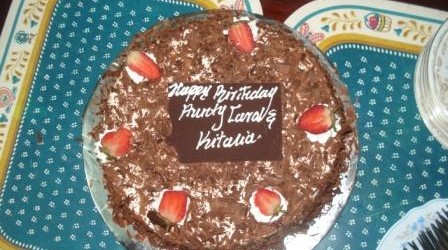
My mother-in-law has an interesting family tradition. Each month, she celebrates each of her children’s, their spouses, and her grandchildren’s birthdays in a special way. This she does by hosting family dinners. My mom-in-law is blessed with six children, three daughters-in-law, two sons-in-law, and eight grandchildren. Thankfully, there happens to be a birthday or two each month, meaning the entire family gathers at her house for a family dinner at least once every month.

These dinners are special times that we all look forward to because it is when we get to relax, be easy and enjoy the company of family. In the everyday hustle and bustle that city life is, it is absolutely refreshing to let your hair down and spend quality moments in the company of loved ones.

During these family dinners, we update each other on the goings on in our lives and our workplaces. We also get to relieve our individual childhood memories and have a good laugh about them. While I never got to meet my father-in-law because he passed on 18 years ago, I somehow feel like I know him already — courtesy of how his children collectively relieve their memories of him during the family dinners. All grown up with families of their own, his children have such fond memories of him and it’s always interesting to listen in. Indeed, his presence is always felt during each dinner.

The dinners are also times when my mum-in-law also shares with us tips on how to raise our children since we all have young families. At the end of the dinner, she routinely shares with us the scriptures and we end by holding hands and praying together as a family.

Last Friday, we had one of those dinners. And at the end of it, something my brother-in-law said struck me. He said that while mother has set her own family tradition, we too need to set our own individual family traditions.

As he said so, memories of my childhood flooded my mind. Whenever we closed school, my parents would promptly take us to the village to spend time with our grandparents. Aside from learning about village life and hearing stories of our forefathers, one of our favourite moments was sitting by the fireside and listening to our grandmother’s folklores — all of which had interesting moral lessons. Today, whenever we meet up with my siblings, we always relieve those interesting village moments.

So last Friday as I listened to my brother-in-law encourage us to create our own family traditions, I knew it was something I would take seriously. Currently, what we do in our home is pray together as a family each night before retiring to bed. I hope to create more family traditions as days go by.

The goodness of family traditions is that not only do they help members understand their lineage and their identity, but they also play a big role in strengthening a family’s bond because the value of face-face interaction can never be downplayed. In today’s hectic world, months or years can easily go by without family members seeing each other, and so intentionally creating a regular meeting schedule for family members can help resolve this.

Family traditions could be as simple or as complicated as you want them to be. They could be family dinners, watching a movie together as a family once a week, having Sunday lunch together, taking family vacations once a year, or travelling to a loved one’s gravesite once a year and thereafter sharing a meal together.

As years go by, and the children grow, then nature of family traditions may change a little according to the children’s ages. But the benefits of doing so are very rewarding, and your children and their children will always thank you for that. Remember it’s never too late; you can start your own family tradition today!

*As originally published in The Star.

Why are Tomatoes in Nairobi Selling so Expensively Lately?

0

Haiya! Moms how much are you buying your tomatoes for?

For the last three  or so weeks the prices of tomatoes have not been very nice. Around where I stay, a tomato that usually goes for 5 bob is now going for 15 bob! You will be lucky if you get any for 10 bob. When I asked one mama mboga the reasons for the high price, she told me it’s because of the rain.

Nyanya hazipendi maji ama baridi, kwa hivyo zimeharibika zote huko mashambani kwa sababu ya hii baridi na mvua imekuwa ikinyesha,” she said.

Fair enough. I don’t know anything about farming so I will swallow whatever mama mboga tells me.

About a week later, I went to a different mama mboga, and the price was 10 bob per tomato. And the size of this 10 bob tomato is like that of a grape!. :( The ones that usually go for nne kumi are the ones that are now moja kumi. :( Anyway I asked her why they are so expensive and she told me:
“Ni kwa sababu kuna ugonjwa ya nyanya imetoka huko Ethipia ikaingilia hizi zetu. Sasa imetembea nchi yote ikaharibu nyanya zote. Hizi tumepata ni zile ambazo hazijafikiwa bado.”

Fair enough. I don’t know anything about farming so I will swallow whatever mama mboga tells me.

So yesterday I went to top up a little more nyanya’s and I found a different mama mboga. She was selling hers at 15 bob for one. Again, I asked about the steep prices.

“Unajua sasa hawa madaktari wanastrike tena, kwa hivyo bei ya kila kitu imekataa kushuka,” she told me.

Huh???

Ehhh, I know I know nothing about farming, but this one I will swallow with a big pinch of salt!

So anyways, who knows why the tomatoes are so expensive and when the prices are expected to come down yawa? I have always postponed going to marikiti for the last four years (though I go there every Saturday morning –only in my head) but the way things are going I may just need to stop procrastinating on that issue. A nyanya for 10 or 15 bob is not going down with me well, literally. It’s really paining me.

How much are you buying your nyanya’s for by the way?

She Quit Her Airline Job to Start a School – Caroline Njiru’s Story

5

Have you ever battled with the decision of whether to quit your job or stay on? What then stops you? Fear? Uncertainty? Lack of capital? Well, it’s a decision that Caroline Wawira Njiru struggled with too, before she finally decided to make that bold leap to quit her job as an air hostess and delve into the murky waters of self-employment.

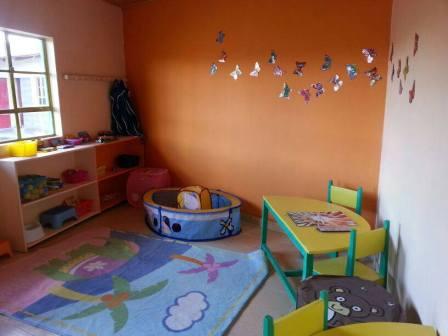
Today, 31 year-old Caroline is the proprietor of Valley Star Academy in Kitengela. The school offers quality elementary education to children aged between 2 – 6 years. So how did she do it? I had a chat with her about her entrepreneurial journey. Read on.

For six years while working as an air hostess, Caroline spent her days traversing different continents, meeting people and enjoying numerous shopping sprees. But as exciting as her job was, she knew she would not be in it for long.

Caroline always had a deep-seated passion for children, and grew up knowing that her destiny lay in doing something with them.

“Even though I didn’t quite know what it is I wanted to do with children, I knew that I would one day devote my life to working with them,” says the Daystar University graduate.

It was not until she got married in 2010 and soon after became a mother that she became certain of the direction she wanted to take.

“Having my daughter opened a new chapter in my life and I knew without doubt that I wanted to run a kindergarten. This would enable me work with children and ensure they received a solid educational foundation,” she says.

Children of Valley Star enjoying a dip.

Caroline immediately began working towards making her dream a reality. She took out her savings and with some top up from her husband – all of which amounted to about Sh4.6 million, she started construction work for the kindergarten.

Mewanwhile, she would continue with her work as an an air hostess and she would, on her days off, spend the entire day supervising construction of the kindergarten. She would also spend hours buried deep in research, learning more about Early Childhood Development (ECD) which would be necessary in her journey as a kindergarten entrepreneur.

She also began formulating an exit strategy from her full-time job as she knew she wanted to work at the kindergarten fulltime. But as she watched the construction near completion, the reality of resigning from her well-paying job for an uncertain future began to sink in.

I began getting scared and second guessing my decision. Here I was, earning a good salary, yet I was contemplating quitting for the murky waters of self-employment. I wondered if I was making the right move,”  she remembers.

valley_star_academy

Caroline then sought the advice of friends, and many discouraged her from quitting.

“They told me not to leave my job, advising me to instead run the kindergarten on the side. Becoming an air hostess does not come easy, and they wondered why I wanted to quit a job that is coveted by many!”

After getting her second child in March 2012, Caroline made up her mind not to return to work after her maternity leave. But the more she thought about it, the more her friends’ advice made sense. Eventually, she shelved the quitting idea and resumed work. But the more she worked, the more she became certain that she did not belong there anymore.

So in October 2012, Caroline handed in her resignation letter.

“Many of my friends thought I was crazy. I had earlier survived a massive retrenchment at the airline, and some told me that my resignation was selfish, that I could have saved someone else from being axed, that I was mocking those who had lost their jobs,” she says.

Finally free to pursue her dream, Caroline would now spend her days at the construction, aiming to open the kindergartens’ doors in January 2013. But she had underestimated the intricacies involved in the final phase of the project, which led her to postpone opening the kindergarten to the next school term.

Her dream finally came to be when Valley Star Academy, Kitengela, opened its doors in May 2013. But it did not go as expected. Only one child was enrolled!

Not one to be discouraged easily, Caroline soldiered on.

“I had given my assurance to the child’s parents that I would give their son the best, even though he was the only child in the school. Because I did not have a school van, I would pick the child from his home, drop him in school, ensure that he was well taught, played, ate well, took him for swimming and other extracurricular activities, then dropped him back home. Even though they knew their son was the only child in the school, I thank God for his parents who believed in my dream. Interestingly, I didn’t know them personally – they simply came across a flier I had distributed around Kitengela, visited the school and entrusted me with their child. I will never forget that couple for as long as I live,” she says.

Two weeks later, the school enrolled another child, and a week later, another child. Today, the school has 45 children in different classes ranging from toddler class to pre-unit. The school has grown and will undertake it’s first Standard One enrollment in January 2016.

It is now three years since she quit her airline job, and Caroline has no regrets.

“It has been a good journey, one of immense sacrifice, but every bit worth it. Right now I am more focused on laying a good foundation for the school rather than making huge profits. Thankfully, the school now is able to pay the salaries of its teachers, a driver, a cleaner and a cook. We have even managed to purchase a school van,” she says.

But more than that, Caroline finally found the fulfillment she had been yearning for.

“I am now living my dream, which is working with children. When I look at the fulfillment I have today, I cannot compare it to how it was when I was employed. I am glad I decided to quit employment for entrepreneurship. Besides, I get to spend time with my husband and two children – things that I hardly did in my previous job as sometimes my I would be gone for weeks on end. I missed so many my friend’s weddings, their bridal showers and baby showers – but not anymore. I am now able to attend all my friends and family functions,” she says.

Isn’t Caroline’s story inspiring?

See Irene Adhiambo’s inspiring story below.

Follow Mummy Tales on Facebook and Twitter.

*I originally published this story in Saturday Nation.

Motherhood Notes from a Kenyan Mom in the Diaspora: Weaning Lema after Exclusive Breastfeeding

0

Nabubwaya Chambers was born and bred in Kenya, but she is today raising her family in Texas, USA where she has been living for the last three years. Nabubwaya shares her motherhood journey with us, as a mother riasing her family in the diaspora –with her Kenyan influences.

Her son Lema is eight months old. If you missed her last post, you can read it here where she talked of the pregnancy and her birth experience. Today, she tells us about weaning Lema.

Lema has never been on formula. It has been yet another adventure of pumping both at work and at home in order to keep up with the milk supply for our baby. Breastfeeding remains his favorite pastime activity. Lema is full of joy, energy, laughter, ambition, and curiosity. He is always trying to find out what he can do next while crawling, what he can play with while in his play pen, or what he can discover next while standing/walking with support of the couch. There is always something to tag on, or chase after for Lema. I am always a hawk around him in case he needs help from Mama. His adventure began as soon as he turned six months when he started crawling.

We introduced solids for the first time just a few days after he turned six months. I managed to do exclusive breastfeeding! :)

When Lema first tasted solids, he winced and then threw a very sharp and shocked look our way after he took his first bites of oatmeal and banana cereal. After we tried feeding him a few more scoops, he started warming up to the idea of nyonyo’s unrivaled competition. He has tried new meals since then and thankfully, isn’t allergic to any foods. I introduced a happy dance and song that I willingly perform after Lema successfully conquers his mountain of baby food. I bet I’m always singing out of tune even though my one baby audience gets a kick out of it. He coos and laughs, spreads his arms apart while kicking his feet in the air.

Eight months down the line, we remain grateful for this blessed assurance that we will be able to raise our baby Lema by the grace of God. We frequently look at his photos of the first days he discovered how to do something new. They elicit floodgates of beautiful memories for us. These moments tramp all the fatigue we are constantly battling: post work exhaustion, three hours only sleep days before an unforgiving night shift at work, and all the numerous things we have had to sacrifice don’t even come close to what we have found in raising a baby.

Following Lema’s birth, our outlook towards life has somewhat been positively transformed. We have learned to work well as a team. Surely nothing can replace the love parents have for their own flesh and blood. I used to wonder how it feels to have a baby and would ask mama’s how they manage to raise children with so much joy. Now I know how it feels and I am glad it feels that way.

The smiles, chuckles, touch, charming look, glance in my direction when my son hears my voice, all bring so much happiness. When he looks at me and says “Mama”, I instantly melt away. It’s no wonder that many parents will climb their own Mt. Everest to do anything for their child that makes them a better person. I know I am willing to put on those gimonstrous boots and back pack to surmount my own Mt. Everest, so that my baby will grow up loved and well nurtured.

***

Melvin Barongo Talks About her Life with Fistula for the Last Ten Years

4

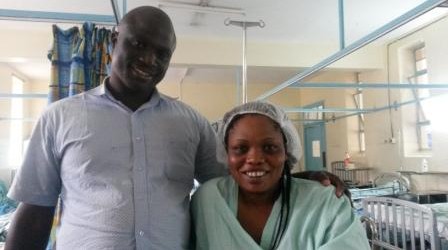
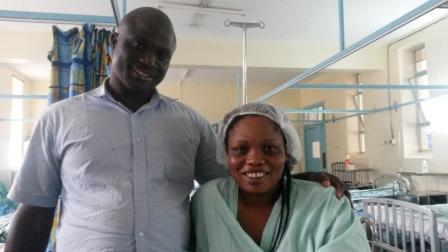
Remember there was a free fistula medical camp being advertised on television a few weeks back in July? The camp was organized and supported by among others, the Flying Doctors Society of Africa, the Freedom from Fistula Foundation, Kenyatta National Hospital and Citizen Television. I went to visit some of the women in hospital during that time and while there, I met one lady called Melvin Barongo and her husband Eric Otieno.

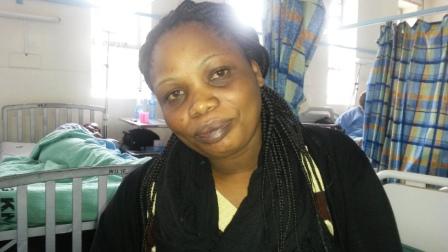
34 year-old Melvin Nyamao Barongo had been living with fistula for the last ten years ever since she delivered her first child in 2004. She told me that after she delivered, she noticed that she was leaking urine but thought it was something normal that all mothers who had given birth naturally go through.

On the few times it really bothered her, she thought to ask other women about it but never did so because it was too embarrassing. Also, she assumed that every other mother suffered in silence just like her so why should she talk about it yet other mothers before her weren’t doing so?

Then, closest person to her –her twin sister had delivered via caesarean section so she knew she couldn’t possibly know anything about it (since remember she thought that only women who deliver naturally are the ones who have a leaking urine problem).

Melvin told me that she kept the issue a secret from her husband until the day he asked her why their newborn son was consuming too many diapers. Eric was worried, thinking his son had a medical problem. What he didn’t know was that both mother and son were using the diapers! And that was when Melvin revealed the truth to her husband.

But she still didn’t seek treatment for it until five years later. Why? Because she was too embarrassed to do so. Melvin and her husband are based in Mombasa, Coast province. She sells clothes while he is a clerk at a bus company.

When she eventually sought treatment at a local health center, Melvin was told to do physical exercises that would help stop her urine leaks. She was told to walk around and do kegel exercises. None of this helped stop the continuous flow of urine.

In 2012, the couple had their second son. The leaking urine problem still persisted. She never mentioned it to any of the nurses who attended to her delivery.

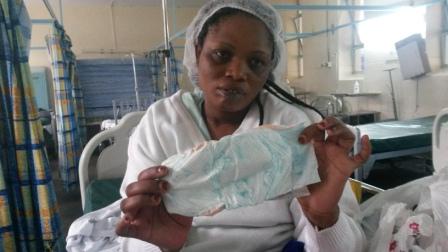
During my interview with her, Melvin showed me the diapers that she had been using for the last ten years. She pulled out a handful of Pampers diapers size 5. Totally broke my heart listening to her and watching her remove those diapers. Those are the size of diapers that my three year old son Kitty uses for the night!

“Maryanne you have no idea the kind of life I have lived for the last ten years. Can you imagine wearing a diaper every day and every single night for the last ten years? My sons outgrow the use of diapers, but yet I still continue using them,” she said.

Melvin told me she’d go through about five diapers in a day. All through the ten years, her husband ensured she had a constant supply of them. The adult diapers would have been too expensive for their family budget, so the kids’ diapers are the best they could do with.

During this time, Melvin stopped visiting friends and relatives because she would always be scared that the diapers would leak. So she just kept to herself. Or even if she really had to visit someone, she would avoid taking any liquid so that her bladder wouldn’t fill up. She would also hold back any laughter and would suppress coughs as any of these activities would make her urine gush out and perhaps cause the diaper to leak –something she couldn’t dare risk. Imagine that.

So one day last month as she and her husband were having dinner while watching tv, they chanced on an advert on Citizen television calling on all women who leaked urine or faeces to make their way to Kenyatta National Hospital for free screening and treatment. And they wasted no time. They quickly packed their things, booked their tickets and came to Nairobi.

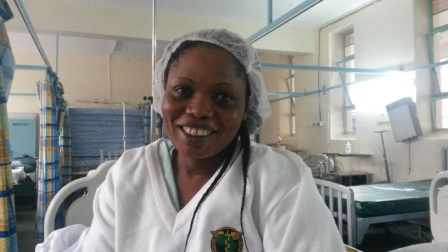
On 24 July 2014, Melvin had her successful fistula repair surgery. She did not pay a shilling for it. And her husband was there with her all through her admission in hospital, which was about two weeks. When I met Melvin at KNH’s Ward 42 which is where the fistula patients were kept before being transferred to Ward 1B for recovery, I actually thought Eric was a member of staff because he was always there chatting happily with the nurses and he seemed to know his way around the place so well. Turns out he was her husband, and had never once left her side all through her admission. He reported to her ward every morning and was the last visitor to leave at night, a routine he did for a whole two weeks!

He told me that all through the ten years of his wife’s fistula, he too felt like he had fistula.

“It has been a long journey for both of us and I have walked with her all through it. That is why I am here with her during this final step as well as it has been my journey too. I am so happy because it will be a new beginning for us,” he excitedly told me.

Well, Melvin is one very lucky woman. Many women with fistula have had their husbands leave them because they cannot stand the smell and the general association of urine or leaking faeces.  As you may know, sexual relations with a woman who has fistula can be very challenging and many men do not hang around for long.

But Eric did.

The couple has since returned to Mombasa. Last Saturday, Melvin called me to update me on how her life has changed.

“I am so much happier, I keep coughing intentionally just to check if my panty is stained, but it remains dry. Now I can even burst out into laughter without having to worry about a urine gush. I can now go for chama or visit my friend and drink the tea they offer me without any reservations. I cannot believe that I don’t have to wear a diaper at night or during the day. I keep checking myself thinking that I’ve wet my clothes, but I see no stain. I still think that I’m dreaming. You have no idea what that surgery has done for me,” she told me.

Wow. Happy for her too! :)

Seeing how her life has transformed in just those few weeks, you just have to commend those NGO’s that fundraise so that people like Melvin can have a better life.

Are you implementing a community project targeting mothers that you’d like me to write about? Email me on maryanne@mummytales.com and I’ll get back to you.

Introducing Nabubwaya Chambers, a Kenyan Mom (by birth) Raising her Family in the US

0

I’d like to introduce you to a Mummy Tales reader who will be regularly contributing posts here. She is Nabubwaya Chambers, a Kenyan married to an American. Together, the couple has an adorable eight-month old son called Lema. The Chambers family is based in Texas, USA.

Nabubwaya moved to the US three years ago, and she will be giving us a glimpse of how life is raising a child in the US with her Kenyan background. Nabubwaya and I grew up in the same estate (BuruBuru) and so I’m especially keen to see if she’ll pass on any related influences to her son ;) I shall be anxiously looking forward to her posts. I hope you will too.

Here is her first post:

“My husband and I have been blessed to have a beautiful baby boy whom we love to call Lema. He was born eight months ago in the US. Pregnancy for me was a world of firsts. Never been pregnant before, I never knew how things would progress, what to expect or what to do in the event I needed to do anything out of the ordinary.

Everything was all brand new and exciting. Thankfully, I was able to work a full time job at a specialty hospital that required me to juggle 12-16 hour shifts per week, which mostly meant I was on my feet a lot. It was a great challenge but I managed to pull through well. With the many bills that need to be paid in the 21st Century, we just can’t afford to saunter through life without working!

You bet I would put on my baggy scrubs and dash off to work to earn a living despite the back and leg pains associated with pregnancy. I must admit I was scared to face the isolated rooms that required me to suit up. This helped me protect myself and my unborn baby from any lingering infections that existed in that room. Well, if you have never believed in the power of prayer, please entertain the thought that it does work. I would literally say a prayer before the start of my shifts and the end of my shifts. Thankfully, I managed to work right up to the last day of the week before Lema was due.

Shangwe na vigelegele!!!!! accompanied Lema’s birth at the hospital. We imagined a whole gang of Maasai warriors and isikuti dancers performing an unmatched ensemble to welcome our little warrior. Lema was born on 16 November 2013. His was a natural birth after I labored for about 20 hours at the hospital. Though I remember out of great anticipation and excitement, we had tried to make him arrive earlier than he wanted to come…we had tried the reasonable and safe things you have heard works wonders, read the celebrated ‘What to Expect While you are Expecting’ book, listened to wise stories from our mamas, experienced friends, and relatives, and tasted all things nice that may speed up the labor process.:)

Alas, our timing was not baby Lema’s timing. Mama and Baba just had to wait for Lema to jipanga nicely and make his debut when he was ready. You should have seen us perambulating along the hallways of the hospital for hours during the labor.

The numerous lunges and sitting on the birth ball for hours were part of the 20 hours before our ululation moment. We were fortunate to have a doula that gave us her undivided attention and ensured we were well taken care of. I appreciate American healthcare for providing free doulas even weeks before labor officially kicks in. They can be reached at any time and are always willing to help with advice and exercises to help welcome the baby.

After two good days of thorough tests and round the clock visits by our medical team, lactation specialists and friends, we were discharged to go home and start raising Lema the best way we could.

We can say it has been one adventure after the other. Now here in America, we can’t easily afford to hire help or randomly approach a neighbor to come into our home to help us watch over Lema as we catch up with the one million things new parents need to catch up on (cue sleep as number one requirement on this list).

Baba Lema and I took turns sleeping/napping, doing chores, keeping the house afloat, waking up to soothe Lema when he cried, and I woke up every time to breast feed Lema during the wee and normal day time hours. Baba Lema would then proceed to work all day and part of the night long, then head back home to help take care of his pride and joy. I would be left alone at home to take care of our baby with one eye open and the other closed on some occasions. Ah, the good ol’ early days of new parenting.

There really is no excuse out there in the universe that prohibits men from helping raise their own babies. Baba Lema has done it wholeheartedly and continues to do it while we both juggle jobs in this fast paced culture. He holds back complaints and negativity as he continues to help us face everyday life. Thank you, Baba Lema for being a wonderful father and husband time and time again.

Why You’ll Never See Adverts for Infant Formula Milk in Kenya

7

Have you ever seen adverts for infant formula milk, breastfeeding bottles, bottle teats, artificial nipples, pacifiers, powdered milk or complimentary feeds for babies below six months of age?

And when in hospital after you had your newborn, you may have had some marketing people come over to you and promote some baby products such as diapers, but yet you’ve never seen anyone talk to new mums about which formula milk they should buy.

Have you ever wondered why? Well, because it’s against the law to do so.

According to the Kenyan laws, it is illegal to market breastmilk substitutes and related products to pregnant women, mothers or health professionals. While these products can be accessed by a new mum if she so wishes, the issue is that she should not be faced with deceptive messages that portray infant formula as superior to, or equivalent to breastmilk.

There is alot of power in advertising, and apparently, some of the pictures or messages contained in ads promoting breastmilk substitutes may make some mothers less determined to breastfeed their babies if they know that there is a product they can buy that is just as good as breastmilk.

Similarly, pictures of fancy breastmilk bottles may deceive a mother into thinking that they are just as good as her own breast so she doesn’t really need to do the actual breastfeeding (which any mum will tell you requires lots of commitment, hard work, time, effort and energy. And sometimes blood and tears, but every bit worth it).

Aside from that, these substitutes can also put the lives of the infants at risk. The occurrence of diarrheal and other diseases for such children are high because they are not accessing breastmilk (which contains loads of antibodies that help offer the baby immunity from various infections).

A new mum.
A new mum.

Additionally, if the milk is not prepared well (in the correct proportions and with clean water in hygienic conditions) or the feeding equipment sterilized, the baby could easily fall ill.

Kenya’s Ministry of Health’s policy direction with regard to breastfeeding is that babies below six months should be exclusively breastfed –that is giving baby breastmilk alone and nothing else –NOT even sips of water, foods or other liquids aside from medicines prescribed by a doctor. This is because breastmilk contains all the nourishment that a baby needs during that time for its healthy growth and development.

The law about non-promotion of breastmilk substitutes and related products is all contained in the Breastmilk Substitute (Regulation and Control) Act (2012). It includes some of the following main provisions:

  • There should be no advertising of products under the scope of the Act to the public.
  • No free samples should be offered to mothers.
  • There should be no promotion of products in health facilities.
  • Health workers should not be offered these products as gifts.
  • There should be no words or pictures on the labels idealizing artificial feeding, including photos of babies.
  • All information on artificial infant feeding must explain the benefits and superiority of breastfeeding, as well as the costs and hazards of artificial feeding.

And that is why you’ll never see these ads in the newspaper, magazines, on websites, on television or radio or any other form of media. You’ll also never see them being promoted in supermarkets anywhere.

And that is also why new mothers in hospital will never be given tins of formula or breastmilk bottles as gifts to take home with them as they leave the hospital. Or when they go for clinic they will never be given as free samples. You will also never find leaflets, posters or brochures talking about these products in any health facility.

All because all measures need to be undertaken to encourage mothers to breastfeed their babies and not easily consider alternatives. Why? Because breastmilk is best. And by the way infants who are not breastfed are 15 times more likely to die from pneumonia and 11 times more likely to die of diarrhea than those who are exclusively breastfed for the first six months of life (UNICEF). So Kenya is committed to curbing and regulating any efforts that undermine the practice of breastfeeding and the benefits of both breastfeeding and breastmilk.

So there you go. Hope you’ve learnt something new today 🙂

Do you have any comments about this article? You may do so in the comments section below.

You may connect with Mummy Tales on: YOU TUBEFACEBOOK l INSTAGRAM l TWITTER 

My Day at World Breastfeeding Week Launch at Pumwani Maternity Hospital

0

Today marks the start of the World Breastfeeding Week, which runs from 1 – 7 August 2014. As usual, I always attend the launch of the event as I am breastfeeding advocate number one :) (especially exclusive breastfeeding). You can read my last year’s post here.

During this month, you will see me writing alot more breastfeeding posts, in a bid to continue creating awareness on the immense benefits of breastmilk and breastfeeding.

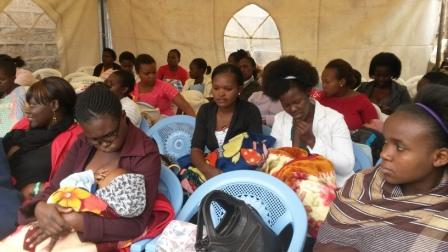
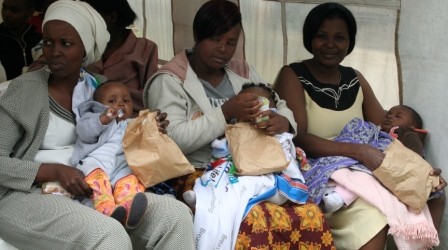
So I have spent today at Pumwani Maternity Hospital where the celebrations were being officially launched. Here are some photos of the event.

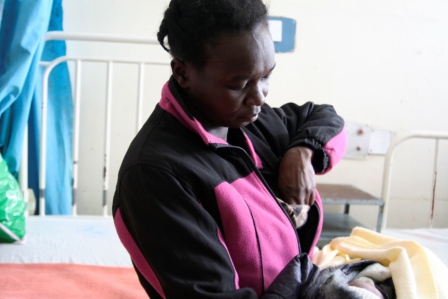
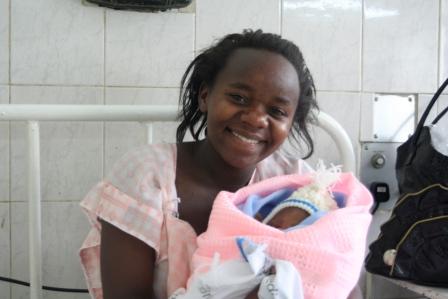
This is first time mom Jane Muthoni who I met at the wards. The 21 year old cashier at a hotel was overjoyed as she held her baby. She delivered Falzana Wanjiku who weighed 3.4kg at birth. How cute! And by the way Jane had delivered her baby this morning. #strongwoman

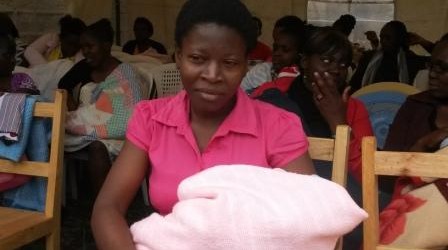
The Community Health Workers in Kamukunji performed an interesting skit. At the end, they invited the audience to dance along with them. This is KBC’s Marie Yambo returning to her seat after doing a jig :)

The event was graced by among others, Rachel Nyamai -Member of Parliament for Kitui South and chair of the Parliamentary Health Committee as well as the wife of Nairobi County’s deputy governer Mrs. Catherine Mueke. They did ward rounds where they had a chat with new moms and talked to them about the importance of breastfeeding.

So that was my day today. I’ve just gotten home, very tired. It was good day, plus it was also nice to board those number 9 matatu’s to Eastleigh which I hadn’t boarded in quite a while!

By the way I took those rickety old ones and I paid 50 bob. I sat next to the driver and in conversation he told me that “you see that manyanga (pointing at one new, souped up, graffiti drawn, sparkling rims, boom-twaf matatu), they would have charged you 100 bob”. And the rickety ones by the way are the ones that fika mwisho of huko Garissa lodge, while the manyanga’s just turn somewhere along the way before the end stage.

So I asked why 100 bob and the told me they charge an extra 50 bob because you get to listen to music in them. Clearly I’m old because I don’t understand how I can pay an extra 50 bob for a distance of about seven minutes. (town to Pumwani Hospital took about 7 minutes and it’s only because we stopped stopped along the way as some people alighted).

A whole 50 shillings extra??? How many banana’s are those I can buy for my boys? Weeeee! No.

Anyway have a lovely weekend, and in your own capacity, try and encourage every new mom to breastfeed. Also let her know that it’s possible to hack exclusive breastfeeding for the first six months. I did it with my first son (when I was employed) and I did it with my second son (when I was self-employed). With determination, all moms can achieve this.

Talk to you next week God willing!

Caroline Kinyanjui: I Have Been With My House girl for Thirteen Years

23

Caroline Kinyanjui, 38, has maintained one housegirl for the last thirteen years. Married with a 14 year old son Trevor, Caroline stands out among many moms I must admit. This is because it is quite difficult to maintain a housegirl for long in many Kenyan households today. Even managing a year is quite an achievement!!!

Nowadays is not like those days when our moms would maintain housegirls for years and years. Something seems to have gone wrong somewhere and I have no idea what it is because there seems to be a very high turnover of them in many homes.

Whether the problem lies with we as employers, or the housegirls as employees, or both – I don’t know. What I know is that I spoke to Caroline because I was curious to know just how she had managed 13 years with the same housegirl. The lady went to work at Caroline’s place when her son was just one year old. I had an interview with her for purposes of picking up any tips and advice on what she’s done (and not done). Here are details of that interview.


MT: Thanks Carol for agreeing to share your story. Where did you get your housegirl from?

Ck: I got her from the Salvation Army Girls Centre in Kariokor, Nairobi

MT: How old is she?

CK: She is now 36 years old

MT: How has your experience with her been?

CK: I would say pleasant. She had previously worked in similar settings as my household, so the settling in for her was easy. Besides, she was easy to train around what my requirements were. The Salvation Army Girls’ center also equips them with training on basic things like cooking, cleaning and home management so this made things easier already.

By the way I had no time to train her as my previous housegirl had left for the ‘village’ and not returned as agreed, so I found myself in a very stressful situation one Monday morning.

MT: What qualities does SHE have that you think have enabled her to stay with you that long?

CK: I would have a long list but let me zero down to what really matters in any human interaction:

Honesty – she is very honest as when she messes, she will always inform me even if it means calling me when I am at work.

Respect – she respects boundaries. She has never crossed the line I would say.

Responsibility – I can trust her to run my home when I travel. And whenever I give her time or days off, she will always come back on the agreed date without fail.

Taking initiative – when my son Trevor was younger, she would spot issues in good time. I remember she was the first one to notice that he was uncomfortable when he had a condition called phimosis and immediately notified me.  She also notices when my dogs are unwell and alerts me in good time.

MT: What qualities do YOU have that you think have made her stay that long?

CK: I am patient; I don’t dismiss someone without giving them time to prove themselves.

I also respect contracts; I have never paid her late even for one month. Her contract says that she should be paid by the last day of the month, and I pay her by the 27 or 28th day of the month.

People tell me I am diplomatic in the way I approach issues, maybe this has helped on those days when we have to discuss issues of performance or when things going wrong.

MT: Do you allow her to discipline your child?

CK: No – disciplining my child is my sole responsibility.  Her work is to report any wrong doing to me. So my son knows she is an authority in that way.

MT: You mentioned you give her days off…

CK: Sunday is her official off day. Public holidays are free for her as well.  I also allow her to go off during Christmas and Easter Holidays. Her contract allows for an annual leave but she prefers to get a pay instead of taking the days off.

MT: When she falls sick, who takes care of her bills?

CK: I have always paid for medical consultation and cost of medicine whenever she falls sick.

MT: Are there any restrictions on the use of some basic stuff in your house?

CK: In my house there are no restrictions in terms of access to toiletries and food. My store is open so she can access soaps, toothpaste and the like.  I give her some amount over and above her salary or a shopping voucher at the end of the year. I have always done this from the day I employed her, I guess I realized I had a gem from the word go.

MT: Do you treat her like a friend, a sister, or do you have a ‘strictly business’ approach?

CK: I treat her like I would treat a relative, say a cousin. I make sure she is comfortable and I always ask her about the welfare of her family, just to make sure that they are okay. If there are issues she will always tell me and I follow up with her later to show concern and sometimes even offer her my opinion. It makes me understand her better and the issues she could be dealing with. Sometimes when I notice some family issues could be disturbing her, I give her like a weekend off to go and settle them.

MT: What advice would you give fellow moms about how to relate with their nanny?

CK: First of all is to know that you leave them with the most valuable item – your young ones. So don’t be mean to them. Some mistakes are negligible, so save your energy and fights for serious issues. Relate to them as human beings, they could be going through personal issues which by extension may affect their work. In short, get to know your employee.

MT: There are those who say that no matter how well you treat a housegirl, they will still do you bad. What would you say about that?

CK: In all spheres of life relations there are people who will do you bad however well you treat them and it also applies to the world of nannies but not all are bad. It all depends on luck and the relationships you create. Human beings are meant to be social in nature and chances are you will find that when you treat them nicely, you get the same treatment in return. Just treat them well, give them space.  Imagine they are employees just like you might be an employee of an organization.

MT: Thank you Caroline for sharing your experience with us.

So, anyone else who has managed to keep a housegirl for many years and would be willing to share their tips too? Email me on maryanne@mummytales.com so that I can share your tips too with fellow moms.

MT: For all the moms asking, sorry I don’t have the contacts of the Salvation Army Girls Center in Kariokor and neither does Caroline. 

Also See: Why I Took in my House Girl’s Child to Stay with Us

Questions you Need to ask When Interviewing a House Girl

You may Also Like to Read:

12 Questions to ask When Interviewing a House Girl

I’ve Been with my House Girl for 9 Years. Here’s What I’ve Learnt so Far that has Helped us Stay that Long

The Day I Found out my House Girl was HIV Positive 

Mummy Tales is a blog dedicated to empowering its readers on different aspects of maternal and newborn health, as well as various issues surrounding motherhood and women. Read more motherhood experiences of Kenyan moms hereFollow Mummy Tales on: FACEBOOK l INSTAGRAM l TWITTER 

Valentine Wamwangi: I Almost Lost my Baby at Birth

0

About three weeks ago, I ran a competition on the Mummy Tales Facebook page where one lucky winner was to win two packets of Pampers Premium Care diapers containing 44 diapers each. All a mom needed to do to win was upload a photo of herself and her baby, with a comment about the best advice she received when she was a new mum. She then needed to get her friends to like her photo and comment, and the one with the most likes was to be the winner.

Four moms participated in this, and one of them emerged winner with a total of 160 likes on her comment. The winner was Valentine Cutesmile Wamwangi who posted a photo of her and her baby, and shared the following advice she was given when she was a new mom:

“The best advice ever from my mummy was to use only Pampers and Pampers alone, that other diapers were not good for a baby. We are 3 months and still never changed. I am still following the advice and so far so good!”

Congratulations to Valentine. Here is a little about her:

MT: Is this your first child?

VCW: Yes, it is my first child. he is now sixteen weeks old.

MT: How was your pregnancy with him?

VCW: It was a good pregnancy and I had no complications.

MT: Any cravings you had?

Yes! I used to crave a coke soda, combined with mangoes!

MT: What did you like most about your pregnancy?

VCW: I liked the fact that anytime I was bored I would touch my belly and he would kick so hard!

MT: What was the greatest challenge during the pregnancy?

VCW: This has to be the backache, nausea, vomiting and swollen feet.

MT: What do you feel when now you look at your baby?

I feel so lucky that I have him. After a good pregnancy, I almost lost him at birth and I thank God that he saved both of us.

MT: What happened during delivery?

VCW: I went to hospital the day before my due date, and I was induced. Unfortunately, I started bleeding so much and they told me that I would lose my baby if they didn’t take me to theater. So I ended up having an emergency caesarean section. Thankfully we both survived.

MT: Has motherhood changed you in any way? If yes, how?

VCW: Yes motherhood has changed me alot. I used to be a very outgoing lady, but nowadays I’m just an indoors chilled out woman.:) MT: What advice would you give other new moms?

VCW: Always try and understand your baby, bond with him at any opportunity you get, such as during bathing and feeding. Actually, breastfeeding is the best bonding time ever for mother and baby.

MT: Why do you like Pampers diapers?

VCW: I use Pampers diapers because they are the only ones that have never given my baby any diaper rash!

Thanks Valentine and to all the mother moms who participated.

Advertisement

POPULAR POSTS

error: Not Allowed