



















Home Blog Page 50

The 4 Year-Old Girl with Traumatic Gynaecological Fistula in Kisii
3

I recently traveled to Kisii county to cover a free fistula medical camp. The camp was at the Kisii Level 5 Hospital, and the women were receiving free surgery courtesy of the Freedom From Fistula Foundation and the Flying Doctor’s Society of Africa.

As I interviewed the patients, one of the most outstanding cases was that of a little four year-old girl. She wasn’t even a woman. Just a girl.

The little girl had presented with a traumatic gynaecological fistula. She had both vesico-vaginal fistula (VVF) and recto-vaginal fistula (RVF), meaning that she leaked both urine and faeces. She received these injuries following a sexual assault incident in her Kisii hometown after being defiled by a 16-year-old boy — a neighbour well known to her.

During the brutal attack, both her vagina and rectum were ripped apart causing extensive damage to her genital perineum areas.

Her mother, 20-year-old Mary Kwamboka (not her real name) narrates the events surrounding her daughter’s defilement.

“On that day, I left the house at about 4pm and headed to the local market to sell vegetables. I left my daughter playing in the compound with three other children, the eldest being seven years old. My mother, who was undertaking chores in the house, would keep guard over them as was the norm,” she remembers.

A short while later, Kwamboka’s mother would step out to the farm to pick vegetables to include in the family’s evening meal. She was out for only 20 minutes but when she returned, she noticed one of the children was missing. She alerted her neighbours and the search for the four-year-old girl began.

When Kwamboka returned from the market two hours later, she was devastated to hear the news of her missing daughter. She joined in the search, which unfortunately had to be put on hold when pitch darkness set in.

“The following morning at 6am, my cousin, on her way to school, alerted me of a faint cry emanating from a tea plantation near our home. We hurriedly followed the cry and when we got there, what I saw made me weak in the knees. I saw the naked body of a little girl with blood oozing from her face, neck and private parts. She was crying, her face swollen and hardly recognisable. But I knew it was my daughter,” Kwamboka says, struggling to hold back the tears.

Kwamboka, with the assistance of the local chief who happened to be passing by at that very moment, took her daughter to the police station and later to the local district hospital. But due to the extensive injuries suffered, the girl could not be attended to and was instead referred to a higher hospital — the Kisii Level 5 Teaching and Referral Hospital — for further management.

When the girl was able to speak, she recounted details of what happened that evening.

“As the four children were playing, and just after my mother had stepped out to the farm to pick vegetables, our 16-year-old neighbour approached my daughter with a slice of bread. After eating it, he asked her if she wanted another slice and when she said yes, he asked her to accompany him to his house for more bread. Since he is well known to our family, my daughter went with him to his home. There, my daughter says he did not offer her more bread but instead raped her all night long. In the early morning, he carried her to a nearby tea plantation where he dumped her,” narrates a pained Kwamboka.

The rape incident not only left the little girl nursing physical injuries on her face and neck which Kwamboka believes were as a result of slapping, punching and attempted strangulation, but extensive damage to her private parts as well. The previously healthy girl was now unable to control her urine and faeces.

But her treatment would not be straightforward. Because of the extensive damage to her bowels, a fistula repair surgery could not be immediately performed.

According to Dr Stephen Mutiso, one of the fistula repair surgeons attending to her at the hospital, the girl had to first undergo a colostomy due to the severity of the injuries.

“The colostomy will allow part of her intestine to rest and heal first before we attempt any further surgery. We created a new path for her stool to leave the body by making a hole in the abdominal wall which now drains her waste into a pouch,” he said during the camp.

Following the colostomy, the girl will then need to undergo a second surgery — that of repairing the vesico-vaginal fistula and recto-vaginal fistulas.

Once healed, a third surgery to reverse the earlier done colostomy will be done on her. This will be about a month after the fistula repair surgery when the surgical area has sufficiently healed.

In the meantime, Kwamboka cannot help but agonize over the future of her child. Her daughter’s defilement has brought uncontrollable tears and sleepless nights for the form-three school dropout.

“I hope my child will fully recover from all her physical injuries. I also pray that she did not acquire HIV. I pray that she will not be psychologically damaged by this inhumane incident,” she cries.

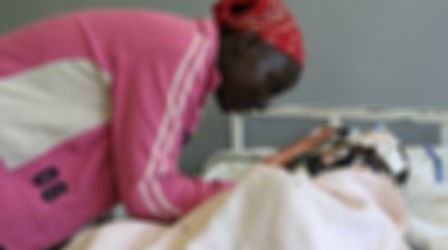
As her four-year-old daughter lay in a hospital bed next to a 72-year-old fistula patient, her mother cried for the innocence of her little girl.

“She is just a girl, not even a woman. What does she know about life? I cannot understand why someone would do this to a child!”

For now, her only hope lies in the Sexual Offences Act. According to the law, the defilement of a child aged 11 years or less attracts a mandatory sentence of life imprisonment.

“My greatest wish is to see to it that justice has been served to the man who did this to my daughter. If it were up to me, I would wish he were killed immediately but unfortunately, I have to abide by whatever the law dictates,” she says.

*At the time of my interview with her, the alleged perpetrator of the girl had been arrested after the minor positively identified him.

Also Read:
Melvin_Barongo1b Melvin Barongo Talks About her Life with Fistula for the Last Ten Years

Rusinga School and the Boy with Dreadlocks: How it Ended

3

Have you been following the case of the Kenyan mom who sued Rusinga School for kicking her son out of class because of his dreadlocks?

Well, the ruling was made this week and here is how it went, as reported in The Star.

“A six-year-old boy who sued Rusinga School after he was ordered to cut off dreadlocks has lost his legal battle to keep his long hair.

In a judgment yesterday, High Court judge Mumbi Ngugi dismissed the case on grounds that he failed to convince court that his culture and religious rights had been violated.

Ngugi said it was clear the boy’s mother wanted him to keep dreadlocks for fashion and not religious reasons as she had alleged. She said the mother knew all along, since she enrolled him at the school’s kindergarten in 2010, that dreadlocks are not permitted.

Ngugi said the mother signed the school’s code of conduct agreeing to observe rules and regulations. The judge’s decision means the boy who has missed school since September 7, will have to either cut off his hair to enable him resume school or look for another school that will accommodate his style. The boy’s mother went to court protesting that the schools directive to have her son’s hair chopped off was discriminative.

She told justice Ngugi that her son completed the four-year kindergarten school without complications, but when he reported on September 7 to enroll in the preparatory school he was told he could not be accepted until he cut his hair.

She argued that the boy’s father is Jamaican and the dreadlocks are part of his culture. The mother wanted the school to be compelled to accept the boy back, saying the decision is illegal as it discriminates on gender, religious and cultural grounds.

The school, however, said it is a Christian school and does not accept boys to have dreadlocks. In her ruling, Ngugi said courts have no desire in interfering with the running of institutions, adding that schools must be allowed to govern their pupils.

“The petitioner has not shown this court that the child practices Rastafarian religion, had she proved this, she could have persuaded this court,” she said.”

 So that’s how it ended.

What do you think about the whole issue? Do you think the boy had a valid case? Or do you think the judge was fair in her decision? What do you think of the mother’s decision to pursue this case legally? Would you have done the same thing?

*top image: justice mumbi ngugi

Of Cancer, a Doctor and my Random Thoughts as a Journalist

1

Since its cancer awareness month, I am currently working on a cancer article and yesterday, I went to interview a doctor for an expert input.

Now, this doctor was very good in the sense that he did not rush the interview. In my own experience, some doctors always seem to be in a rush to go to I don’t know where. When I have seen them either as patient or a journalist, the clock ticks very loudly in the consultation room and I find myself speaking very quickly, panting and literally running out of breath. Not that they are usually chasing me or anything, but there’s something about that interaction that makes you feel as though you just need to hurry up already.

*sigh*.

Do you have the same experience too?

Anyways, the doctor I interviewed yesterday was different. A very soft-spoken doctor who did not seem to be in a rush to go to I don’t know where. He gave me all the time in the world and I found myself not panting and running out of breath.

As we commenced the interview, and as he began getting into the technical issues of the cancer I am writing about, he told me to relax and not take notes, that he will share the notes he was writing afterwards.

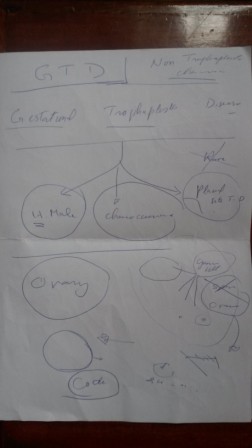
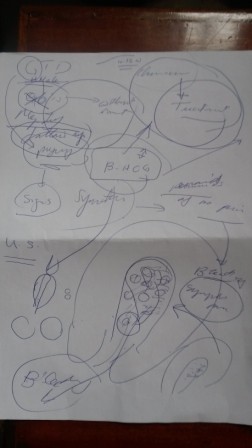
He was explaining his points on a piece of A4 paper and was helping me understand the technical issues in a manner that a layman can understand (I am very much a layman when it comes to medical jargon). The interview lasted about 30 minutes.

And after the interview, he handed me the notes for me to go home and refer to as I worked on my article.

This is how the good doctor’s notes looked like.

Woooii!!

I did take my own notes though. ;) But all in all, I have mad respect for doctors. How can you not? The nature of their work simply requires a brilliant mind, selflessness and  commitment. As a health journalist, I am in continuous awe of their work.
Miscarriage in Kenya: The Stitch in Time that Prevented my Miscarriage: Selina Ojwang

23

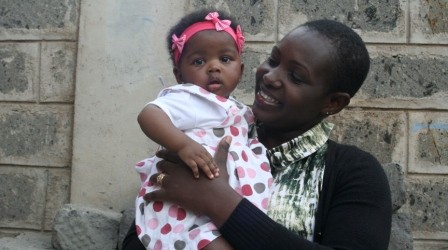
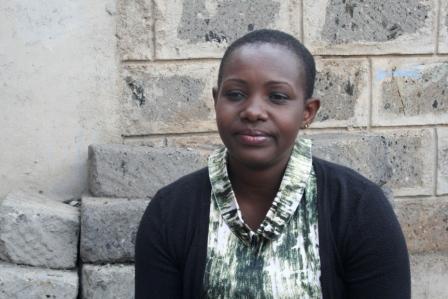
Last week, I met a young mom called Selina Odongo Ojwang’. Selina is  mother to a seven-month old daughter called Nina Natania. Nina means ‘God’s grace’ while Natania means ‘God’s gift’. Quite interesting names which have a deep meaning to Nina’s parents.

As I chatted Selina and watched her play with and cuddle her daughter, she mentioned to me that it is still yet to dawn on her that she is actually a mother. This is because the road to motherhood for this 30-year-old insurance sales agent has not been an easy one.

It all began two years ago when she fell pregnant with her first child. Excited at the thought of becoming a mother, Selina focused on a healthy lifestyle which included eating right and engaging in mild exercise. She also dutifully attended her antenatal clinics.

But one day, at 16 weeks pregnant, Selina felt a sudden gush of warm liquid surge through her legs. She immediately rushed to hospital where she was informed that her waters were breaking prematurely. Unfortunately, she lost the baby.

“It was a handsome little boy,” she remembers.

Still hopeful about becoming a mother, Selina conceived again three months later. This time round though, she found herself extremely paranoid about the pregnancy.

“I worried alot and feared I would lose the baby. I became very cautious in everything I did, careful not to put myself in harm’s way,” she remembers.

To ensure all would go well, Selina opted to see one of the best consultant gynaecologists in town for her antenatal visits.

After learning about her previous miscarriage, which he suspected was likely caused by a weak cervix, the doctor suggested the option of a cervical cerclage, which involves closing the cervix with a stitch. With the cervical stitch in place, it would reduce the likelihood of her cervix opening up prematurely due to pressure from the growing foetus.

However, after taking her through a series of tests during her 16th week of pregnancy, the doctor informed her that she did not need to have the cervical stitch after all.

“The tests established that my cervix was competent enough to carry the pregnancy to full term,” she remembers.

Relieved at the news of a complication-free pregnancy, Selina relaxed and began shopping for her baby.

However, this joy was not to last for long as three weeks later, on Christmas day 2012, she felt the all familiar gush of a warm liquid spurt through her legs.

“I could not believe it. There was no way I could be losing my baby again. How, yet the doctor assured me all was well?” she cried as she dashed to the hospital. Unfortunately, her gynaecologist was out of town as it was the festive season so she settled for the nearest hospital.

At the hospital, an ultrasound on her 19-week pregnancy was done, which revealed that the baby had a regular heartbeat, though the amniotic fluid was less than usual. But it was the doctor’s words that shocked her most.

“Just get rid of that thing,” he announced, referring to her foetus.

Selina was taken aback by his attitude.

“The doctor showed no sympathy or concern for me. His words pierced me deeply,” she remembers.

Despite the doctor’s suggestion, Selina and her husband would hear none of it.

“We were not going to kill our baby. The ultrasound showed the baby’s heartbeat was existent. I could feel the baby playing and kicking inside me, so how could I terminate the pregnancy?” she wondered.

For the next few days, Selina remained in hospital hoping for a medical miracle. But each time the doctor came to review her, he would scold her, asking her why she was taking long to ‘get that thing removed’.

“Those were the most heartless words I have ever heard. I will never forget that doctor for as long as I live,” she says.

Sadly, as the hours passed, the baby’s heartbeat and the kicks gradually became faint. By the third day, the medics could not trace a foetal heartbeat and the movements in her belly were no more. Labour had to be induced for her to deliver the now-dead foetus.

“The hospital nurses wrapped the baby in a shawl and handed the baby over to me. It was another baby boy. I took a few photographs of him before they took him away,” she remembers.

Losing a second pregnancy hit Selina hard. She spent the next two months holed up in her house, mourning her two unborn sons.

Her sorrow was made worse by people’s talk.

“When I went to church, I was turned away from the choir which I had faithfully served in for many years. I later discovered word was that I was a great sinner and God was punishing me for several abortions apparently procured before I got married. Some church members said I was bewitched and therefore did not belong in their fellowship. To date, I have never returned to that church,” she says.

But the church was not the only place she would face rejection.

“Friends stopped inviting me to baby showers as they believed I carried an evil spirit that killed unborn babies. Whenever I visited new mothers, I noticed they would not allow me to hold their newborns as they believed my hands carried death.”

Distressed by the happenings in her life, Selina decided to bury herself in her work. She also put on hold trying for another baby as she did not feel ready to cope with another disappointment.

However, nine months after her second miscarriage, Selina began feeling nauseous. Familiar with the symptoms, she took a pregnancy test. The results were positive.

“I was disappointed. I was on the birth control pill and was unprepared for another pregnancy. I was not emotionally and physically ready to deal with the rigours of losing another baby,” she remembers.

Certain of another miscarriage, Selina decided not to seek any antenatal care but instead wait for nature to take its course.

“I was already familiar with the routine. My waters would break in my fourth month, I would rush to hospital, I would be induced and then give birth to a dead foetus.”

But her husband, a medical doctor, urged her to have a positive outlook about the pregnancy. She resisted, but eventually conceded in the third month where she agreed to start her antenatal visits.

This time round though, Selina insisted on a cervical stitch. The first gynaecologist she went to declined to give her the stitch, instead giving her alternative medication.

“While I took the drugs, I decided to search for another doctor who would give me the stitch. I was not going to rest until I had the stitch. If I lost the baby, it was going to be because of something else but not because of a weakened cervix,” she remembers insisting.

Finally, after a wide search, she found a doctor who understood her concerns. When she saw him at 14 weeks pregnant, he ran some tests on her. The results showed that her cervix was already opening up.

“In a few days time, I was going to suffer another miscarriage. He booked me for the surgical procedure the following week. But I never made it to the appointed day as three days to the date, I began having pains in my belly and after rushing to hospital, I was told my cervix was dilating. The doctor gave me an emergency cervical stitch — the McDonald Stitch.”

The rest of the pregnancy was delicate, where Selina remained indoors for most of the time following strict instructions from her doctor.

“They were very agonising months as every passing hour, I kept dreading that my waters would break anytime. There entire pregnancy was spent in great fear of me losing my baby,” she remembers.

But the pregnancy progressed well without any major incident.

However, Selina faced another pregnancy scare at 36 weeks when she began developing preeclampsia, another pregnancy complication that could be fatal. Her blood pressure was alarmingly high, she was nose bleeding and her face, feet and hands were extremely swollen.

This condition necessitated the doctor to remove the McDonald stitch and the following week, Selina gave birth to a healthy baby girl through normal delivery.

Today, her daughter is a healthy, bubbly seven-month-old who has never suffered any ill-health.

Does Selina plan to have more children?

“Yes, but I will always insist on a cervical stitch. That is a must, something I will never compromise on,” she vows.

Selina also urges other women who have suffered miscarriages to read widely about cervical stitches, and have a discussion with their doctor about it as a possible solution to their miscarriages.

“No woman should have a miscarriage that can be avoided,” she said, as we concluded the interview.

And that is why the couple named their daughter Nina Natania. Indeed, she is God’s gracious gift.

Also see helpful information in the video below:

What is a Cervical Stitch?

– A cervical cerclage (stitch) is given in the case of a weak cervix (cervical incompetence). The stitch is placed in the cervix as a precautionary measure to keep it closed and prevent it from opening up prematurely during pregnancy.

– The stitch is usually inserted between 10-16 weeks, though in some cases it can be inserted a few weeks after that.

– The stitch is usually removed at around 37-38 weeks of pregnancy.

Mummy Tales is an organization dedicated to empowering its readers on different aspects of womanhood and motherhood. Follow Mummy Tales on: FACEBOOK l YOU TUBEINSTAGRAM l TWITTER 

*I first published this article in The Star newspaper.

How to Make Macadamia Nut Cookies

4

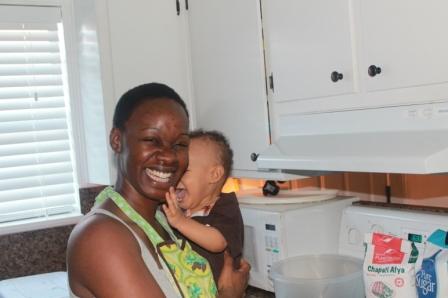
Nabubwaya Chambers is a Kenyan-born mom now raising her family in Texas, USA. She lives with her husband and their son Lema. Nabubwaya’s mom recently visited her in Texas,  and is characteristic of all mothers, she took along some unga for her daughter. Here is what Nabubwaya was able to make from some of the unga her mom brought to her. She writes:

“Last week, I decided to be a little bit innovative by baking macadamia nuts cookies. Instead of using the usual all-purpose flour, I opted for the celebrated Chapati Afya unga that my lovely mother had brought from Kenya on her recent trip to visit us.

I don’t know if anybody out there has tried this before, but I would really like to know if it has been done before and how it tasted. Well, let us just say that I most certainly brought all of the edible Kenya very close to our kitchen this time around.

I googled a basic recipe and adapted it to fit the time and ingredients that I had. You can find it here: Macadamia Nut Cookies Recipe. I substituted butter with olive oil since it was just sitting on my counter. I usually add very little olive oil to Lema’s meals and he absolutely loves it. I have tried butter before but he did not warm up to it at all so olive oil it is.

Anyway, back to my attempt at making the macadamia nut cookies. The recipe called for 10-12 minutes of baking time, or until the cookies turn golden brown at 375 degrees.

My curiosity led me to peep at the cookies through the oven door where I could clearly see them working hard to come out just right. I did the first batch in 12 minutes and they seemed alright for my first time edible experiment. The second batch seemed even better in some way. I cooled them then waited for Baba Lema to come home from work. We enjoyed the cookies as our dessert after sharing a meal.

Meanwhile, our little baby Lema slept very peacefully in the room. The video monitor was on and I could see him lying there with no care in the world.

We might request our dear mama to send us some Chapati Afya multipurpose flour so that we can come up with more recipes for some good food. We have also made pancakes with this flour and they were so delicious. Talk about innovation in the kitchen! We enjoyed them greatly as Lema watched every bite of it!”

Hmmm, so what do you think of Nabubwaya’s cookies? Have you ever tried doing something similar?

Don’t Ignore that Suicidal Cry for Help…

0

In recent days, I have come across information on people who have taken their own lives. Young people with a bright future whose lives have suddenly been cut short through suicide. Notably, in the three cases I’ve learnt about, the individuals had subtly posted ‘goodbye messages’ on their social media pages.

For a certain period before their deaths, the young people would consistently post messages hinting about their imminent demise. Their messages had the recurrent themes of sadness, hopelessness and feelings of worthlessness. Most talked about being happier on the ‘other side’.

Interestingly after their deaths, friends flooded their pages with messages of ‘Ohhh my God was it that bad? Still in shock! I can’t believe this! I’m sorry! I wish I took you seriously! Why didn’t you call, text? Why did you have to do it?…and so on.

But the sad truth is they had already reached out to their family and friends. Their laments about life, hopelessness, loneliness, betrayal, guilt and death were indicative of this. Only that perhaps, caught up in life’s busy affairs, their family and friends did not read in between the lines. Notably, the comments after their death were so much more than when the person was alive — crying out for help. Their responses came too little too late.

Sad

Society has mainly cultured us to think that when a person reveals their suicidal thoughts because of life’s problems, it’s just an attention-seeking gimmick. I mean, we all have problems in life, so why don’t they just suck it up like everybody else does? Suicidal people are thought of as cowards, quitters, weak and selfish — why would they deliberately leave their loved ones in such pain and anguish?

But the truth is that many of these people are not cowards. And neither are they selfish or mean. Many are depressed, and depression is an illness that can be fatal if appropriate interventions are not taken. Many times, depressed people don’t even know they are depressed so are not aware of their need for professional help.

I got to understand the rationale of depression and suicide when researching on depression during and after pregnancy. I mean, the expectation of bringing forth a new life into the world, or the joy of holding a precious newborn in a woman’s arms is supposed to make every mother overjoyed, right? So why is it that some new mothers hate their newborns so much that they cannot stand the sight of them? Why do some mothers kill their newborns before taking their own lives?

John Gacheru, a counselling psychologist I spoke to, informed me that for people who are depressed, it is as though they are suffocating in a dark tunnel and the only light they can see ahead of them is the suicide one. They believe ending their life is the only way out of their debilitating misery. In that very instance, at that particular time, death is the only relief from their perceived wretchedness.

sad woman

Yet, while someone who is not depressed may not see it that way and may even laugh it off, it is a very logical reasoning for a depressed person. In their minds, suicide is their only solution. Only death will satisfy their craving for freedom. Depression is real and for many, it is not a feeling that they can just simply snap out of or ‘just get over it’. Depressed people need help, many times professional help.

So instead of waiting to post messages of shock and regret on the page of a family member or friend who has taken their own life, do something today. Pay attention to that brother, sister, cousin, niece, nephew, friend or colleague who is crying out for help. Don’t comment ‘praying for you’, and hope that their problems are just a passing cloud. Your intervention could be just what will save their life.

images: dreamstime.com

Ninda Kang’ethe: “My Cakes are All Natural. I Use Fresh and Organic Products to Bake, with no Artificial Ingredients”

0

Ninda Kang’ethe is a mother of five. She has a full-time job as an Executive Director in an NGO but still finds time to bake tens of cakes and other pastries each week. Quite a handful her life is! Ninda bakes her cakes under the brand ’2 Sisters 2 Continents Cupcakes’.

I had an interview with Ninda about her life as a businesswoman, her family life, her motherhood experiences –which includes a miscarriage and the loss of a child a few days after birth. Read on, as Ninda explains in her own words.

How the Journey to my Bakery Expertise Began

My love for the kitchen started with my mother. When I was growing up, she was always baking and cooking for our family and friends. My mom scoured over every magazine and cookbook she could lay her hands on.  I learned a lot from watching her experiment in the kitchen.

From as early as on as I can remember, I measured flour, mixed cake batter, chopped vegetables –you name it, I did it all with my mom.

Memories of  my Very First Cake

I was about 9 years old when I baked my first cake. I followed a classic traditional yellow cake recipe from my mom’s “Joy of Cooking” cook book. Everyone enjoyed it and this made me feel very happy and accomplished. My dream was to study culinary arts but my parents encouraged me to pursue Law or Business. I eventually earned my B.A in Political Science and later on my M.B.A in Management from the US.

I was baking mostly as a hobby for family and friends, many of whom kept telling me to start a business. So I took all of the knowledge I had received from my mom and together with some pastry arts courses I had undertaken in the US, I started a small custom cake business from my home in 2010 which I called “Sweet Endings”.

Pregnancy, Work and Baking

However, in 2012 I took a break as I was pregnant and juggling my job and baking became overwhelming. However, last year my sister, who is based in the US encouraged me to re-launch and re-brand and change focus to cupcakes. I still offer custom cakes and cheesecakes but have since introduced cookies, bars, cake pops and pies.

The name of the business “2 Sisters 2 Continents Cupcakes” came about from my sister and I being close and our own biggest supporters but at the same time we are now living on two different continents as she still lives in North America. She is also a baker and a foodie and supports the business with recipes, sourcing ingredients and equipment from the US.

The Challenges I Face in my Business

I still hold a full time job as an Executive Director of an NGO and my other life job is being a mom. It was difficult at first with my job, but I am now flexible with my time and also ensuring I have enough sundries for that emergency order that comes knocking. The most challenging part is not having enough time to do everything I want.

Pricing is also a challenge, because everything is made from scratch using fresh ingredients. I don’t use anything artificial. I use fresh butter, organic eggs, vanilla bean and fresh cream. There are very few things I can find at wholesale prices. Additionally, fresh and organic products are costly to purchase. Some ingredients are not available in the local market while some are very costly so my sister sources them from the US and has them shipped to me here.

My Greatest Satisfaction

I find it rewarding to develop my own blueprint of how I want to effectively run a business, developing new flavours and designs, and of course the joy my clients get from my end-products nothing can quantify that!

I sell my cakes mostly through word of mouth and Facebook. The most popular flavours are Caramel Mocha Latte, White Chocolate Raspberry, Red Velvet, Chocolate Chip Cookie Dough, Death by Chocolate, Carrot-Pineapple and Coconut Lemon just to name a few. The Fudge Brownies and Lemon Bars are also popular. The newest flavour is Snickers Bar.

Ninda the Mom

I am a mom of five –one boy and four girls. My son Azizi will be turning 15 this month in August. He is mature for his age, smart and focused.

My eldest daughter Zainabu is 11 she is my right hand, responsible and caring.

She is followed by Nakwavi, 9 years and who is the “girly girl” of the family. She loves clothes, make up and shoes! She is sweet and quiet.

Then there is 5 year-old Nyambura who is very outgoing and free spirited.

My last born is Nekesa who is 2 years old. She is the love of the family, an active, happy and loving little girl.

I love being a mom, with the best part being the unconditional love I get from my kids. It sometimes makes me breathless.  Seeing the magnificent caring people they are growing into, and knowing that my love and compassion had to do with that fills me with awe. I can’t wait to see the man and women I will have raised in the future and I know they will be amazing.

The lowest moment in my motherhood journey was a miscarriage and the loss of Nekesa’s twin shortly after birth in September 2012.

I must say that I completely love spending time with my kids. We love to go to the movies, swimming and playing outdoors. My children are my greatest blessing and gift to me, and I absolutely cherish them.”

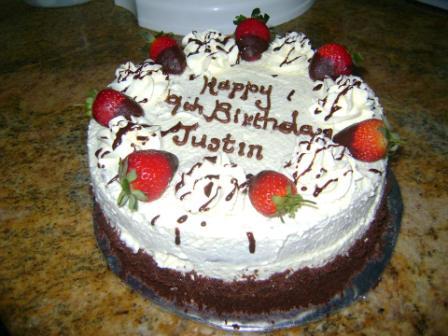
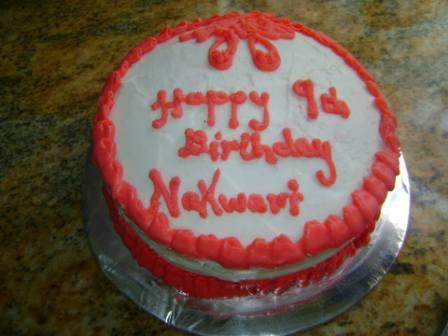
Wow! So that’s Ninda’s story. Ninda can be reached on 0736 137 911. Here’s more photos of her work.

She does cookies too!

Beautiful work by Ninda. Keep it up!

Do You Have a High Turnover of House Girls? Be Careful About That

2
Edith Kanyingi of the Centre for Domestic Workers and Training

The issue of house girls is one that is very close to many mother’s hearts. Because most need help with their babies while they are out at work.

Some house girls, like Caroline Kinyanjui’s stay for years (they’ve been together thirteen years –read Caroline’s story here), but that is rare nowadays for there seems to be very few homes that retain one house girl for long. Many homes today experience a high turnover of house girls. But does this high turnover have any effect on the children?

I talked to a mom, a sociologist and a child psychologist about this issue, which I hope will enlighten you.

Lucy Kang’ethe has employed 15 house girls since she began hiring help to take care of her children four years ago. The mother of two – a four-year-old boy and a one-year-old girl – says that this number is exclusive of the girls who only work for one or two days then leave without warning. The reasons?

“Some couldn’t handle the workload, or take basic instructions; others got better job offers, while some returned to their husbands, disrespect … and so many more,” says the 34 year-old who runs her own real-estate business.
Lucy, who takes three weeks to train new house girls –irrespective of their prior working experience, never hesitates to dismiss workers who are not up to the task.

“If you don’t meet my expectations, I have no business keeping you. The shortest-serving house girl in my home lasted three months, while the longest-serving worked for me for nine months.”

While changing house girls frequently may appear to be common in many homes today, child development experts warn that a high turnover potentially has negative effects on children. The constant interruption and readjustment to new caregivers can be a challenge, especially for young children, says Sociologist Christopher Kiboro.
“Children spend a lot of time, during their formative years with their caregivers and even look up to them, picking up attitudes and habits from them. If you change caregivers frequently, each brings a different background that is foreign to the child, such as language, mannerisms, beliefs and values, so there is no consistency in what the child is learning.
Further, this constant cycle where a nanny leaves just when a child is developing attachment may lead the child to grow up with the notion that relationships are not long-lasting. Children who are exposed to such frequent changes may develop a habit of neglecting social relationships mid-way,” explains Mr. Kiboro, who lectures Sociology at Chuka University.
His views are echoed by Dr. Philomena Ndambuki, a child psychologist. According to Dr. Ndambuki, social stability is important for the healthy growth of a child and if this stability is disrupted it may affect the child’s social, intellectual and emotional development. She warns that frequent changes in nannies may lead to regression in some children.
Indeed, Lucy has noticed that changing nannies has an effect on her children.

“Whenever I have a new house girl, my children refuse to eat or sleep during the day if I’m not around. My son cries uncontrollably and becomes overly clingy when I’m around. It always takes time for them to adjust to the new one,” she says.

Nevertheless, sometimes changing nannies is unavoidable. In such cases Edith Kanyingi of the Centre for Domestic Workers and Training Institute says that women should handle the departure of a house help properly to minimize negative effects on the child.

“Children are attached to their nannies so it can be terribly upsetting when the caregiver leaves. It is a loss to the child and it can greatly affect their emotional health,” she says.

Edith Kanyingi of the Centre for Domestic Workers and Training

Edith Kanyingi of the Centre for Domestic Workers and Training Institute

“Parents need to be aware of this, and also learn how to help their child in such circumstances. Help the child understand why the caregiver left, and if possible, allow for a sufficient transition period. Do not be quick to replace the former house girl, as the child may need time to grieve the loss.”

How to mitigate the effects

– Don’t be too quick to dismiss a house help for misdemeanors. Have some core qualities you expect and let the rest slide; for instance, if she is excellent with the child, you can overlook other minor shortcomings.

– Parting ways may be inevitable, so when you release a house help, explain to your child why his nanny has to leave. Also let the nanny bid farewell to the child especially if they had a good bond.”

*As I originally published in the Nation.

What is your experience? Do you have a high turnover of house girls? Have you managed to retain one house girl for years? What do you think of the experts’ opinions?

Mummy Tales is a platform dedicated to empowering its readers on different aspects of womanhood and motherhood. Read more motherhood experiences of Kenyan moms hereConnect with Mummy Tales on: FACEBOOK l YOU TUBE l INSTAGRAM l TWITTER

The Loss of My Unborn Baby -Gertrude Mungai Shares Her Painful Experience

0

I’ve just come across a very heartbreaking blog post by Gertrude Mungai. She is the woman behind ‘Mombasa Raha’;). Gertrude is a ‘lifestyle designer on sex and relationships’ and I’m sure many of us have read her articles in newspapers, seen her on television shows and listened to her on the radio. She also hosts bridal showers, which I’m sure some of us have attended.

Sadly, Gertrude suffered a miscarriage two weeks ago. She lost her third child at 5 months pregnant. Totally heartbreaking. Gertrude has narrated the entire experience –from planning the (surprise) pregnancy with her husband, the early days of the pregnancy, and even naming the unborn child in consultation with her two sons –14 year old Mark and 11 year-old Albert. To the eventual loss of her pregnancy through a painful miscarriage.

Head over to her blog; Gertrude Mungai’s blog and read her story, in her own words.

We wish Gertrude and her family peace and comfort during this difficult time.

*top image courtesy Gertrude Mungai’s blog

On the Days you Suddenly Don’t Have a Nanny and You Desperately Need Help, Time Off Mummy is Your Saviour

4

As a mom, have you ever been caught up in a situation where:

– Your housegirl failed to show up for work after her day off or holiday yet you must report to work the following day?

– When unexpected circumstances force you to suddenly let go of your housegirl yet you have no plan B?

– It’s your housegirl’s day off but yet you still need help with the kids? For example you need to go to the salon or run some errands –tasks which will be otherwise be quite tricky when you have to tag the kids along? Or when it’s the housegirls day off and you need to visit a sick relative in hospital and you can’t be allowed in with the kids?

– You need to go to a function and you need some extra help with the kids?

I remember one day about three months ago, my housegirl called me on a Sunday evening (her day off) and told me she had suddenly fallen ill so she wouldn’t return that day and would ‘possibly return on Monday or Tuesday if she felt better’.

*Wololo*.

I had no plan B. And I had lots of work to do that couldn’t be delayed. Since I knew about Time Off Mummy, I just called them up and let them know that I needed a baby sitter to come to my place the following morning at 8.30 am.

The following morning, the sitter arrived punctually and the first thing I did was to observe her interaction with my youngest son Ello who was 14 months old then. I was liked what I observed.

I then oriented her and gave her instructions on how to prepare the milk, fruits and lunch for him, which she did quite well. She fed him, cleaned his dishes, played with him indoors, and when the sun was out, took him out to bask. And when it was time to put him to bed, she did so. Basically she followed the routine I had laid out for her for Ello. The baby sitter stayed at my place till 4pm, time which enabled me to complete my work assignments (I work from home so I had locked myself up in the bedroom).

The reason why I was comfortable with the baby sitter is because I was aware of the kind of staff that Time Off Mummy have. Their babysitters are trained in first aid, communicate very well in both English and Swahili (spoken and written), have a minimum qualification of a form four certificate (the lady I got actually has training in ECD), have a valid ID, possess a certificate of good conduct and have undergone a thorough vetting process. Those are just a few of the qualities they have.

Also, and quite important is that the ladies behind Time Off Mummy –Dolphine and Medlene are personally known to me and I know they are very legit and don’t do shoddy business. They are moms with young babies themselves, so they completely understand the whole business of having a good child minder.

So incase you ever get caught up in one of those situations where you need that extra hand with the babies, then do give Time Off Mummy a call. I wasn’t disappointed with their services, and so they come highly recommended by me.

Have a look at the Time Off Mummy website and Like the Time Off Mummy Facebook page.

Time Off Mummy can be reached on 0726 -03 79 79 or 0732- 68 58 11.

Give them a try and feel free to share your feedback here.

Advertisement

POPULAR POSTS

error: Not Allowed