One day in 2014, Irene received a text message from the father of her child saying he wouldn’t be able to cater for their bills anymore, because he already had too many bills to pay, hence they just had to sort themselves out…
Today, I’m sharing the story of Irene Adhiambo Oduor, a Kenyan mom who shares her journey through motherhood and entrepreneurship. Click on her story below.
Irene takes us through the journey of how the idea to start her business came about, and how her daughter has been of great influence to the growth of the business. She also shares helpful insights she has learned along the way about how to grow a business. I hope you learn something from her. Also share this video with a friend as you never know who might benefit from learning about Irene’s story.
If you have a motherhood story you’d like to share with other moms, you can email it to me on maryanne@mummytales.com and I’ll be in touch with you.
Mummy Talesis a platform dedicated to empowering its readers on different aspects of womanhood and motherhood. Read more motherhood experiences of Kenyan momshere. Connect with Mummy Tales on: FACEBOOK lYOU TUBE l INSTAGRAM l TWITTER
Happy New Year friends and hope it has started off well for you and your family. So, this year, I intend to be publishing a new post every Tuesday. Starting today ?. So be sure to be coming by every Tuesday to read something new from me.
What are the do’s and don’ts of pet-keeping, especially if you’re getting pets for your children? I personally don’t have pets in my house and neither did I grow up with pets in our home, but I do know of households where pets are an invaluable part of the family.
Some of the common pets in homes include: dogs, cats, lizards (my friend’s son keeps a gecko), rabbits, fish, parrots and many more. So what are the do’s and don’ts of pet-keeping?
Below are some tips from one mom -Yvonne Njoki, who currently has two cats and a Japanese Spitz. She plans on adding to her brood another dog and cat.
Yvonne has always had cats in her house even before she became a mom. Her daughter, who is a year and a half old, has developed a similar love for pets.
Here are her insights based on her observations and experiences:
Confirm that your child loves animals. Don’t force an animal on a child
Be financially and emotionally ready for the task ahead because pets are a labor of love… and money. They need to be fed, housed, groomed, taken to the veterinary doctor, cared for, taken for walks, shown affection …
Training your pet is both easy and hard. It depends on the type of pet and the breed. However, first time pet owners can consider getting an older already-trained pet
When it comes to dogs, it is important to know that not all dog breeds are suitable for small children
Ensure you vaccinate your pet. They also need to be dewormed
Teach your children to respect the animals. No beating, pulling, tagging seating on them, tying them up, snatching their food, pulling their hair out, dragging them by the ears etc. remember that even the mildest of animals can turn defensive when hit or pulled.
Photo by Leanè Jacobs from Pexels
Below are other helpful insights that I’ve gathered from my friends and who keep pets:
If buying a pet, make sure it’s a healthy one. Get a pet from a reputable source (a vet can recommend this). Or if you’re being gifted a pet, do your due diligence and establish that it’s not a sick animal being ‘donated’ to you. Find out if it’s up to date with its vaccinations
Do your kids have allergies? Be sure to establish this before you bring a pet home. For example, some children are allergic to fur, saliva, feathers etc. Remember that some allergies can trigger asthmatic attacks or intense itching that can cause sores, which can lead to infection.
Young children should never be left alone with pets. Their interaction must be supervised by an adult
Don’t allow the pet to lick the baby or child, especially if there are any cuts or bruises. Pets usually like licking faces so be wary of this
Pets can be a source of conflict between you and your neighbors, especially when they stray into their compound and poop there or destroy their gardens, or when they are excessively loud etc.
Always wash hands thoroughly with soap and clean water after all contact with a pet. Ensure the kids wash their hands with soap before each meal
Involve your child in the care of the pet. It helps them learn about responsibility
Teach your children to watch for danger signs in the pet
How about you? Do you have pets in your home? What other tips would you add? Let us know in the comments section down below.
Thanks for reading and see you next Tuesday. Meanwhile, if you have a story you’d like to share with other moms, you can email me on maryanne@mummytales.com and I’ll be in touch with you.
You may also like to see:
Mummy Talesis a platform dedicated to empowering its readers on different aspects of maternal and newborn health, as well as various issues surrounding motherhood and women. Read more motherhood experiences of Kenyan momshere. Connect withMummy Tales on:YOUTUBE l FACEBOOK l INSTAGRAM l TWITTER
Moms, have you ever breastfed another woman’s baby? Or if you haven’t, is it something you would do? Well, today I share the story of one mom who once did that.
Here is her narration of that:
“My friend and I were pregnant at the same time, and we had delivered our babies in the same month, so they were basically agemates.
She had a business running a kiosk and one day, she ran out of supplies and needed to make a quick dash to the wholesale store for a restock. Before she left, she breastfed her baby and left her sleeping. She then requested me to keep watch over her. She assured me she wouldn’t take long, that by the time she got back, her baby would still be asleep.
Unfortunately, her baby woke up a short while later. She then began fussing and crying. Hard as I tried comforting her, she wouldn’t stop crying. I rocked her, saddled her, soothed her, sang for her… but she continued crying.
Hungry Baby?
In between, I was also calming down my baby who had by then woken up. I would breastfeed my baby, then return to soothing my friend’s baby -to no avail.
After a while, I got so frustrated as I looked at the baby in distress. So I made a quick decision.
I thought maybe the baby had not breastfed enough and was hungry thus the incessant cries. It had been over two hours since her mom had left. So I decided to offer her my breastmilk.
As I breastfed her, she calmed down and after a few minutes, she slept – like a baby. When her mom returned, she found her still sleeping peacefully.
Panicky, Scared Mother
I felt the need to tell my friend what had happened. When I told her, to say that she was shell-shocked would be an understatement! She went into panic mode and began shaking while pacing up and down.
She then turned to me and asked:
“Are you okay? What is your HIV status?”
I told her that I was HIV negative, but she insisted on us going to the VCT center immediately to verify this. She actually closed down her shop and we went to get the HIV test done there and then.
I was Naive
Honestly for me, I just did the first thing that came to my mind. It was an innocent gesture. The baby was crying and my first instinct was to feed her so that she could calm down. We hadn’t weaned our babies yet, so breastmilk was the only food I could think of giving her.
I was 21 years old then, young and not as informed as I am now about the risks of breastfeeding another woman’s baby. Thankfully, we remained friends and our babies are now 13 years old.
file photo: Africa Knows
Would I breastfeed another mom’s baby if need be? Yes I would, without any hesitation. I would do anything to help a baby in need. However, I would ensure that I have permission from the mother to do so.” -END
Editor’s note: The practice of breastfeeding another woman’s baby is called wet nursing. While the practice has been around for years, doing so requires precautions due to the health risks involved. Dr. Stephen Mutiso says that various infections can be transmitted through breastmilk, and they include HIV and Hepatitis B, among others. So this is important information to take note of.
So, have you ever breastfed another woman’s child? Is it something you would do? Let me know in the comments section below.
You may Also Like:
Mummy Talesis a platform dedicated to empowering its readers on different aspects of maternal and newborn health, as well as various issues surrounding motherhood and women. Read more motherhood experiences of Kenyan momshere. Connect withMummy Tales on:YOUTUBE l FACEBOOK l INSTAGRAM l TWITTER
Today, I’ll tell you a short story about how I styled my hair while on recent travels to Central and West Africa. So my first travel was to N’Djamena, the capital city of Chad. I came back to Nairobi and a week later, I traveled to Cotonou -the economic hub of the West African country of Benin.
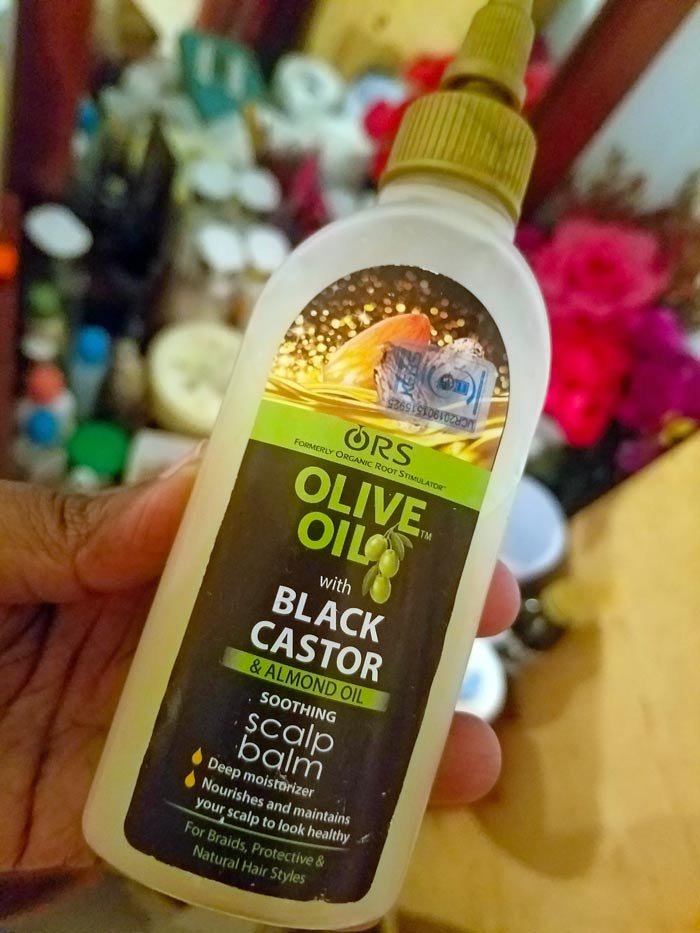
Today’s post is in collaboration with the new ORS Black Castor Oil range.
The new ORS Black Castor oils 🙂
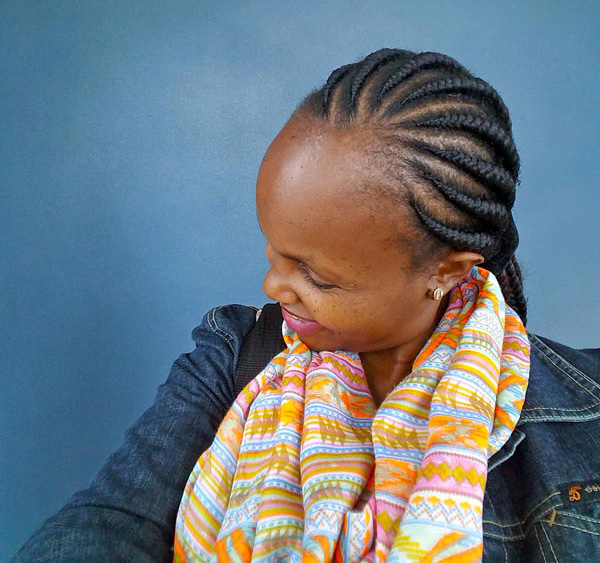
Now, before I left for N’Djamena, I went and got myself a protective hairstyle. This is because when I’m away on travel, I don’t like the business of styling my hair every morning. I always feel as though this distracts me, gets me all confused, late and what not. I just like waking up and going 🙂 All I usually need to do is carry my essential items (usually mafuta to nourish the hair and braid spray when I have braids and that’s it).
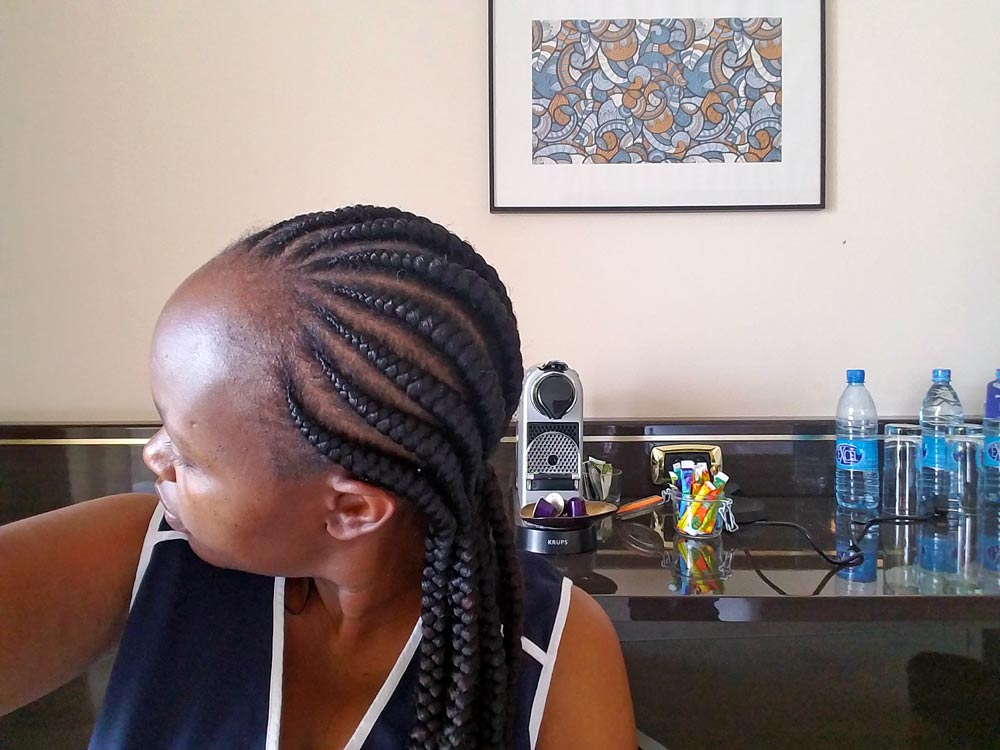
My bandkias that I traveled with. Super easy to maintain 🙂
So I got some cornrows done -specifically the bandika style. I chose bandika because they aren’t complicated and are light on the head. I didn’t want something heavy on my head because I knew of the heat in those countries and I didn’t want my head boiling with heat. The weather in those two countries is typically hot. Very hot hot hot and humid.
So how I maintained the neatness of my hair while away is by using the ORS scalp balm. I would apply it whenever I felt my hair felt thirsty. Aside from loving its sweet minty smell, the scalp balm kept my scalp well nourished.
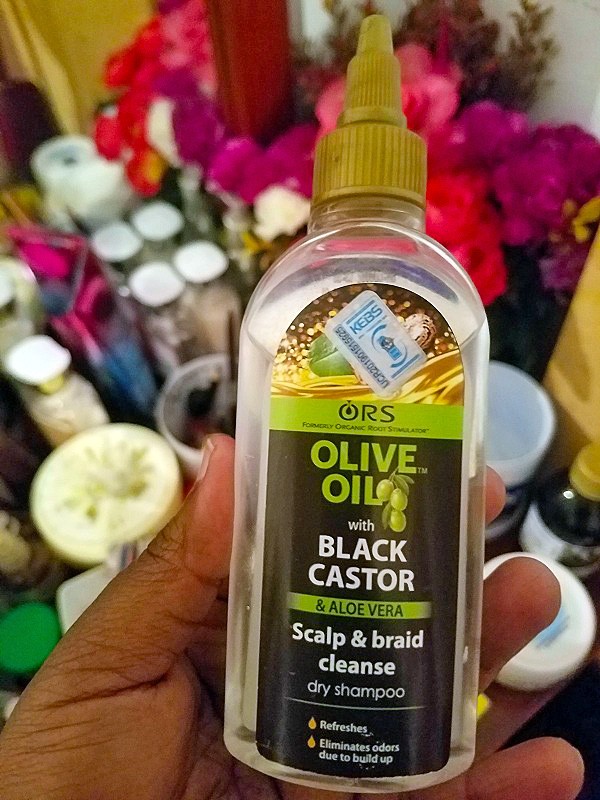
To help get rid of any build up, I would dry shampoo my scalp and this I did using the ORS Black Castor Scalp & Oil Cleanse.
I cannot even describe the feeling that the dry shampoo would leave on my head. It’s a cold, cool refreshing feeling that makes you know what your scalp is clean. Like spotlessly clean. The application of the ORS Black Castor Scalp & Oil Cleanse is quite easy, as demonstrated in the video below.
So I repeated that routine the entire time I had my bandika – which lasted for a month. The cornrows remained neat all through my travels, which saved me a lot of hustle.
The bandika lines remained well maintained 🙂
What I particularly liked about those two products, aside from what they did to my hair, is how easy the application was. This is because of the applicator (nozzle) that the bottle containers have, so you just apply only your scalp very easily. No need to ask someone to help you to apply, and plus there is no spillage at all if you apply on your scalp carefully.
Undoing the Bandika
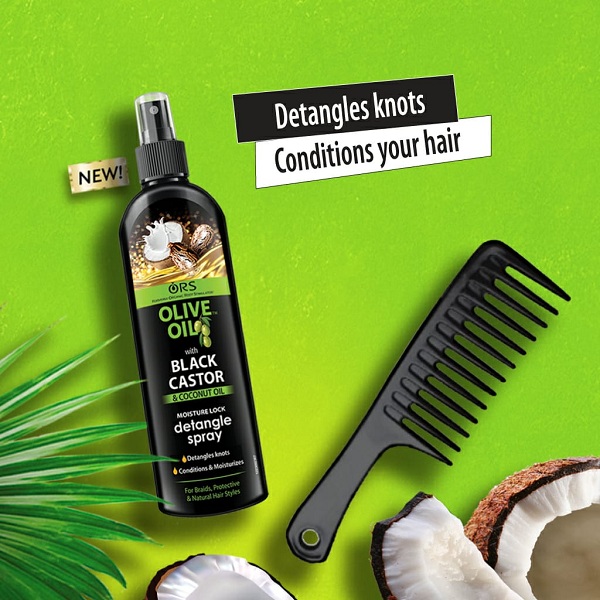
When I was undoing the braids a month later, I first removed the bandikas, then I was left with the cornrows on my natural hair. I then sprayed the detangle spray directly onto each line, then waited about 15 minutes. The undoing process was so easy after that, my hair did not tangle at all.
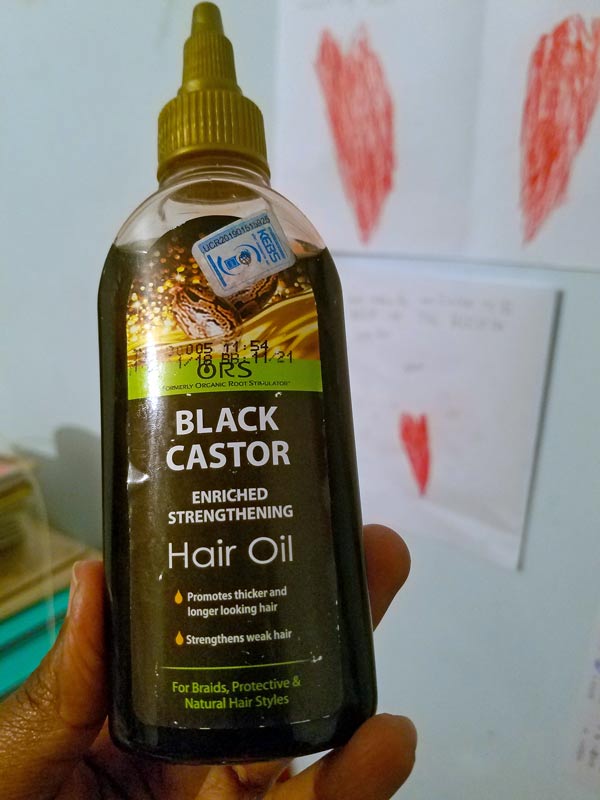
Right now, my hair is open or sometimes I hold it in like a high puff. I’ve just began using the black castor oil because from the reviews of many women, black castor restores hairlines as well as strengthens it. I’ve been made to understand that using it consistently will give good results, so I’m currently doing that – using the black castor oil on my hairline consistently.
I leave my hair open like this, or sometimes I hold it in a high puff 🙂
The ORS Black Castor Oil range of hair products is new in the Kenyan market and so far, I like those products that I have used. You can find them being sold in stores like Best Lady, Super Cosmetics, Chandarana and Carrefour supermarkets.
Have you used any of the new ORS Black Castor Oil products? What is your feedback on them? Which is the one product you would really really like to try out? Let me know in the comments section down below and you never know…
Are you in Nairobi and you’re looking for stylish maternity dresses, tops, pants, jeans, and other fashionable pieces for your pregnancy? Well, I know of a place in the Nairobi CBD where you can get a good range of comfortable maternity wear that will totally flatter you and your bump ?.
Have a look at some of the items that Molly’s Maternity Wear located at the Jamia Mall, shop F79B stocks. Whether office or casual wear, good thing about the store is that you’ll find what you’re looking for. I personally know the owner of the business, so feel free to reach out to her, shop and enjoy the experience.
So those are some of types of clothes at Molly’s Maternity Wear. If you have a pregnant friend or sister, you can take her there and help her shop for what will look good on her. If you work in the CBD, take her for a walk over her lunch hour (it’s good exercise also) she can pick an item or two.
All photos provided by Molly’s Maternity Wear. You can reach them on +254 722 664988.
You can also watch Peninah’s inspiring story below:
You may also be interested in Mary’s story below:
You may also like to see Irene’s story below:
That’s all for today. Thanks for reading 🙂
Mummy Talesis a platform dedicated to empowering its readers on different aspects of maternal and newborn health, as well as various issues surrounding motherhood and women. Read more motherhood experiences of Kenyan momshere. Connect withMummy Tales on:YOUTUBE l FACEBOOK l INSTAGRAM l TWITTER
“Hi moms, last night my LO was fussing as he was BF, so I asked DH to take her. My DM also helps during the day seeing as I’m a CS mom. What tips can you give this FTM to make my experience with DD easier? Also, what FP should I use since I don’t want a SB soon? TIA!
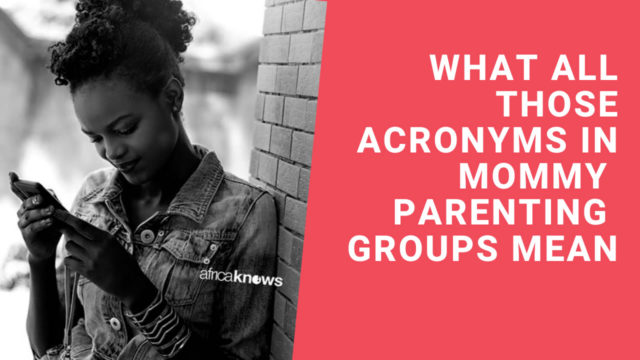
Moms, have you ever come across such a post and you somehow got lost in it all? Well, I’m a member of several mommy Facebook groups in Kenya, and there are many abbreviations that moms frequently use such that if you’re unfamiliar with them, you’ll thoroughly float. As I have done many times 🙂 Has that ever happened to you too?
So I’ve compiled a few of these abbreviations to help out any new mom. If I have left out any, please add in the comments section below. Also share with a fellow mom!
LO – Little One
BF – Breastfeeding
BM – Breast milk
EBF – Exclusive Breastfeeding
DH – Dear Husband
BD – Baby Daddy
SO – Significant Other
DW – Dear Wife
DS – Dear Son
DD – Dear Daughter
DM – Domestic Manager (housegirl, house help or nanny)
MIL – Mother-in-Law
FIL – Father-in-Law
DIL – Daughter-in-Law
SIL – Sister-in-Law
BIL – Brother-in-Law
FP – Family Planning
FTM – First Time Mum
CS – Caeserean Section
VBAC – Vaginal Birth After Caeserean Section
PPD – Post Partum Depression
FB – First Born
SB – Second Born
LB – Last Born
TTC – Trying to Conceive
EDD – Expected Due Date
DD – Due Date
CIO – Cry it Out
SAHM – Stay-at-Home-Mom
WAHM – Work-from-Home-Mom
TIA – Thanks in Advance
TBH – To Be Honest
ION – In Other News
NBR – Not Baby Related
VBS – Vocational Bible School
Did I leave any out? You may add in the comments section down below 🙂
You may also like to see Martha’s interesting story:
Martha, a mother of three has stayed with her live-in house girl for a good solid 13 years! So what exactly has worked out for her (or rather both of them) that they’ve managed to stay together that long? She shares her experience in the video below. You can also watch it here. Watch and maybe you could pick a thing or two from her story. Also share this link with a fellow mom who could benefit from the information.
Mummy Talesis a platform dedicated to empowering its readers on different aspects of womanhood and motherhood. Read more motherhood experiences of Kenyan momshere. Connect with Mummy Tales on: FACEBOOK lYOU TUBE l INSTAGRAM l TWITTER
Hi friends! Do you know of a mom who has a child with autism? What is their experience like? I know of one such mom -Alison Kiriinya, whose 6-year-old son is autistic. Alison frequently shares snippets of her life as an autism mom following her son’s diagnosis in April 2018 and today, I’ll link you up to a post where she highlights her experience.
“So at around 2 years old, my son had to be admitted because of an infection that was causing a high fever. It is when we were in the hospital that I realized that he was not speaking as well as he was supposed to and that his self-care milestones were a little delayed.
He got better and we were discharged, but I still kept observing him, hoping that the delays would self-rectify. They didn’t. Read the rest of Alison’s storyhere.
Please follow Alison’s blog, and if you know of a colleague, friend, sister, cousin, aunt, neighbor or anybody who has a child with autism, share Alison’s insights with them. Parenting is all about learning from each other. May you be encouraged by her journey.
Mummy Talesis a platform dedicated to empowering its readers on different aspects of maternal and newborn health, as well as various issues surrounding motherhood and women. Read more motherhood experiences of Kenyan momshere. Connect withMummy Tales on:YOUTUBE l FACEBOOK l INSTAGRAM l TWITTER
Ezekiel Mutua, the Kenya Film Classification Board chief recently announced his banning of some secular songs ‘outside of bars and clubs’. This is because of the lewd lyrics contained in the songs -that have strong sexual undertones.
His move reminded me of a conversation I once had with some pals of mine. We were chatting over coffee in a café when the Tetema song began playing and one of us, Rachel, suddenly went on a rant.
“This song! Can you imagine last week, I walked into my house only to be greeted by my six-year-old daughter singing word-for-word that tetema song? She was even jumping up and kicking her legs in the air, then shaking her shoulders as she danced. From where did my innocent child learn the tetema lyrics and the accompanying obscene gyrating dance moves???” a visibly horrified Rachel exclaimed.
Rachel then told us that her first instinct was to dash to cover her daughters’ mouth with her hands to stop her from tetemaring.
But she was too shocked and just stood there staring at her daughter as she happily sang and danced to ‘oohhh mama tetema… aya twende tetema..’.
“Where did she learn those words from, because it’s certainly not in my house!” She added.
See, Rachel is a born-again Christian, plays gospel music in her home and in her car, goes to church faithfully and ensures her children attend Sunday School and VBS without fail, reads Bible stories with the kids at bedtime, attends BSF and basically leads the Godly life -the whole nine yards. So we believed her when she said that its highly unlikely her daughter heard the song in her house, or in her car. So where could have her daughter could have learned the words from? We discussed:-
The School Van
Turns out that many school vans play music while transporting the kids, so that was a possible avenue because her daughter does indeed use a hired van for her school transport. And the driver is a young dude, so most likely.
The Friends and Neighbors
Well, you may not play a certain type of music in your home, but your child does visit neighbors or cousins, and there’s a likelihood that in that house, that music is played.
The House Girl (and staying relatives)
It so happens that some house girls play trending, secular music on their phones, and they don’t mind the children watching the videos, singing along with them and even dancing to the music. This also applies to older nephews, nieces and other relatives who stay with you.
TV after School
After arriving home from school, most local TV channels air music shows -most of them (if not all), airing secular music. So as the kids are taking their snacks before they start on their homework, they are most likely watching Tetema and the like.
Matatus
Some children use public transport to and from school, and most don’t play gospel music. Some matatus even play radio discussions that are sooo uncomfortable for an adult’s ears, so you can only imagine the children and what they absorb through these widely broadcasted conversations.
So we told Rachel that of course, as parents we cannot control everything our children listen to, watch or do every single minute, but as parents, the best thing we can do is to guide them accordingly and empower them to always endeavor to be of good standing and character.
What are your thoughts about this issue? Have you ever heard your children waxing lyrical to a song which made you cringe? What did you do? Comment down below.
Mummy Talesis a platform dedicated to empowering its readers on different aspects of maternal and newborn health, as well as various issues surrounding motherhood and women. Read more motherhood experiences of Kenyan momshere. Connect withMummy Tales on:YOUTUBE l FACEBOOK l INSTAGRAM l TWITTER
I love stories that warm my heart, and today, I’m happy to share the successful story of baby Jeremy 🙂
On 22nd March, 2019, Catherine Joy arrived at Kenyatta National Hospital (KNH) bleeding heavily, 22 weeks into pregnancy. The multidisciplinary team led by Dr. Barbara Magoha – Obstetrician, immediately commenced investigations to determine the cause of the bleeding at such early gestation. Dr. Magoha successfuly managed the condition, helping Catherine deliver a pre-term baby on 1st April 2019 at 24 weeks weeks. Baby Jeremy Tubula was born with a birth weight of 400gms.
The team at Kenyatta Prime Care Centre newborn unit, led by Neonatologist Dr. Miriam Karanja took over the care of baby Jeremy Tubula and on Wednesday 28 August 2019, he was discharged from hospital weighing 3.5kg.
The KNH CEO Dr. Evanson Kamuri (speaking in the video below) said that baby Jeremy responded well to care and treatment for the five months he was in the newborn unit. He was optimistic that Jeremy would go on to lead a healthy and long life.
In 2011, KNH neonatal specialists successfully nurtured a baby born weighing 400gms, the first case in the history of Kenya. Baby Hope who is a strong and jovial eight-year old girl now was among the guests at the press conference. Baby Jeremy’s parents are happy and expressed their gratitude to God and KNH specialists and nurses who took care of their baby. They are grateful that they finally get to take their baby home to lead a normal life like babies born at full-term. –Source: Kenyatta National Hospital.
Baby Jeremy’s story is so heart-warming. Join me in praying for good health and God’s favor upon the life of baby Jeremy and his family. We also remember in our prayers all other babies who are right now in newborn units and their parents. May God see them through.























 Mummy Tales is a platform dedicated to empowering its readers on different aspects of womanhood and motherhood. Read more motherhood experiences of Kenyan moms here. Connect with Mummy Tales on: FACEBOOK l YOU TUBE l INSTAGRAM l TWITTER